

How Identity Lifecycle Management Strengthens Enterprise Governance
Introduction
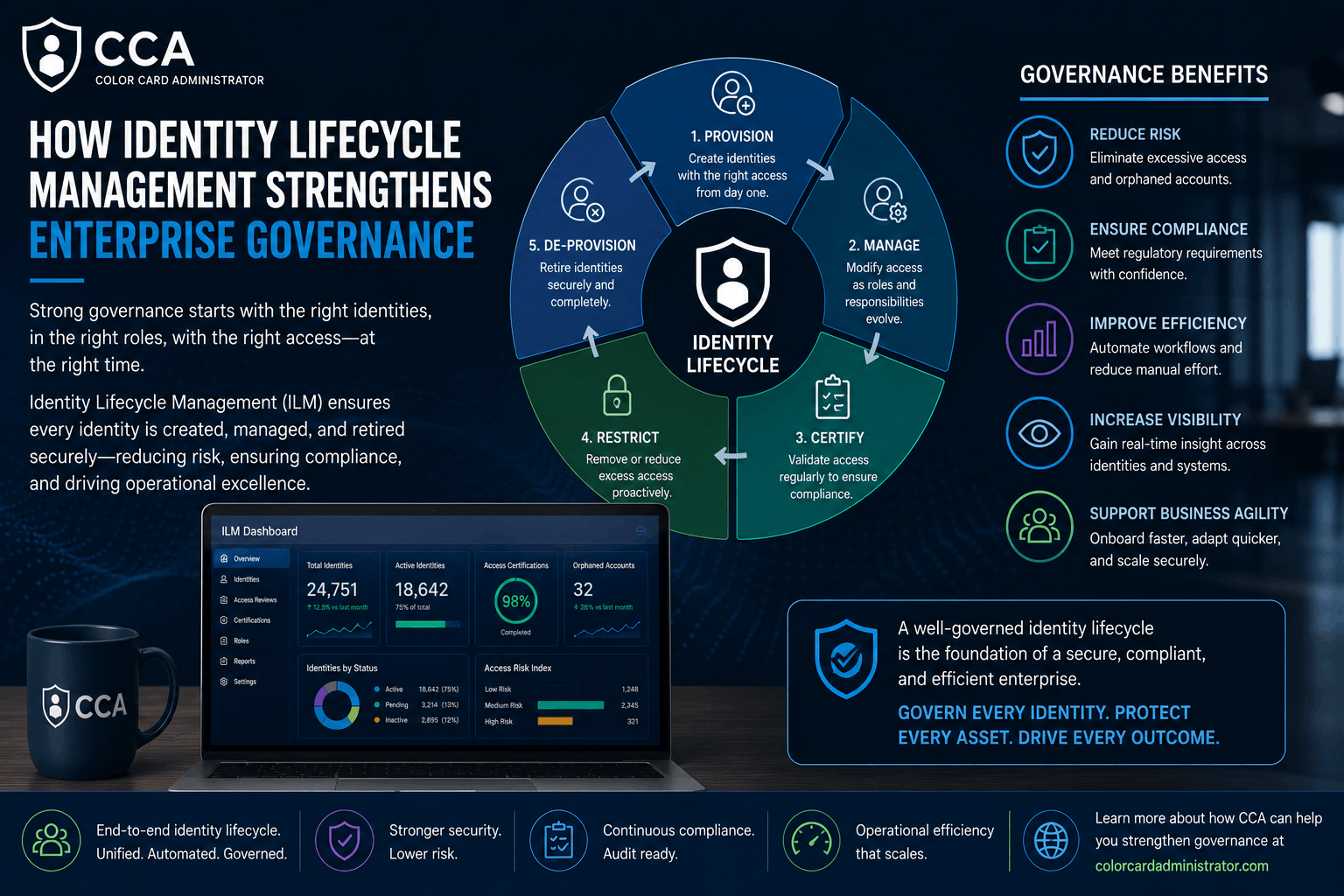
Identity lifecycle management enterprise governance begins with a simple operational reality: employee identity is not static. People join, move, change roles, transfer locations, update titles, and eventually leave the organization. Each of these events changes how identity should be represented across business cards, digital identity assets, approval systems, procurement workflows, and enterprise records.
When lifecycle changes are not governed, identity execution becomes inaccurate and inconsistent. Business cards may carry outdated titles. Digital profiles may remain active after role changes. Vendors may fulfill requests using stale employee data. Approval workflows may route to incorrect managers or departments. These are not isolated administrative issues. They are governance failures that weaken operational control and reduce enterprise visibility.
CCA’s governance strategy treats identity lifecycle events as operational triggers. This aligns with business card governance and ensures identity execution remains accurate across the full employee lifecycle.
Why Lifecycle Governance Matters
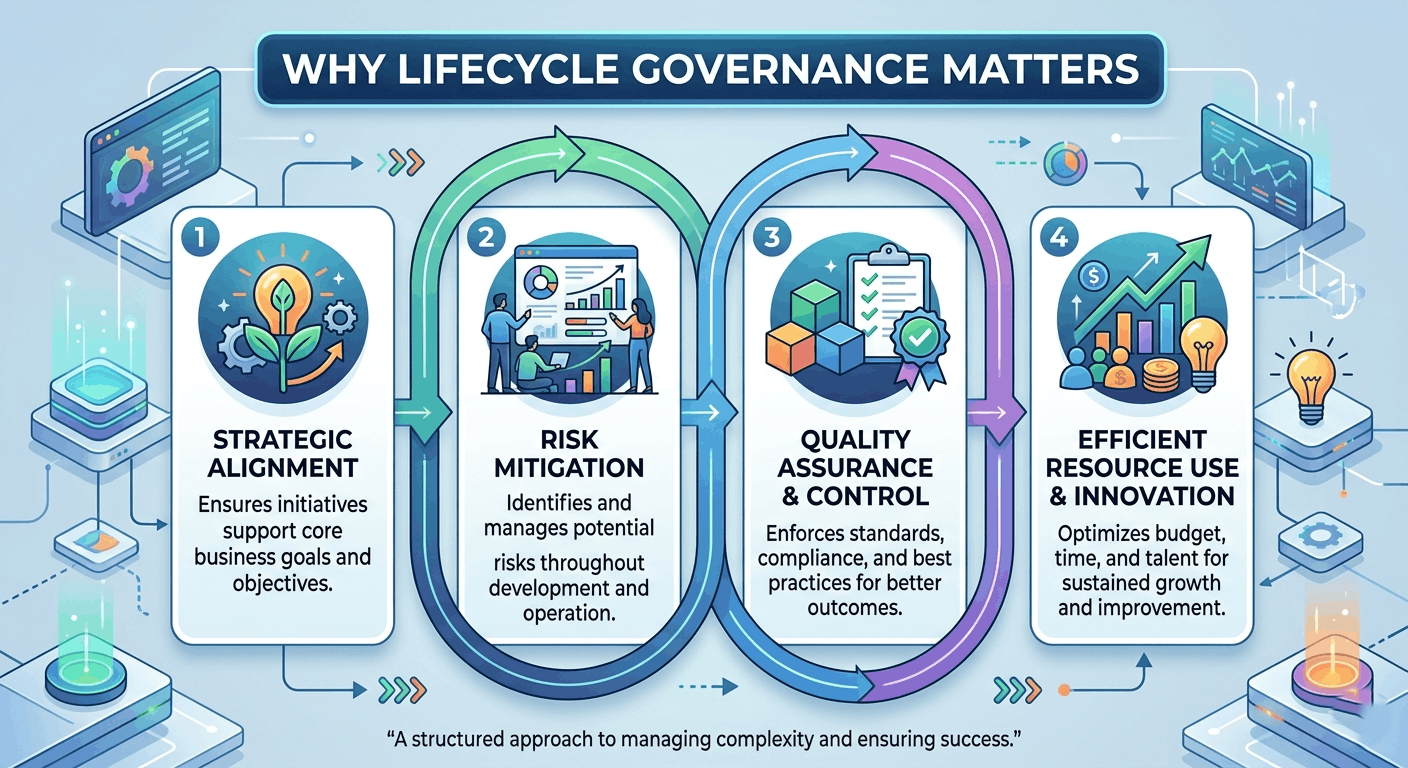
Most organizations focus heavily on onboarding but underinvest in lifecycle continuity. Onboarding is important because it establishes the initial identity framework, but governance cannot stop once an employee is provisioned into operational systems.
A governed identity system must account for:
- Role changes
- Department transfers
- Office relocations
- Name changes
- Compliance updates
- Manager changes
- Permission adjustments
- Offboarding events
Each lifecycle event creates a potential governance gap if systems are not synchronized properly.
For example, if HR updates an employee’s title but the centralized business card workflows does not update simultaneously, identity inconsistency appears across operational systems. If procurement approves a vendor request using outdated employee information, fulfillment becomes inaccurate. If offboarding workflows fail to deactivate identity assets, operational exposure can continue after employment ends.
Over time, these inconsistencies reduce governance reliability and create operational fragmentation across enterprise environments.
Lifecycle Management and Onboarding
Automated onboarding is often the first step toward lifecycle governance maturity. A newly created employee record should trigger controlled identity provisioning, template assignment, approval routing, vendor coordination, and operational workflow execution automatically.
This creates a standardized onboarding process that improves identity consistency while reducing manual administrative coordination.
However, onboarding should be viewed as the beginning of identity governance rather than the complete system. The same governance logic used to provision identity assets initially should also support updates throughout the employee lifecycle.
Without lifecycle continuity, organizations often create governance environments that function correctly during onboarding but gradually lose accuracy as employee data evolves over time.
Sustainable governance requires operational systems capable of maintaining identity synchronization continuously rather than only during initial provisioning.
The Role of HRIS Integration
HRIS systems typically serve as the authoritative source for employee identity data. For lifecycle governance to function effectively, business card workflows and identity systems must synchronize directly with HRIS data and organizational hierarchy structures.
Enterprise integrations, therefore, become foundational to lifecycle governance maturity.
When HRIS synchronization is implemented properly, operational events such as:
- Role changes
- Title updates
- Department transfers
- Location changes
- Reporting structure updates
can automatically trigger governed workflow actions across downstream systems.
This reduces manual data re-entry, improves identity accuracy, and minimizes operational inconsistencies across business card systems, procurement environments, approval workflows, and digital identity infrastructure.
Integrated operational environments also improve organizational responsiveness because identity updates can propagate across systems more efficiently.
Lifecycle Governance and Operational Visibility
Lifecycle governance depends heavily on visibility. Organizations must understand when lifecycle events occur, which workflows they trigger, whether approvals were completed correctly, and whether downstream identity assets were updated successfully.
Without centralized visibility, lifecycle governance becomes dependent on manual follow-up and fragmented coordination between departments. Identity lifecycle governance is part of the broader operational infrastructure organizations need as systems, workflows, and departments become more interconnected.
Operational visibility connects lifecycle events to governance reporting infrastructure. This allows enterprises to:
- Detect delays
- Identify workflow exceptions
- Monitor approval activity
- Improve audit readiness
- Reduce identity inconsistencies
- Maintain governance accountability
Visibility also improves operational scalability because organizations can monitor identity execution across distributed teams, systems, vendors, and enterprise workflows.
As enterprise complexity increases, centralized visibility becomes increasingly important for maintaining governance consistency.
Offboarding as a Governance Test
Offboarding is one of the strongest tests of governance maturity.
In fragmented operational environments, physical and digital identity assets may remain unmanaged after an employee exits the organization. Business cards may remain in circulation, digital profiles may continue appearing publicly, and vendor systems may still contain outdated employee records.
In governed environments, offboarding automatically triggers:
- Controlled deactivation
- Audit review
- Vendor restrictions
- Workflow closure
- Identity asset removal
- Approval verification
This is where identity lifecycle management becomes operational infrastructure rather than administrative coordination.
The enterprise is no longer simply responding to requests manually. It is governing identity state continuously across time and operational systems.
Identity Lifecycle Governance Model
| Lifecycle Event | Governance Risk | Infrastructure Response |
|---|---|---|
| New hire | Delayed identity provisioning | Automated onboarding workflow |
| Role change | Outdated title or permissions | HRIS-triggered update |
| Location transfer | Incorrect office data | Location-based template update |
| Manager change | Wrong approval routing | Hierarchy synchronization |
| Offboarding | Active outdated identity assets | Deactivation and audit workflow |
The Role of Governance Platforms
Governance platforms such as Business Card Solutions support lifecycle control by connecting employee data, workflows, approvals, templates, vendor activity, operational reporting, and audit visibility into a centralized infrastructure.
This allows organizations to manage identity execution as a continuous operational system rather than a series of disconnected administrative tasks. Business Card Manager supports this execution layer by connecting centralized ordering, approval routing, operational visibility, and HRIS synchronization into one governed workflow environment.
Centralized governance platforms improve consistency by ensuring lifecycle events remain synchronized across procurement systems, onboarding workflows, approval structures, vendor environments, and identity assets.
Organizations also gain stronger visibility into operational execution and governance performance across the entire identity lifecycle.
Strategic Takeaway
Identity lifecycle management strengthens enterprise governance because it keeps identity execution aligned with organizational reality. Employees change, systems evolve, operational structures shift, and governance must ensure identity assets change accurately with them.
Enterprises that govern the full lifecycle gain stronger identity accuracy, auditability, compliance alignment, workflow consistency, and operational control.
Lifecycle governance is not simply about updating records.
It is about maintaining continuous governance integrity across the entire enterprise identity infrastructure.