

Building Enterprise Governance Visibility Across Identity Workflows
Introduction
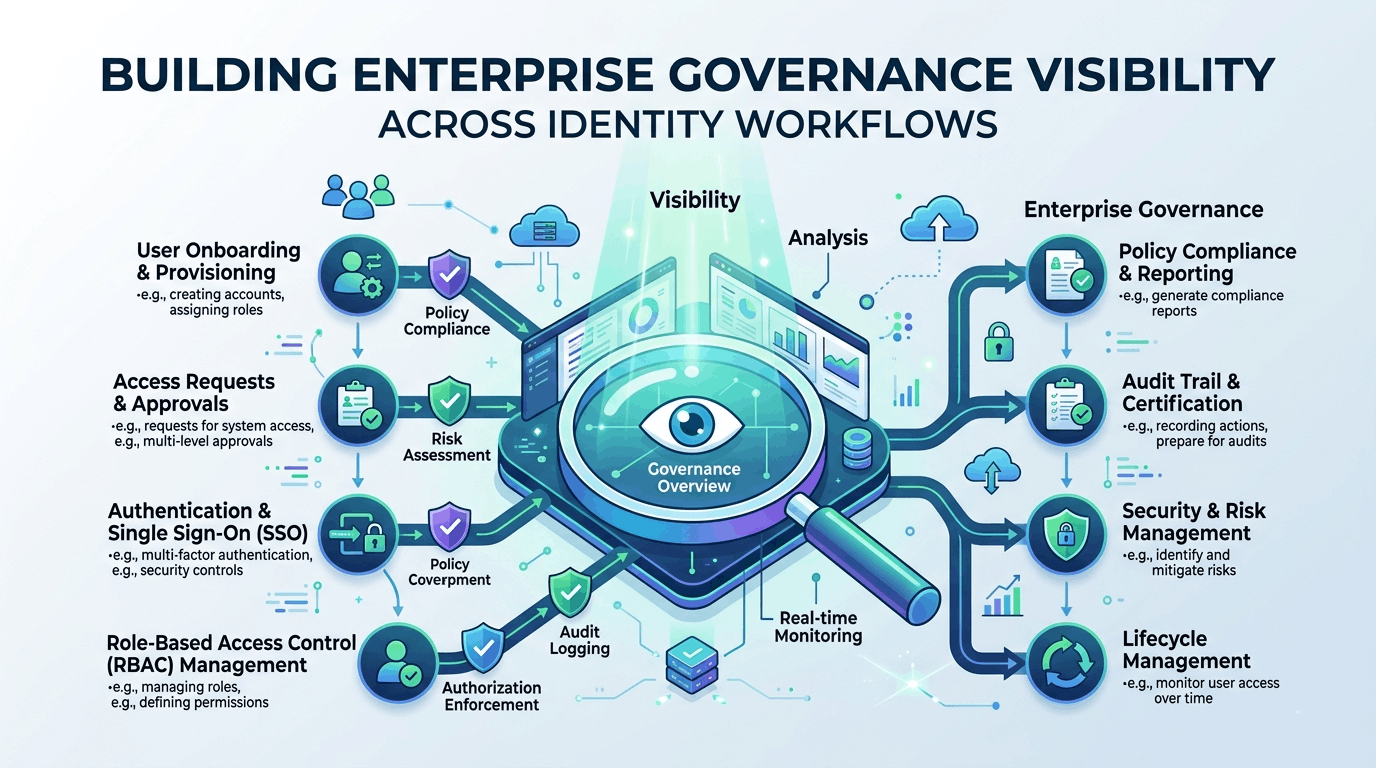
Enterprise organizations cannot govern what they cannot see.
As identity workflows expand across onboarding systems, procurement operations, approval chains, vendor networks, and distributed enterprise environments, operational visibility becomes increasingly difficult to maintain. Many organizations implement governance policies but fail to establish centralized visibility into how those policies operate across systems and workflows.
This creates a dangerous operational gap.
Without governance visibility, organizations lose the ability to measure consistency, detect workflow fragmentation, monitor policy enforcement, and identify operational exceptions before they become enterprise-wide risks.
This is why governance visibility has become foundational to modern business card governance strategies:
Governance visibility is no longer a reporting function alone. It is infrastructure.
Why Visibility Matters in Enterprise Governance

Most enterprise governance failures are not caused by missing policies. They are caused by invisible operational fragmentation.
As organizations scale, identity execution becomes increasingly distributed across:
– HR systems
– onboarding workflows
– procurement routing
– regional operations
– vendor ecosystems
– approval systems
– identity lifecycle processes
Without centralized visibility, organizations struggle to understand how these systems interact operationally.
For example, organizations implementing automated onboarding systems frequently discover inconsistent identity provisioning, approval delays, or disconnected procurement processes:
Governance visibility allows organizations to identify these issues before they scale operationally.
The Difference Between Governance Reporting and Governance Visibility
Many organizations incorrectly assume reporting equals visibility.
Reporting is retrospective.
Visibility is operational.
Traditional reporting often focuses on:
– workflow counts
– completed approvals
– operational throughput
– vendor activity summaries
Governance visibility goes significantly deeper.
It provides insight into:
– workflow consistency
– operational exceptions
– policy enforcement integrity
– audit traceability
– infrastructure alignment
– cross-system synchronization
Organizations implementing governance-first identity systems understand that operational control depends on continuous visibility across enterprise infrastructure:
Visibility transforms governance from static oversight into active operational intelligence.
Workflow Visibility Across Enterprise Systems
Enterprise identity workflows rarely operate within a single system.
Identity execution frequently intersects with:
– HRIS platforms
– procurement infrastructure
– ERP environments
– approval engines
– vendor systems
– compliance workflows
Disconnected visibility across these environments creates governance blind spots.
This is why enterprise integrations are critical to governance maturity:
Organizations must establish visibility across the entire operational ecosystem rather than isolated systems.
Without integrated governance visibility, fragmentation becomes difficult to detect.
How Governance Visibility Improves Identity Standardization
Standardization depends on operational transparency.
Organizations cannot maintain identity consistency if workflow deviations remain invisible.
Governance visibility allows organizations to identify:
– unauthorized template usage
– inconsistent title structures
– vendor deviations
– policy bypass activity
– regional workflow inconsistencies
– onboarding execution gaps
These operational inconsistencies are often the same issues discussed in:
Visibility creates the operational awareness necessary to maintain identity consistency at scale.
Auditability as a Visibility Framework
Auditability is one of the strongest components of governance visibility.
Enterprise organizations should be able to identify:
– who initiated requests
– who approved workflows
– Which systems were involved
– where policy exceptions occurred
– how workflows were executed
– which vendors fulfilled requests
Organizations implementing operational identity governance systems prioritize auditability because it transforms governance into measurable infrastructure:
Auditability allows organizations to validate governance operationally rather than theoretically.
Governance Visibility and Infrastructure Maturity
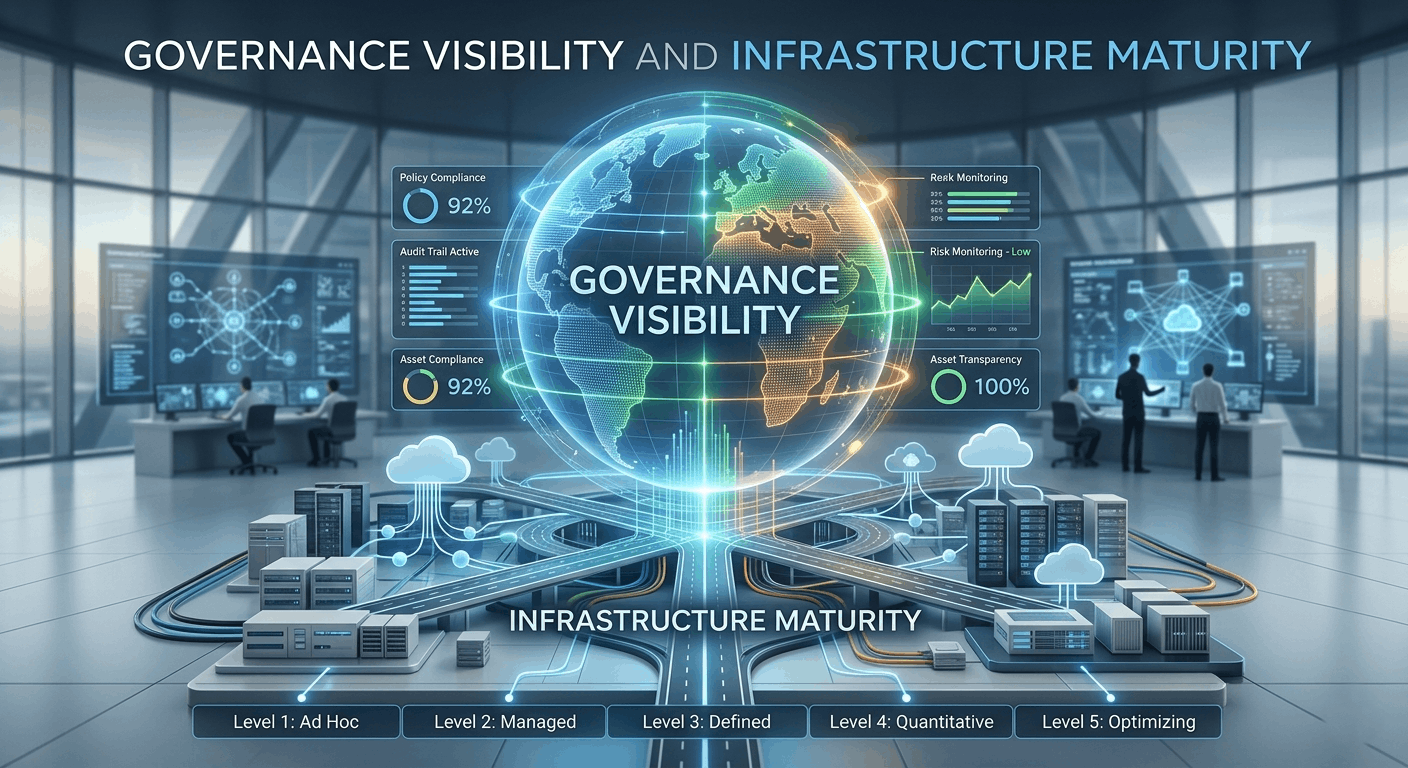
The most mature enterprise organizations treat governance visibility as infrastructure.
Visibility becomes embedded into:
– workflow systems
– onboarding automation
– procurement governance
– approval routing
– vendor orchestration
– operational reporting
– compliance monitoring
Organizations implementing enterprise identity infrastructure strategies achieve significantly stronger operational consistency because governance visibility is centralized across systems:
This level of visibility creates enterprise-wide operational alignment.
The Role of Governance Platforms
Governance platforms operationalize visibility across enterprise workflows.
Platforms such as Business Card Solutions systems enable organizations to:
– monitor workflow execution
– standardize operational visibility
– centralize audit reporting
– enforce governance policies
– integrate operational systems
– identify workflow inconsistencies proactively
This transforms governance visibility from isolated reporting into continuous operational intelligence.
Organizations gain infrastructure-level insight into identity execution across departments, systems, and distributed operational environments.
Governance Visibility Maturity Stages
Enterprise governance visibility evolves progressively.
Stage 1 — Limited Visibility
– fragmented workflows
– disconnected systems
– manual reporting
– decentralized vendors
– minimal auditability
Stage 2 — Centralized Reporting
– standardized workflows
– centralized templates
– approval reporting
– operational dashboards
Stage 3 — Integrated Governance Visibility
– HRIS synchronization
– procurement visibility
– workflow orchestration
– centralized auditability
– operational monitoring
Stage 4 — Governance Intelligence Infrastructure
– real-time operational visibility
– predictive governance analytics
– infrastructure-level reporting
– continuous compliance monitoring
– enterprise-wide workflow intelligence
At this level, governance visibility becomes a strategic operational capability.
Strategic Takeaway
Enterprise governance depends on visibility.
Organizations that cannot see operational inconsistencies cannot govern them effectively.
As enterprise identity workflows become increasingly distributed across systems and operational environments, governance visibility becomes essential for:
– operational consistency
– audit readiness
– workflow integrity
– policy enforcement
– infrastructure-level control
Organizations that invest in governance visibility gain operational intelligence across identity workflows, procurement systems, onboarding operations, and enterprise infrastructure.
Organizations that fail to establish visibility remain vulnerable to fragmentation, inconsistency, and hidden operational risk.
Governance is not simply about defining rules.
It is about maintaining continuous visibility into how those rules operate across the enterprise.