

Why Procurement Governance Depends on Connected Workflow Infrastructure
Introduction
Procurement governance has traditionally been associated with purchasing controls, approval hierarchies, vendor management, and spending oversight. While these capabilities remain important, modern enterprises now operate within significantly more complex operational environments.
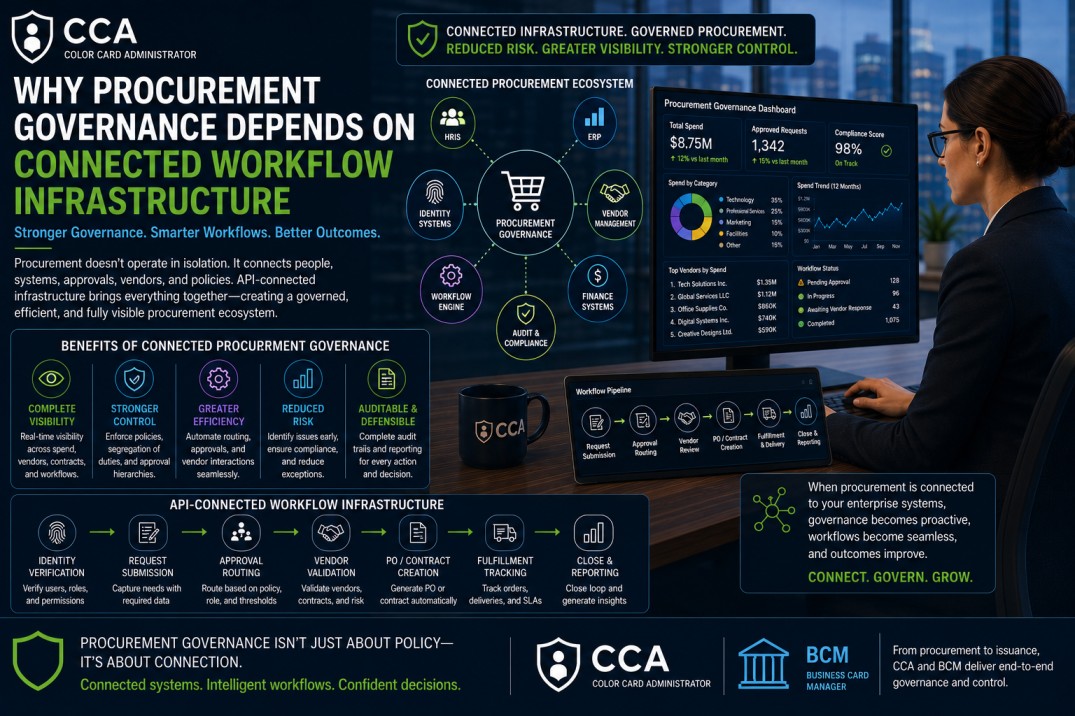
Procurement workflows intersect with onboarding systems, identity governance platforms, HRIS environments, ERP systems, vendor networks, operational reporting tools, and compliance frameworks. As a result, procurement governance can no longer function effectively through isolated processes and disconnected systems.
This is why connected workflow infrastructure has become essential.
Organizations increasingly require procurement workflows that operate as part of a broader governance ecosystem. Governance explains the category. Workflow orchestration explains the operating model. API integration explains how procurement governance becomes scalable, visible, and auditable across enterprise environments.
The Evolution of Procurement Governance

Traditional procurement governance focused primarily on controlling purchasing activity.
Organizations established approval chains, managed vendor relationships, monitored spending, and implemented compliance controls. While effective for smaller and less complex environments, these approaches often struggle as enterprise operations expand.
Modern procurement workflows now influence:
- employee onboarding
- business card provisioning
- identity lifecycle management
- vendor execution
- operational reporting
- compliance validation
- workflow automation
- enterprise governance initiatives
As procurement becomes more connected to broader business operations, governance requires a more integrated infrastructure.
Why Disconnected Procurement Systems Create Risk
Disconnected procurement systems often create visibility gaps.
Approval activity may occur in one platform while vendor fulfillment happens elsewhere. Identity-related procurement requests may be initiated through onboarding systems while spending controls remain isolated within ERP environments.
These disconnected processes create challenges such as:
- limited operational visibility
- approval bottlenecks
- vendor governance inconsistencies
- compliance risk
- auditability gaps
- manual reporting requirements
- workflow inefficiencies
Without connected workflow infrastructure, organizations struggle to maintain governance consistency across procurement activities.
The Role of Connected Workflow Infrastructure
Connected workflow infrastructure links procurement activity with the systems that influence enterprise operations.
This may include:
- HRIS platforms
- ERP environments
- identity governance systems
- business card governance platforms
- vendor fulfillment systems
- approval engines
- reporting infrastructure
- operational intelligence tools
Rather than operating independently, these systems work together through API-connected workflows and orchestration frameworks.
This creates a more coordinated governance environment.
How APIs Strengthen Procurement Governance
APIs provide the connectivity layer that enables procurement systems to communicate with other enterprise platforms.
Employee data can synchronize automatically with procurement workflows. Approval events can be tracked across systems. Vendor activity can be monitored through centralized reporting environments. Operational data can be aggregated into governance dashboards.
This reduces manual intervention while improving governance accuracy.
API-integrated procurement governance allows organizations to maintain stronger control over workflows while supporting scalability.
Vendor Governance and Connected Infrastructure
Vendor governance is a critical component of procurement governance.
Organizations need visibility into vendor performance, fulfillment activity, approval compliance, spending controls, and operational outcomes.
Connected workflow infrastructure provides centralized insight into vendor activity across enterprise environments.
This improves accountability while helping organizations identify operational improvements and governance risks.
Procurement Governance and Business Card Workflows
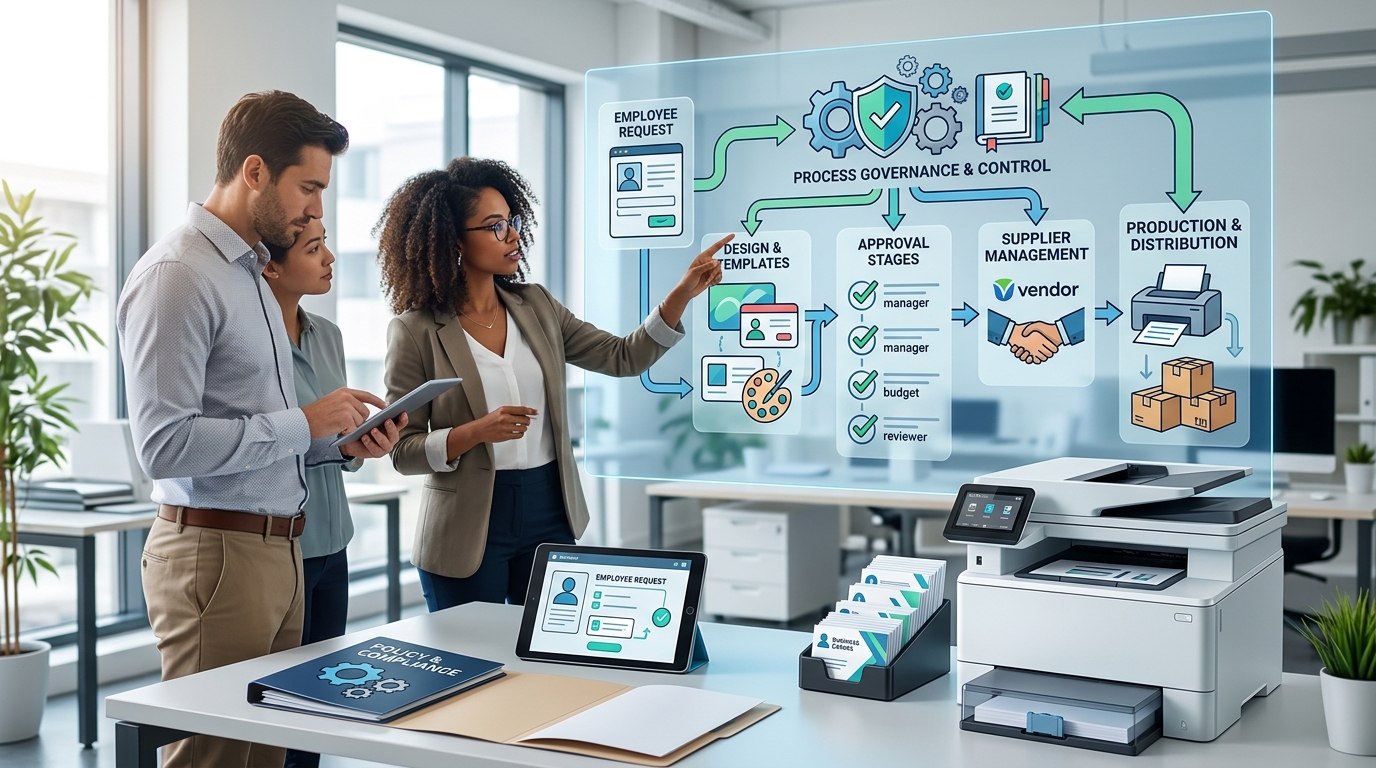
Business card governance provides an excellent example of how procurement workflows intersect with identity governance and operational infrastructure.
Business card requests frequently involve:
- employee identity data
- approval workflows
- procurement controls
- vendor fulfillment
- reporting requirements
- auditability records
When connected through APIs and workflow orchestration, these activities become part of a unified governance model rather than isolated operational processes.
Operational Visibility and Auditability
One of the greatest benefits of connected workflow infrastructure is visibility.
Organizations gain insight into:
- approval activity
- spending controls
- vendor performance
- workflow status
- identity-related procurement requests
- compliance requirements
- operational metrics
This visibility strengthens auditability while improving governance confidence.
Procurement Intelligence Through Workflow Orchestration
Workflow orchestration transforms procurement governance from a collection of isolated processes into a coordinated operational system.
Connected workflows enable organizations to track activity across systems, identify inefficiencies, improve compliance, and strengthen governance controls.
Operational intelligence becomes easier to achieve when procurement systems participate in a connected governance ecosystem.
API-Integrated Enterprise Business Card Printing and Management
Within API-Integrated Enterprise Business Card Printing and Management, procurement governance helps connect ordering, approvals, vendor activity, reporting, and audit visibility into a more controlled enterprise workflow.
Strategic Takeaway
Procurement governance increasingly depends on connected workflow infrastructure.
Organizations that integrate procurement systems with HRIS platforms, ERP environments, identity governance systems, business card workflows, reporting tools, and vendor ecosystems achieve stronger operational visibility, improved auditability, better vendor governance, and more scalable procurement controls.
Connected workflow infrastructure is not simply an operational enhancement.
It is a governance requirement.
As enterprises continue expanding their technology ecosystems, API-integrated procurement governance will become a foundational component of enterprise operational control.
For organizations that need business card ordering, approvals, reporting, and fulfillment execution, Business Card Manager provides the operational platform within the broader CCA ecosystem.
For enterprise buyers, procurement governance should be part of the business card platform decision. A modern business card system should help organizations manage approvals, vendor activity, order visibility, reporting, employee requests, and procurement accountability from request to fulfillment.
Explore how CCA supports API-integrated governance across procurement, identity, onboarding, workflow, and operational systems.