

The Role of APIs in Enterprise Identity Governance and Business Card Workflows
Introduction
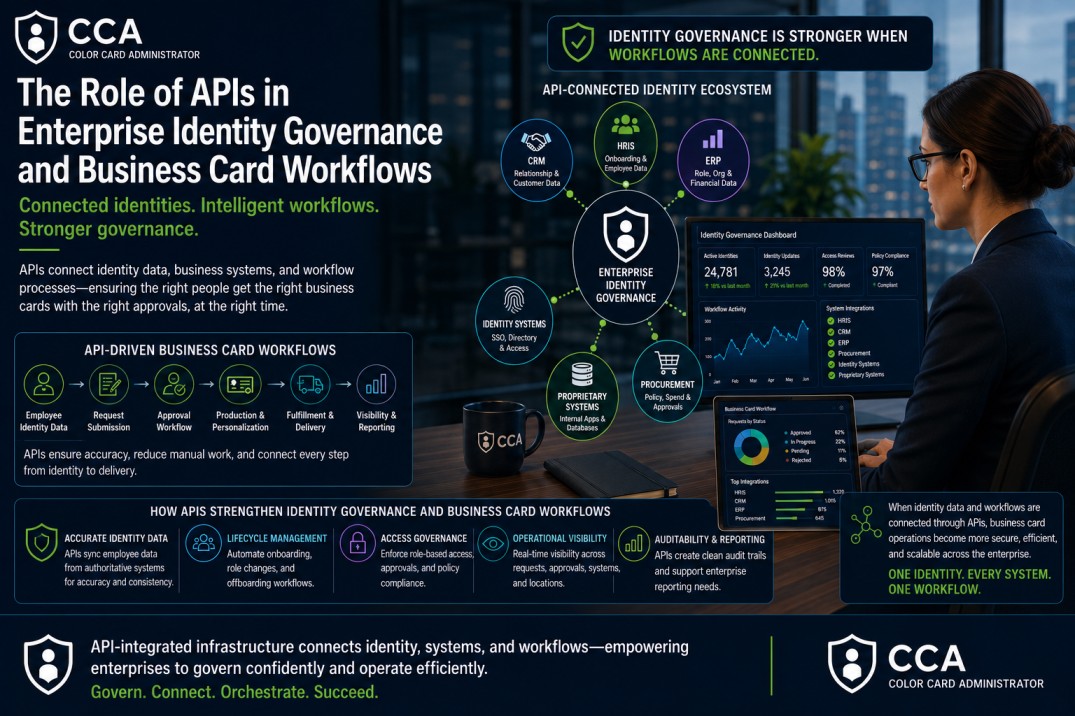
Enterprise identity governance has evolved far beyond directory management and employee provisioning. Modern organizations operate across complex ecosystems that include HRIS platforms, CRM systems, ERP environments, procurement applications, onboarding platforms, approval engines, reporting systems, and vendor networks.
As these environments become increasingly interconnected, organizations require a reliable way to move data, synchronize workflows, and maintain governance consistency across systems.
This is where APIs become essential.
Application Programming Interfaces (APIs) provide the connectivity layer that allows enterprise systems to communicate with one another. They enable identity information, workflow events, approvals, procurement activity, and operational data to move securely across enterprise environments.
For organizations focused on governance maturity, APIs are no longer optional technical tools. They are foundational components of enterprise identity infrastructure.
Within API-Integrated Enterprise Business Card Printing and Management, identity governance helps ensure that employee information, approval rules, brand standards, and reporting remain connected across the systems that support business card ordering and fulfillment.
Why This Matters for Enterprise Buyers
Then explain that buyers should evaluate whether a business card platform can connect with HRIS, CRM, ERP, procurement, approval workflows, and reporting systems
Why APIs Matter in Enterprise Governance
Governance depends on consistency.
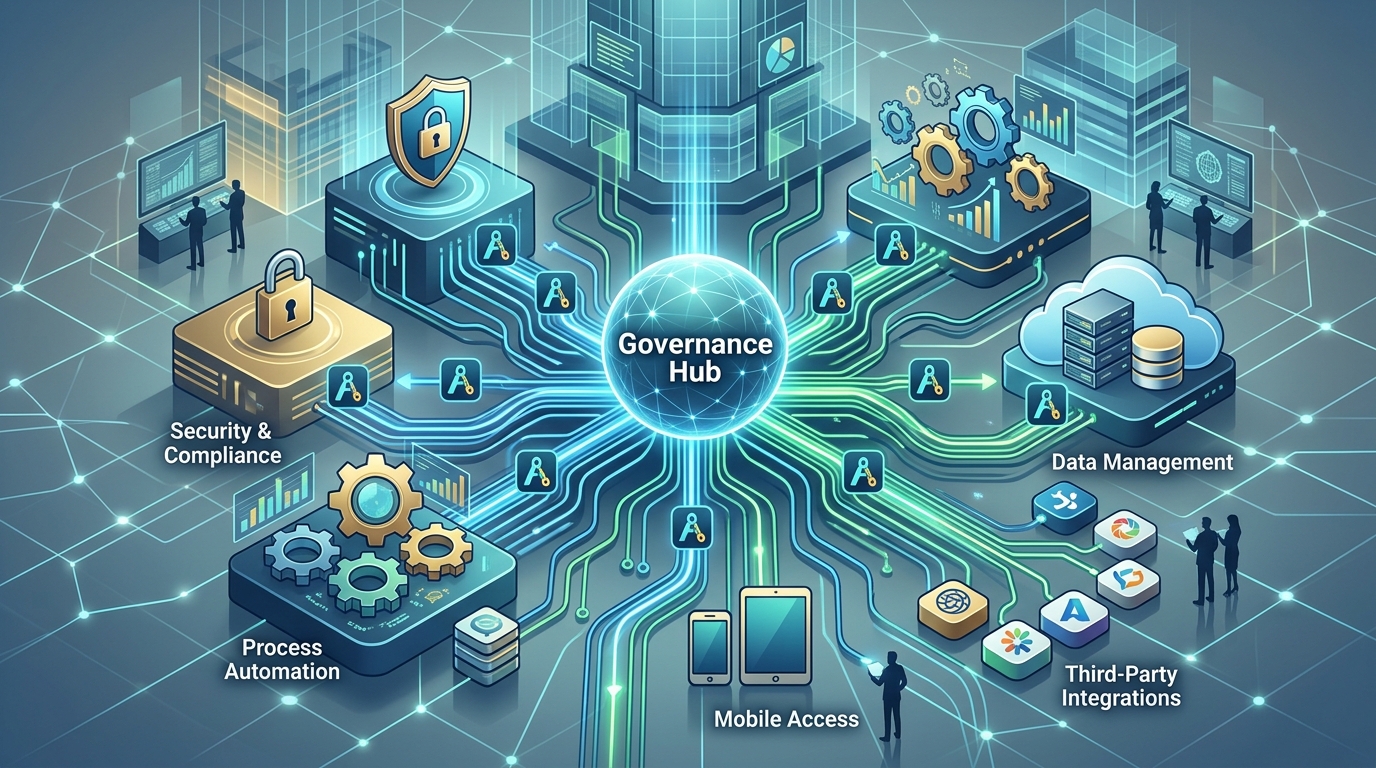
Organizations must ensure that employee identity information, approval structures, procurement controls, onboarding workflows, and operational policies remain aligned across systems.
Without APIs, these processes often depend on manual intervention. Employee records may be updated in one system while remaining outdated in another. Approval workflows may operate independently from procurement environments. Identity lifecycle changes may require manual updates across multiple platforms.
APIs eliminate these operational gaps by creating real-time connections between systems.
This improves governance consistency while reducing administrative complexity.
APIs and Identity Lifecycle Management
Identity lifecycle management is one of the most important governance functions within an enterprise.
Employees join organizations, change roles, move departments, relocate offices, receive promotions, and eventually leave the company. Every lifecycle event creates identity changes that must be reflected across operational systems.
APIs allow identity governance platforms to synchronize these changes automatically. When employee records are updated in HRIS environments, connected systems can receive those updates immediately.
This ensures that identity execution remains accurate throughout the employee lifecycle.
Business Card Workflows as Identity Infrastructure
Every business card carries employee identity, company branding, contact information, approval history, and procurement activity. When that information is managed manually, organizations lose visibility and control. APIs help connect business card workflows to the systems that already manage employees, departments, permissions, purchasing, and reporting.
That is more human and more immediate.
Business cards are often viewed as simple marketing assets. In reality, they represent enterprise identity.
Every business card contains employee information, organizational structure, approved branding, and customer-facing identity data. As identity changes, business card workflows must remain synchronized with authoritative enterprise records.
API-integrated business card governance enables organizations to connect employee identity systems directly with workflow infrastructure. This reduces manual administration while improving consistency and governance control.
The Role of APIs in Workflow Orchestration
Enterprise business card workflows frequently intersect with multiple systems.
Employee information originates in HRIS platforms. Customer-facing identity may connect to CRM systems. Procurement approvals may occur within ERP environments. Vendor fulfillment activity may generate operational reporting data.
APIs make workflow orchestration possible by connecting these systems together.
Rather than operating as isolated environments, organizations can create coordinated workflows that improve efficiency, visibility, and governance consistency.
Procurement Governance and APIs
Procurement governance becomes significantly stronger when systems are connected through APIs.
Organizations gain visibility into approval activity, spending controls, vendor execution, fulfillment status, and procurement compliance. API connections eliminate many of the reporting gaps that occur when procurement systems operate independently from governance workflows.
This improves both operational visibility and audit readiness.
Operational Visibility and Auditability
Enterprise governance requires visibility.
Leaders need to understand how requests move through workflows, who approved activity, where identity data originated, and how operational processes were executed.
APIs improve visibility by connecting workflow data across systems. This creates centralized operational intelligence that supports governance reporting, auditability, and decision-making.
The Strategic Value of API-Integrated Governance
The most important benefit of APIs is strategic alignment.
Organizations that connect identity governance, onboarding workflows, procurement systems, reporting environments, and business card workflows create stronger operational consistency across the enterprise.
This allows governance to function as infrastructure rather than as a collection of disconnected administrative activities.
As enterprises continue expanding their technology ecosystems, API-connected governance will become increasingly important for maintaining operational control.
Strategic Takeaway
APIs play a critical role in enterprise identity governance and business card workflows. They connect systems, synchronize identity data, improve workflow orchestration, strengthen procurement governance, enhance operational visibility, and support identity lifecycle management.
Organizations that invest in API-integrated governance infrastructure achieve stronger consistency, scalability, auditability, and operational control.
In modern enterprise environments, APIs are not simply integration tools.
They are governance enablers.
For enterprise buyers, API-connected governance matters because business card ordering often touches HR, procurement, marketing, sales operations, finance, and compliance. A modern platform should not only print cards. It should help organizations control employee data, approval workflows, brand standards, reporting, and system connectivity from request to fulfillment.
Explore how CCA supports API-integrated enterprise business card governance across workflow, procurement, identity, and operational systems.