

How API-Integrated Governance Improves Operational Visibility
Introduction
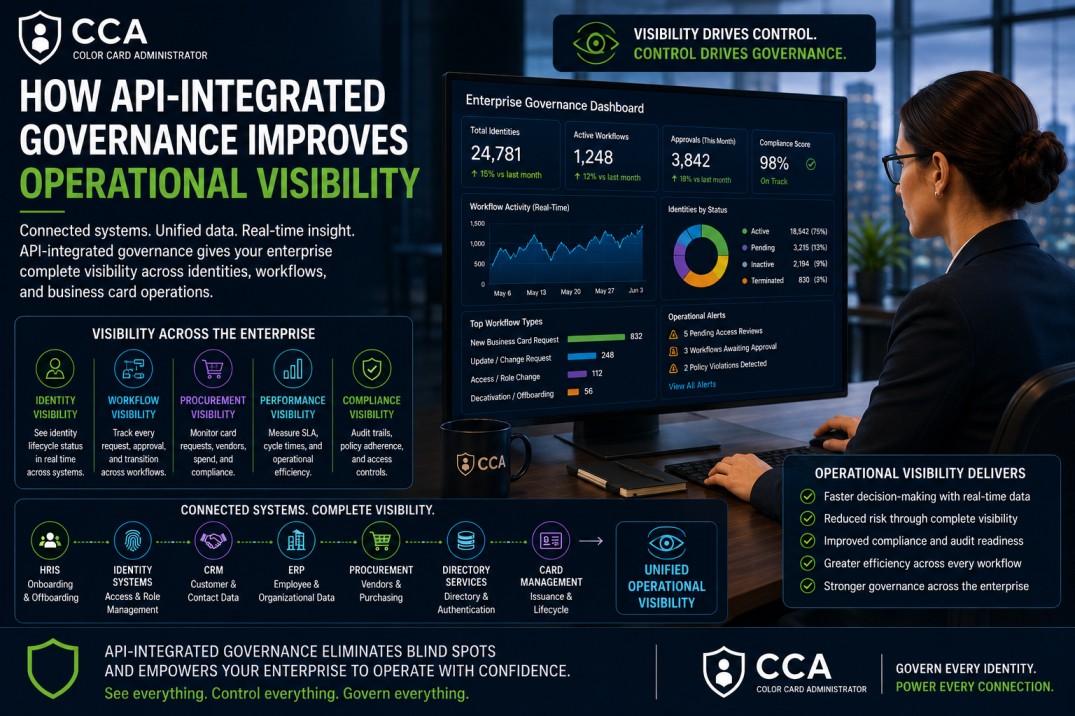
Operational visibility has become one of the most important requirements in modern enterprise governance. As organizations expand across departments, locations, systems, vendors, and workflows, leaders need a clear understanding of how identity, procurement, onboarding, and operational processes function across the enterprise.
Traditional reporting environments often provide fragmented snapshots of activity. However, enterprise governance requires something more comprehensive. Organizations need continuous visibility into workflows, approvals, identity changes, vendor execution, procurement controls, and operational performance.
This is where API-integrated governance creates strategic value.
APIs connect systems, synchronize data, and create a unified operational view across enterprise environments. Governance explains the category. Workflow orchestration explains the operating model. API integration explains how organizations achieve operational visibility at scale.
Why Operational Visibility Matters
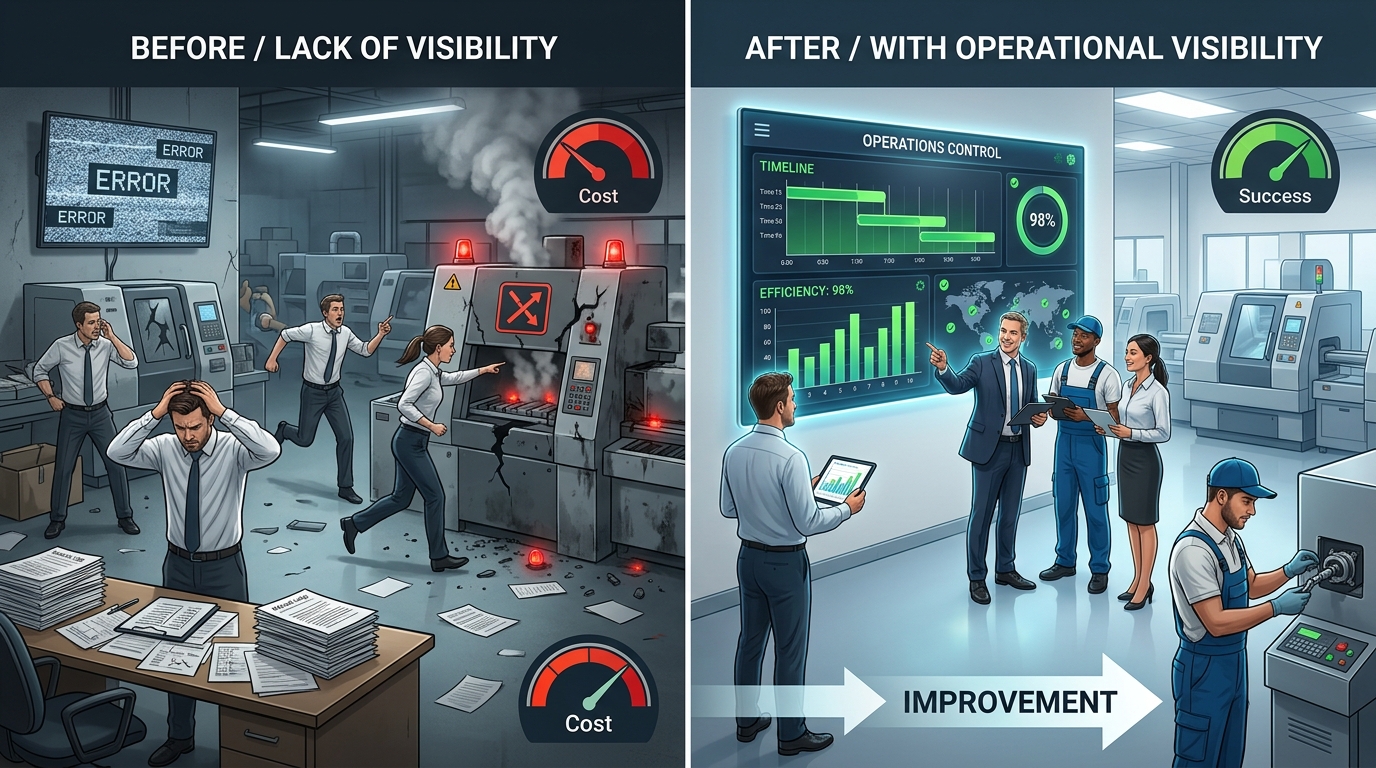
Most governance failures are not caused by missing policies. They are caused by invisible operational fragmentation.
Organizations frequently struggle to identify approval bottlenecks, onboarding delays, identity inconsistencies, vendor deviations, procurement inefficiencies, and workflow exceptions until those issues begin affecting business operations.
Without visibility, operational risk remains hidden.
API-integrated governance provides a mechanism for collecting and synchronizing information across systems. This allows organizations to monitor operational activity continuously rather than relying solely on periodic reporting.
The Connection Between APIs and Visibility
APIs enable operational visibility by connecting systems that would otherwise operate independently.
HRIS platforms contain employee identity information. CRM systems contain customer-facing data. ERP environments contain operational and financial controls. Procurement systems manage approvals and spending activity. Reporting platforms track performance metrics.
When these systems operate independently, visibility becomes fragmented.
API connections allow governance platforms to aggregate data across environments, creating a more complete operational picture.
This improves decision-making while supporting stronger governance maturity.
Identity Governance and Visibility
Identity governance depends heavily on visibility.
Organizations must understand how employee identity changes occur, how approvals are routed, how onboarding workflows operate, and how identity assets are provisioned across systems.
API-integrated identity governance allows organizations to track lifecycle events in real time. Employee onboarding, role changes, department transfers, promotions, and offboarding activities can be monitored across connected systems.
This strengthens governance consistency while improving operational awareness.
Business Card Governance as an Operational Signal
Business card workflows provide valuable operational signals.
Every request contains information about employee identity, approvals, procurement activity, fulfillment execution, and workflow performance.
When connected through APIs, business card governance becomes a source of operational intelligence. Organizations gain visibility into how identity workflows move through enterprise infrastructure and where operational improvements may be required.
Workflow Orchestration and Centralized Visibility
Workflow orchestration plays a critical role in operational visibility.
Enterprise workflows often span HR systems, procurement environments, vendor platforms, reporting tools, identity systems, and operational applications.
API-integrated workflow orchestration coordinates these systems while generating visibility across the entire workflow lifecycle.
Rather than viewing operational activity through isolated reports, organizations gain a centralized governance perspective.
Procurement Visibility and Governance
Procurement governance becomes significantly stronger when connected through APIs.
Organizations gain insight into approvals, spending controls, vendor activity, fulfillment status, compliance requirements, and procurement performance.
This visibility supports stronger auditability while helping organizations identify opportunities for operational improvement.
Auditability and Operational Intelligence
Auditability depends on visibility.
Organizations must be able to understand who initiated requests, who approved activity, which systems supplied data, how workflows executed, and how vendors fulfilled requests.
API-integrated governance creates a more complete audit trail by connecting operational data across systems.
Strategic Takeaway
API-integrated governance improves operational visibility by connecting enterprise systems into a coordinated governance infrastructure.
Organizations that connect HRIS platforms, CRM environments, ERP systems, procurement applications, identity systems, reporting tools, and business card workflows gain stronger visibility, auditability, workflow orchestration, and governance consistency.
Operational visibility is not simply about reporting.
It is about creating continuous operational intelligence across enterprise infrastructure.
For enterprise buyers, operational visibility should be part of the platform decision. A business card system should not only help teams place orders. It should help organizations understand request activity, approval status, employee changes, procurement behavior, brand compliance, reporting gaps, and system connectivity across the business card lifecycle.
For organizations that need business card ordering, approvals, reporting, and fulfillment execution, Business Card Manager provides the operational platform within the broader CCA ecosystem.