

Why Enterprise Identity Infrastructure Requires Cross-System Governance Coordination
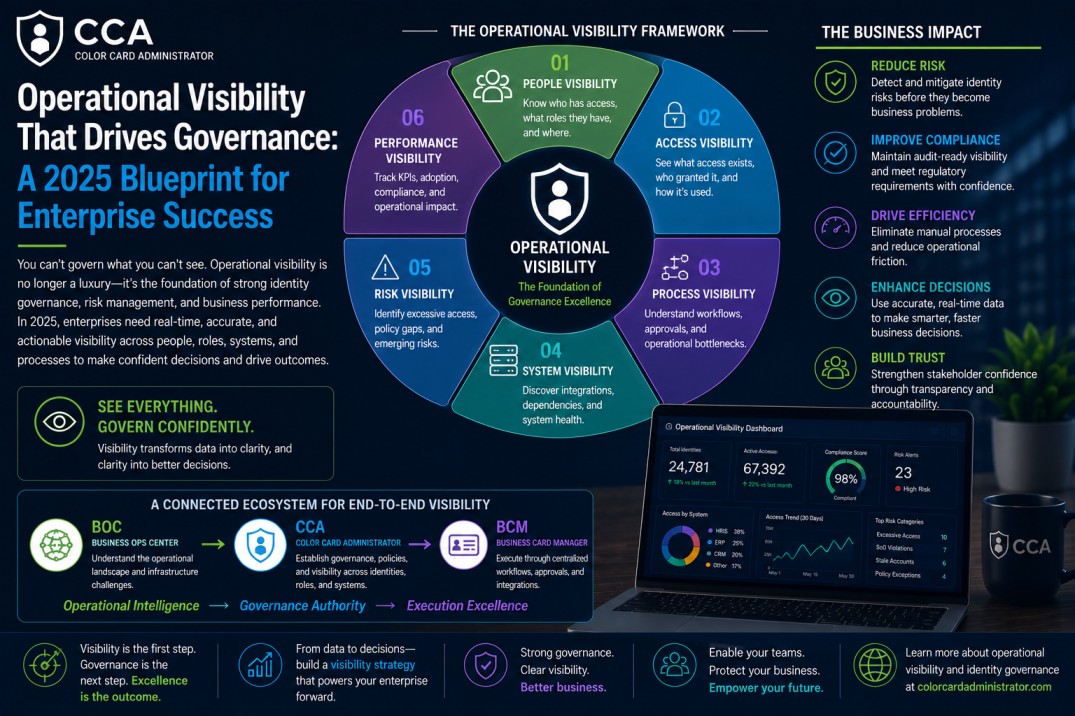
Introduction
Why Cross-System Governance Coordination Matters

Enterprise identity workflows frequently intersect with multiple operational systems simultaneously.
A single onboarding event may involve:
– HRIS synchronization
– approval routing
– procurement workflows
– vendor fulfillment
– identity provisioning
– compliance validation
– operational reporting
– auditability tracking
When these systems operate independently, organizations lose visibility into how identity
execution behaves operationally across the enterprise.
This fragmentation creates:
– inconsistent approvals
– disconnected onboarding execution
– identity standardization gaps
– auditability inconsistencies
– vendor governance failures
– operational blind spots
– policy enforcement weaknesses
Organizations implementing governance-first identity systems understand that operational coordination is essential for scalable governance infrastructure:
Without cross-system governance coordination, operational consistency becomes difficult to maintain at enterprise scale.
The Difference Between System Integration and Governance Coordination
Many organizations incorrectly assume system integration automatically creates governance coordination.
Integration alone is not sufficient.
Enterprise integrations primarily allow systems to exchange operational data.
Governance coordination ensures those systems behave consistently across enterprise workflows.
This distinction is critical.
A procurement system may successfully exchange data with an onboarding platform while operational approvals remain inconsistent. HR systems may synchronize employee information while vendor governance workflows remain fragmented. Reporting systems may collect operational metrics while auditability gaps continue across disconnected approval environments.
Organizations implementing enterprise governance visibility systems frequently discover that operational coordination matters more than simple system connectivity:
Governance coordination creates operational alignment across enterprise infrastructure.
How Governance Coordination Improves Identity Standardization
Identity standardization depends heavily on operational synchronization.
Organizations cannot maintain identity consistency if onboarding systems, procurement workflows, approval structures, vendor ecosystems, and reporting environments operate independently.
Cross-system governance coordination improves identity standardization by aligning:
– onboarding execution
– operational approvals
– vendor governance
– procurement workflows
– compliance validation
– auditability infrastructure
– operational visibility
Organizations implementing enterprise identity standardization strategies frequently discover that coordinated operational infrastructure significantly improves governance consistency:
This creates stronger enterprise operational control across identity systems.
The Role of Workflow Orchestration
Workflow orchestration plays a central role in governance coordination.
Enterprise identity execution rarely occurs within a single operational environment.
Identity workflows frequently intersect with:
– HR systems
– onboarding platforms
– procurement infrastructure
– operational approvals
– vendor ecosystems
– compliance workflows
– reporting systems
– identity lifecycle environments
Workflow orchestration aligns these systems operationally.
Organizations implementing enterprise workflow orchestration infrastructure gain significantly stronger governance consistency across enterprise environments:
Orchestration improves:
– operational synchronization
– onboarding alignment
– governance visibility
– auditability
– policy enforcement
– infrastructure coordination
This transforms identity execution into coordinated enterprise infrastructure.
Why Auditability Depends on Coordination
Auditability becomes fragmented when systems operate independently.
Enterprise organizations must be able to identify:
– how workflows are executed operationally
– which systems triggered provisioning
– how approvals interacted across workflows
– which vendors fulfilled requests
– where operational inconsistencies occurred
– how policies were enforced across systems
– which workflows bypassed governance controls
Organizations implementing governance visibility systems understand that auditability depends heavily on coordinated operational infrastructure:
Without coordination, auditability becomes fragmented across disconnected enterprise systems.
Enterprise Integrations and Governance Infrastructure
Enterprise integrations remain foundational to governance coordination.
Integrations connect governance workflows across:
– HR systems
– onboarding environments
– procurement infrastructure
– operational approvals
– vendor ecosystems
– reporting systems
– compliance environments
This is why enterprise integrations are foundational to governance infrastructure maturity:
Disconnected systems create fragmented operational governance.
Integrated and coordinated infrastructure creates enterprise operational intelligence.
Why API Integration Matters for Cross-System Governance
Cross-system governance coordination becomes stronger when enterprise identity workflows are connected through API-integrated infrastructure.
API-integrated business card governance infrastructure helps organizations coordinate HRIS, onboarding, procurement, approval workflows, vendor environments, reporting systems, compliance systems, and proprietary backends through a governed operating model.
Integration allows systems to exchange data. API-connected governance coordination helps ensure those systems support consistent workflow execution, approval visibility, auditability, and operational control across the enterprise.
How Governance Platforms Enable Coordination
Governance platforms operationalize cross-system coordination across enterprise environments.
Platforms such as Business Card Solutions systems allow organizations to:
– synchronize operational systems
– orchestrate onboarding workflows
– govern vendor ecosystems
– centralize operational visibility
– maintain auditability
– enforce workflow consistency
– coordinate enterprise identity execution
This transforms governance coordination from manual operational oversight into infrastructure-level operational control.
Governance Coordination Maturity Stages
Stage 1 — Fragmented Operational Systems
Organizations operate with disconnected onboarding workflows, isolated procurement systems, decentralized approvals, fragmented vendor governance, and limited operational visibility.
Stage 2 — Standardized Operational Processes
Organizations centralize onboarding coordination, standardize approvals, improve procurement visibility, and strengthen governance consistency.
Stage 3 — Integrated Governance Coordination
Organizations synchronize enterprise systems, orchestrate workflows, centralize auditability, coordinate vendor governance, and establish infrastructure-level operational visibility.
Stage 4 — Enterprise Governance Intelligence Infrastructure
Organizations achieve real-time governance coordination, predictive operational intelligence, continuous workflow orchestration, enterprise-wide operational synchronization, and infrastructure-level governance control.
At this stage, governance coordination becomes a strategic enterprise capability.
Strategic Takeaway
Enterprise identity infrastructure increasingly depends on cross-system governance coordination.
Organizations that operate onboarding workflows, procurement systems, operational approvals, vendor ecosystems, and compliance environments independently often struggle with fragmented operational visibility, inconsistent governance enforcement, auditability gaps, identity standardization failures, and operational blind spots.
As enterprise identity execution expands across distributed operational environments, governance coordination becomes essential for:
– operational synchronization
– governance visibility
– auditability
– workflow orchestration
– policy enforcement
– infrastructure-level operational control
Organizations that invest in cross-system governance coordination achieve significantly stronger enterprise governance consistency.
Governance coordination is no longer simply about connecting systems.
It is about orchestrating operational intelligence across enterprise identity infrastructure.