

Designing Governance-First Identity Systems for Enterprise Control
Introduction
Enterprise organizations do not achieve operational control by simply adding more processes. They achieve control by designing systems that enforce structure, consistency, and governance from the beginning. Identity systems are no exception. As enterprises expand across departments, locations, and integrated platforms, identity execution becomes increasingly complex, spanning multiple workflows, approval structures, systems, and stakeholders. Without intentional design, this growing complexity leads to fragmentation, inconsistent execution, and reduced visibility.
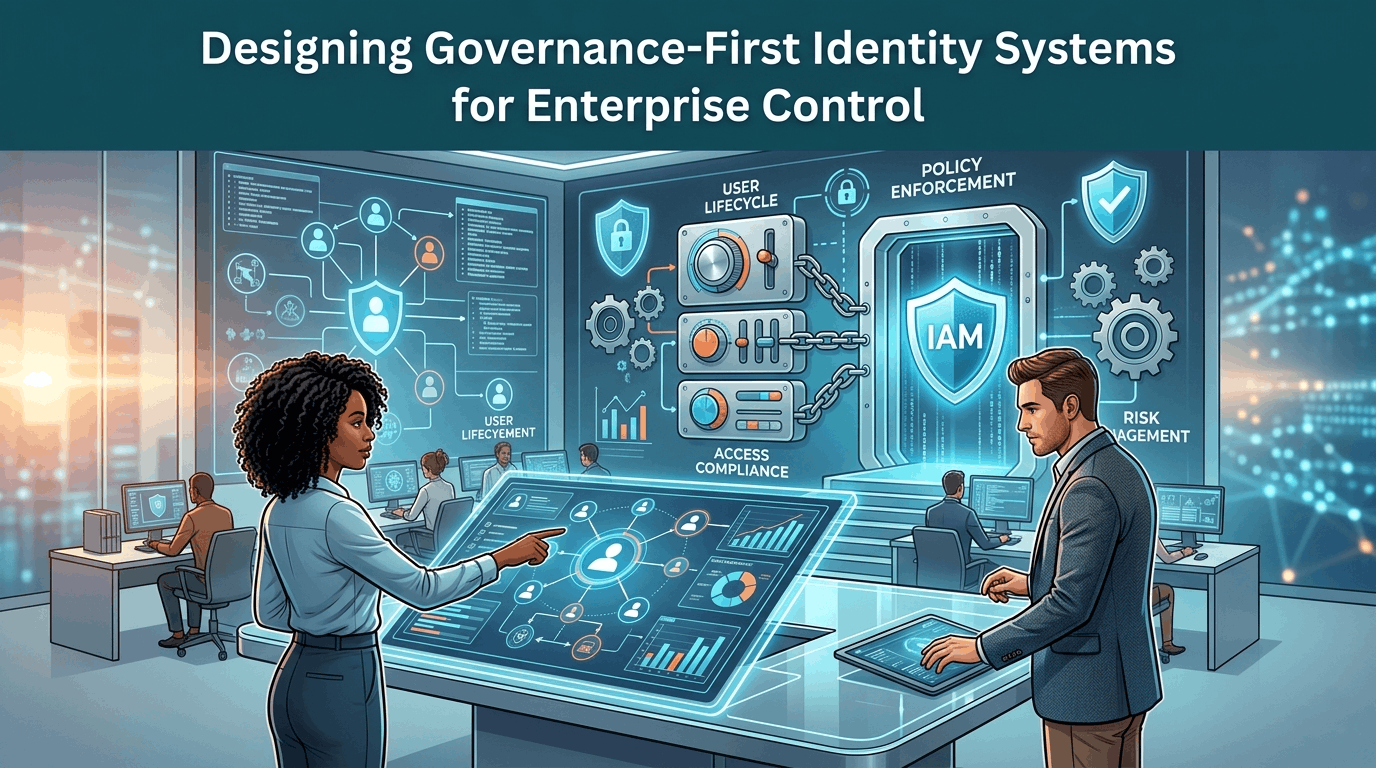
Governance-first design ensures that identity systems are structured from the ground up. Instead of treating governance as an afterthought or a corrective measure, governance becomes the operational foundation on which identity execution operates. This approach enables organizations to create systems that are scalable, auditable, and aligned with enterprise objectives.
Why Identity Systems Require Intentional Design

In many organizations, identity processes evolve organically over time. Teams build workflows around immediate operational needs, and new systems are introduced incrementally as the organization grows. While this approach may provide short-term flexibility, it does not scale effectively in complex enterprise environments. Over time, inconsistencies emerge between departments, workflows become disconnected, and maintaining control becomes increasingly difficult.
Identity systems interact with critical enterprise functions, including onboarding, procurement, compliance management, approval routing, and brand governance. When these systems are not designed cohesively, operational gaps begin to appear. These gaps create inefficiencies, increase the likelihood of errors, and reduce visibility into how identity execution is occurring across the organization.
Intentional design ensures that identity systems are aligned with enterprise infrastructure from the start. It defines how identity data flows across systems, how workflows operate between teams, and how outputs remain standardized and controlled. Rather than relying on reactive oversight, organizations establish proactive governance structures that support long-term operational stability.
What Governance-First Design Means
Governance-first design places structure, rules, and operational control at the center of identity systems. Every workflow, approval, and identity-related action follows a defined process that aligns with organizational policies and governance standards. This approach does not eliminate flexibility. Instead, it ensures flexibility operates within controlled boundaries.
In a governance-first environment, identity data originates from authoritative systems such as HR platforms or centralized enterprise databases. Workflows are standardized across departments to reduce inconsistencies and improve accountability. Access is role-based, ensuring users interact with systems according to predefined permissions and responsibilities.
Template governance also plays a critical role. Whether organizations manage business cards, digital assets, onboarding documentation, or approval workflows, all outputs remain standardized and aligned with brand and compliance requirements.
Most importantly, governance-first systems provide visibility. Every action is tracked, creating a complete audit trail that supports compliance monitoring, operational reporting, and long-term governance measurement.
Building Blocks of Governance-First Identity Systems
A governance-first identity system is built on several foundational components that work together to create a unified and controlled operational environment.
Data integrity serves as the starting point. Identity information must originate from reliable enterprise systems to ensure downstream workflows operate using accurate and standardized data.
Workflow standardization is equally important. Every identity-related action, from onboarding to asset provisioning, should follow a consistent process that reduces variability and strengthens accountability.
Access control defines how users interact with the system. Through role-based permissions, organizations ensure that actions occur within clearly defined governance boundaries.
Template governance ensures that all identity outputs remain consistent across locations, departments, and operational environments. This minimizes brand inconsistency and operational fragmentation.
Finally, audit reporting and operational visibility provide organizations with measurable insight into identity execution. Enterprises can monitor workflows, identify operational trends, and improve governance performance using centralized reporting systems.
Operational Impact of Governance-First Systems
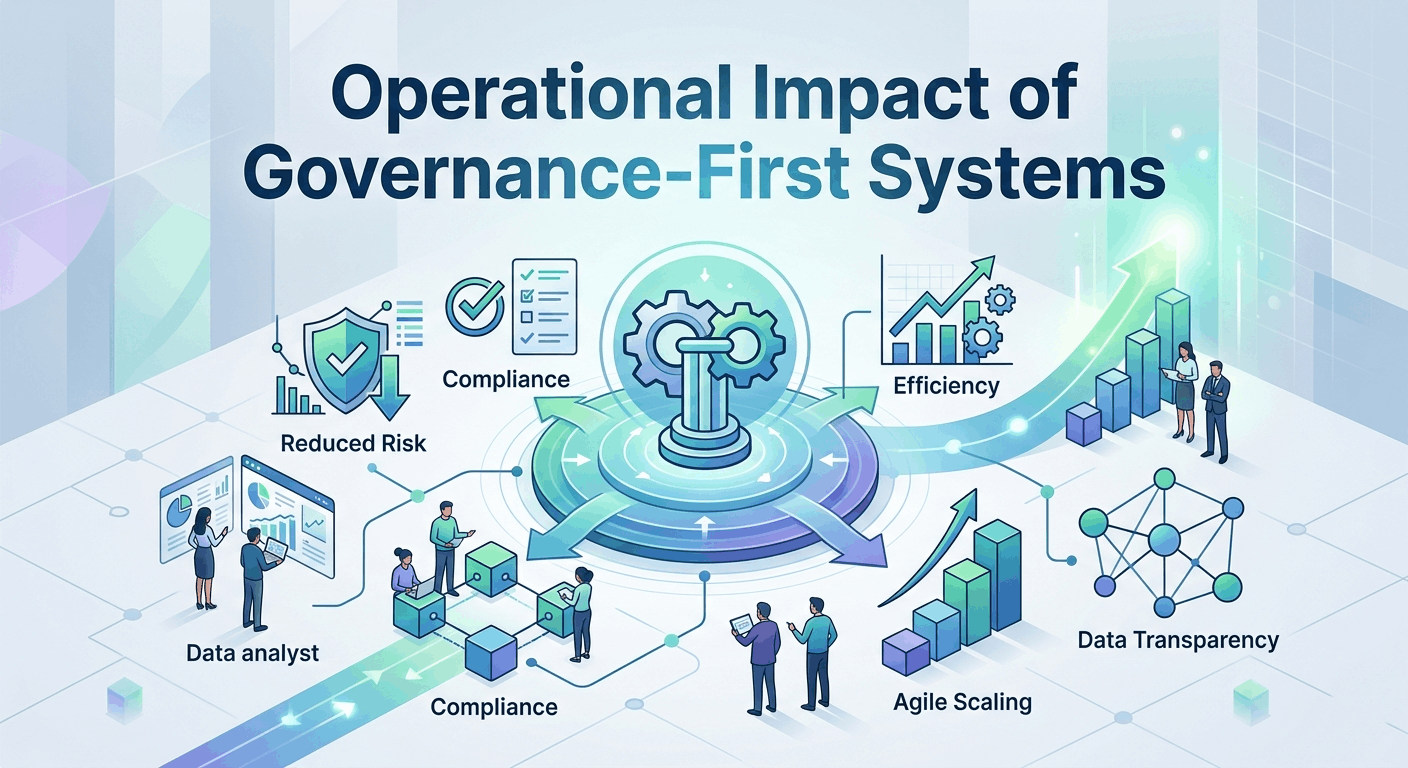
When identity systems are designed with governance at their core, organizations experience significant operational improvements. Workflows become more predictable, approvals become more consistent, and operational outcomes become easier to manage.
Instead of relying heavily on manual oversight, the system itself enforces governance policies automatically. This reduces administrative burden while improving efficiency and compliance alignment. Errors decrease because operational variability is minimized through structured workflows.
Governance-first systems also improve scalability. As organizations expand, the existing governance structure can support additional complexity without losing operational control. This allows enterprises to grow while maintaining consistency across workflows and systems.
Governance as a Design Principle
Governance is often treated as a secondary layer applied after systems are implemented. In modern enterprise environments, this approach is no longer sufficient. Governance must be embedded directly into the system design process.
By treating governance as a design principle, organizations ensure operational control exists from the beginning rather than relying on reactive enforcement later. Identity systems become aligned with broader enterprise architecture, compliance requirements, and operational objectives.
Strategic Takeaway
Enterprise identity systems must be intentionally designed, not assembled through disconnected workflows and reactive processes. Governance-first design ensures that identity execution remains structured, scalable, consistent, and auditable across the organization.
Organizations adopting this approach gain stronger operational control, reduced risk, improved compliance visibility, and greater workflow efficiency. In contrast, organizations relying on fragmented or reactive governance models often struggle to maintain consistency as operational complexity increases.
Control is not achieved through oversight alone.
It is achieved through design.