

Enterprise Policy Intelligence: Turning Governance Rules into Strategic Business Advantage
Introduction
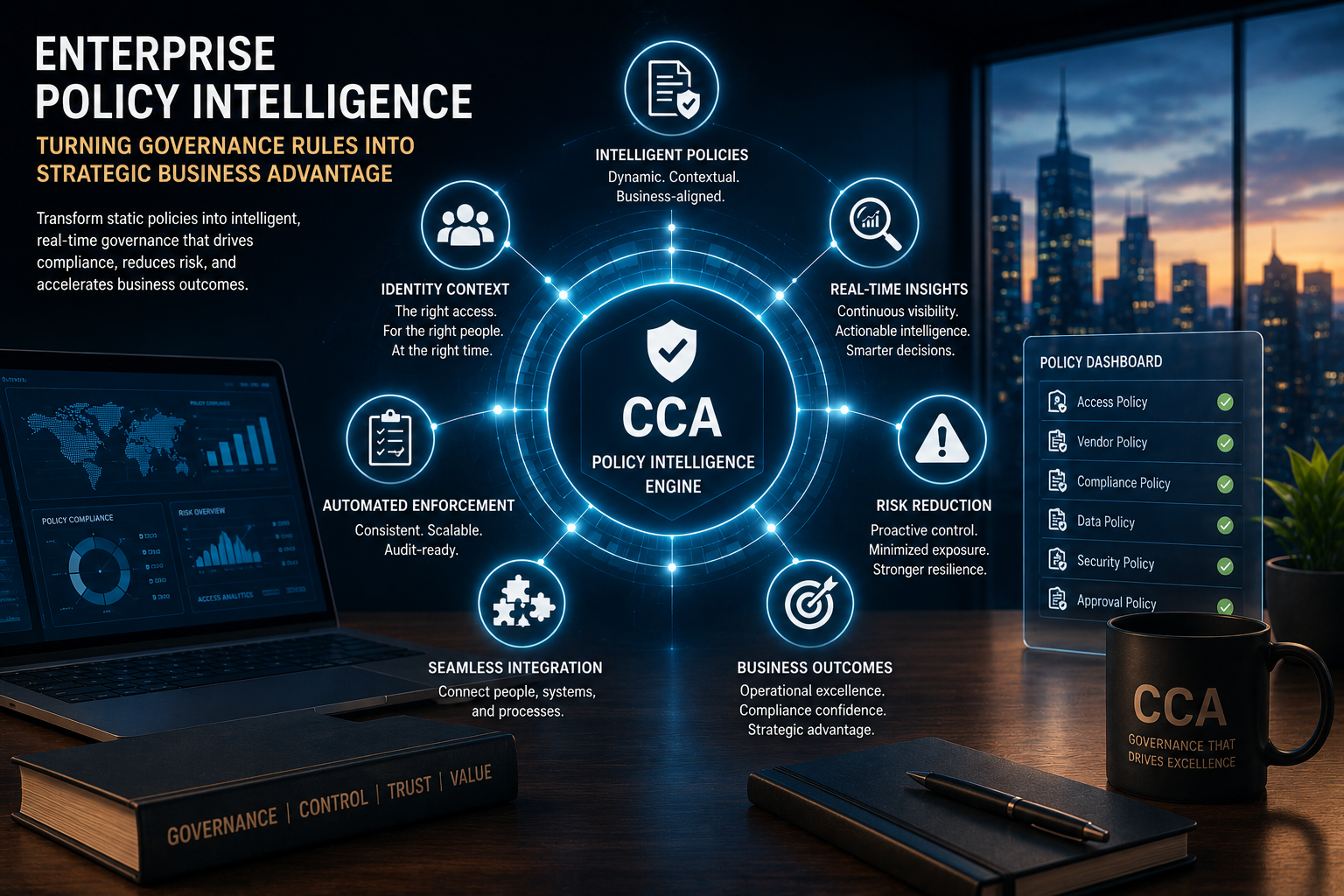
Modern enterprises manage thousands of operational policies governing approvals, business identities, vendors, security, branding, compliance, and lifecycle events. While policies are often documented, they are rarely executed consistently across every business application. This disconnect creates governance gaps that increase operational risk and reduce executive confidence. Enterprise policy intelligence bridges this gap by converting static governance documentation into dynamic, executable business rules. Color Card Administrator (CCA) provides the enterprise governance infrastructure that enables organizations to operationalize policies across every identity-driven business process.
Why Policies Must Become Executable
Traditional governance relies heavily on manuals, periodic audits, spreadsheets, and departmental interpretation. As organizations scale globally, these approaches become difficult to manage. Policy intelligence embeds governance directly into workflows, ensuring every request, approval, and operational decision automatically follows enterprise standards. Governance becomes continuous instead of reactive.
Identity-Driven Policy Intelligence
Identity provides the context required to enforce business rules. Employee roles, reporting structures, regional regulations, departments, vendors, and organizational hierarchies all influence how policies should be applied. By combining trusted identity data with centralized policy engines, enterprises achieve consistent governance regardless of which application initiates the request.
CCA as the Enterprise Policy Engine
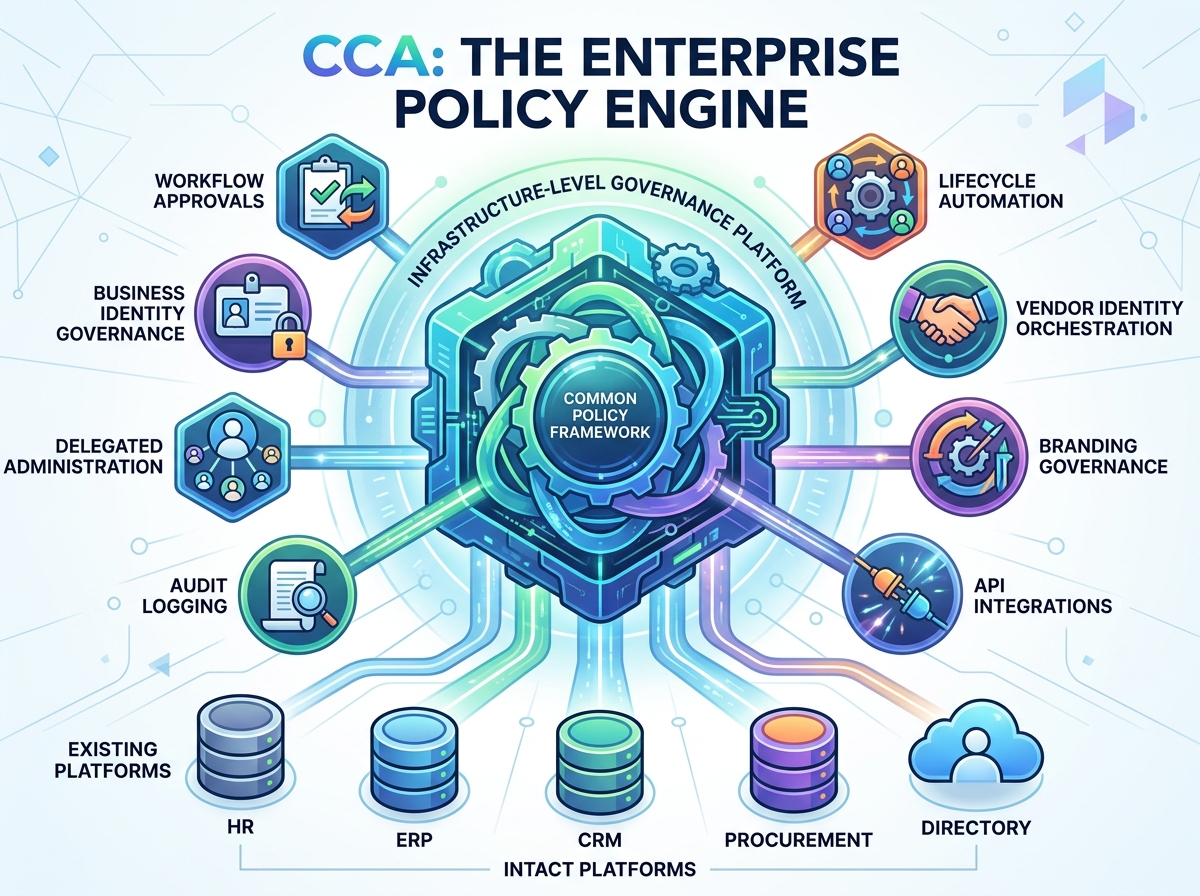
CCA functions as an infrastructure-level governance platform rather than an isolated operational application. It coordinates workflow approvals, business identity governance, delegated administration, vendor identity orchestration, lifecycle automation, branding governance, audit logging, and API integrations through a common policy framework. Existing HR, ERP, CRM, procurement, and directory platforms remain intact while CCA introduces consistent enterprise governance across them.
Business Value
Policy intelligence improves operational consistency, accelerates onboarding, strengthens compliance, reduces manual administration, improves vendor accountability, standardizes business identity execution, simplifies audits, and delivers executive-level visibility. Organizations can respond faster to regulatory changes because policy updates propagate centrally across connected business processes.
Implementation Roadmap
Successful implementation begins with authoritative identity sources, enterprise policy mapping, workflow standardization, API-based integration, governance dashboards, and continuous policy monitoring. Organizations should measure governance maturity using operational metrics such as approval turnaround time, policy adherence, audit readiness, and lifecycle efficiency.
Preparing for Intelligent Enterprises
AI-assisted operations require reliable governance foundations. Intelligent systems must make decisions using trusted identity information and standardized policies. Enterprises with centralized policy intelligence will adopt automation more confidently because governance remains transparent, explainable, and measurable across every operational workflow.
Conclusion
Enterprise governance delivers maximum value when policies become active participants in business execution instead of static documentation. Color Card Administrator (CCA) enables organizations to transform enterprise policies into operational intelligence that improves compliance, consistency, resilience, and strategic decision-making across the entire business ecosystem.