

Adaptive Enterprise Governance: Building Self-Governing Business Operations Through Identity-Centric Control
Introduction
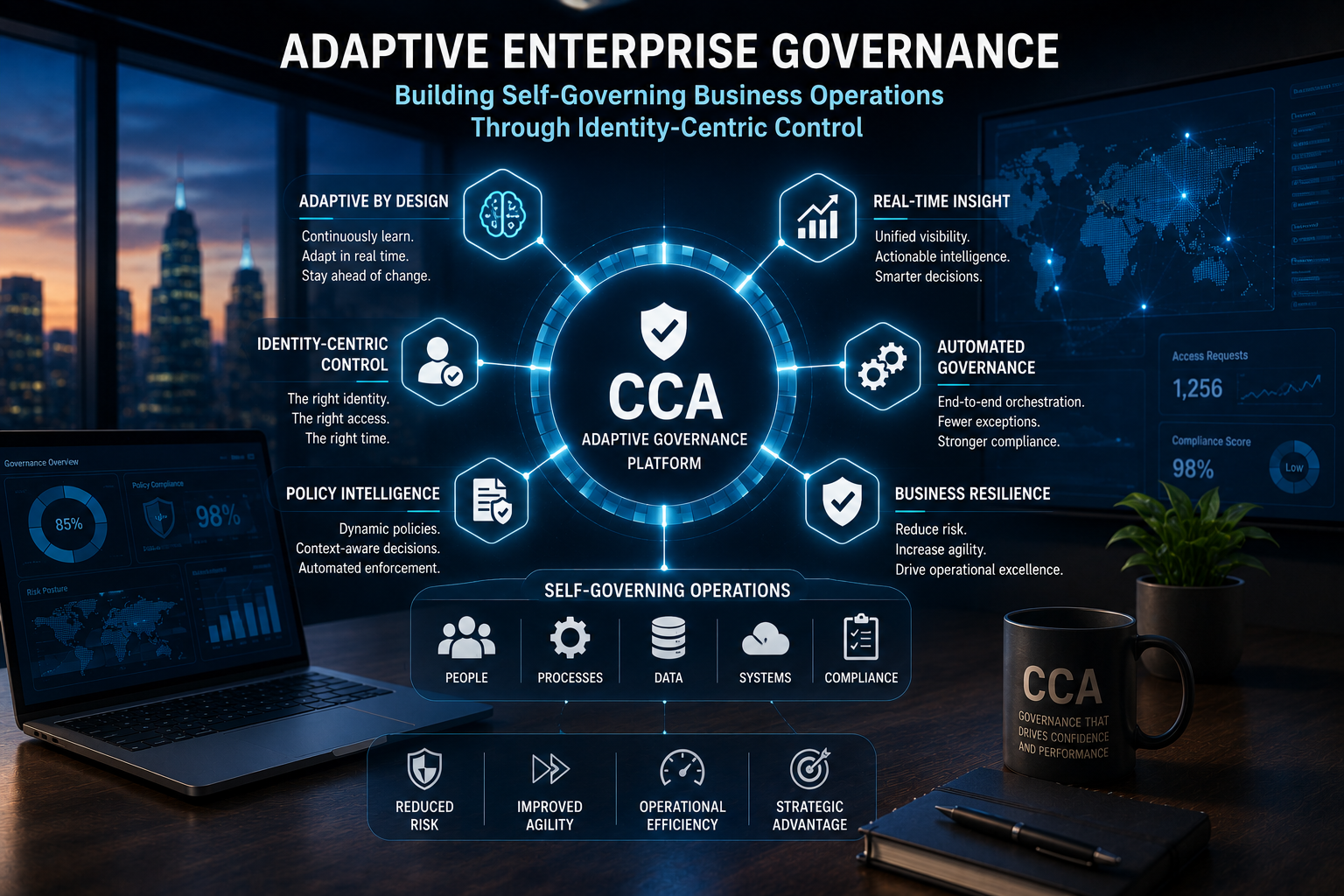
Enterprise governance is evolving from static policies and periodic audits to continuous, adaptive governance that responds to organizational change in real time. As enterprises adopt cloud platforms, AI-assisted workflows, and globally distributed operating models, governance must become dynamic, scalable, and identity-centric. Color Card Administrator (CCA) provides an infrastructure-level governance layer that enables enterprises to embed policy enforcement directly into operational execution.
Why Adaptive Governance Matters
Business structures change continuously through acquisitions, reorganizations, regulatory updates, vendor onboarding, and workforce mobility. Governance models embedded separately inside individual applications struggle to keep pace. Adaptive governance centralizes policy management so operational changes propagate consistently across connected business systems.
Identity-Centric Control
Identity provides the trusted context required for every operational decision. Employee roles, organizational hierarchies, regional regulations, approval authority, vendor relationships, and lifecycle status determine how enterprise policies should be enforced. CCA orchestrates these decisions through a unified governance model rather than isolated application logic.
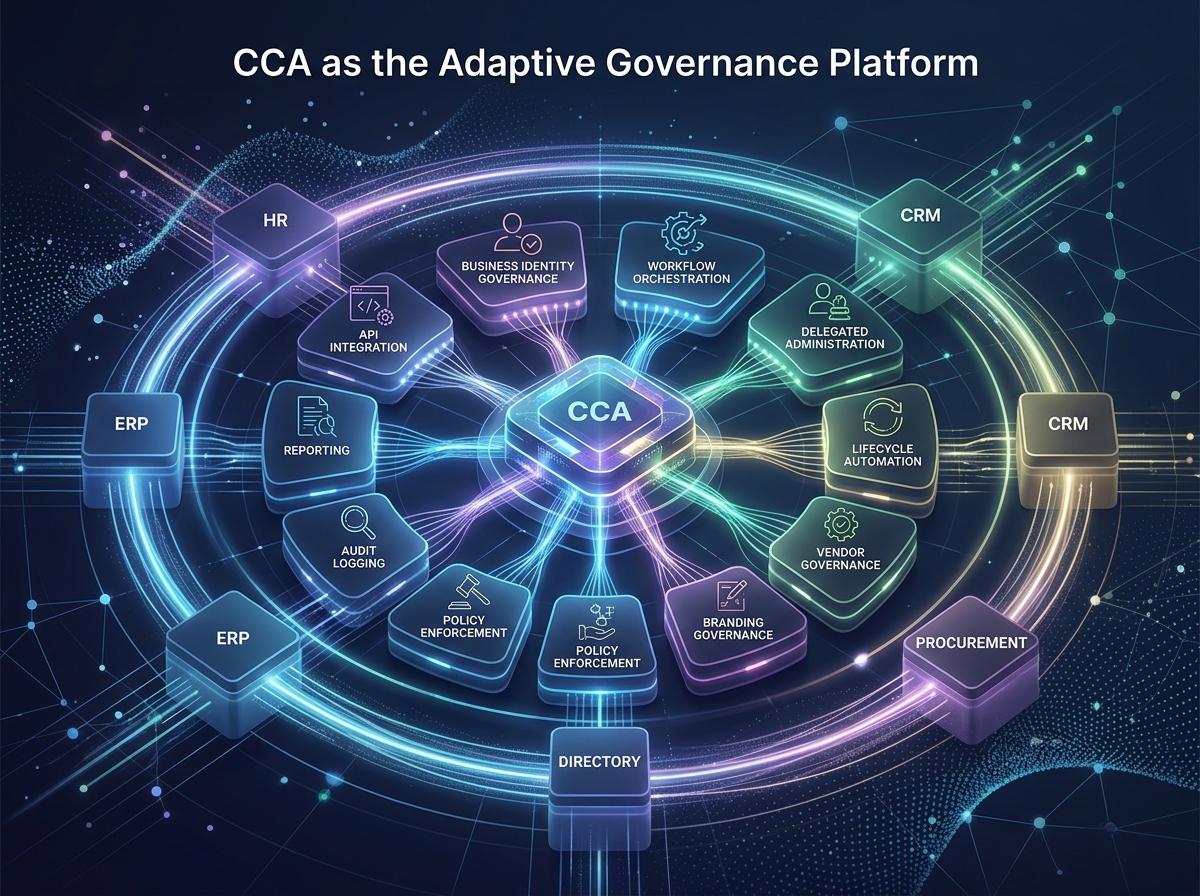
CCA as the Adaptive Governance Platform
It coordinates business identity governance, workflow orchestration, delegated administration, lifecycle automation, vendor governance, branding governance, policy enforcement, audit logging, reporting, and API integration. Existing HR, ERP, CRM, procurement, and directory platforms continue to operate while CCA introduces consistent enterprise governance across them.
Business Outcomes
Organizations benefit from faster policy implementation, stronger compliance, simplified audits, improved operational resilience, better executive visibility, standardized approvals, reduced administrative effort, and greater confidence in enterprise-wide execution. Governance becomes an enabler of transformation rather than a barrier to innovation.
Implementation Framework
Begin with authoritative identity sources, define reusable governance policies, map enterprise workflows, integrate core business systems, automate lifecycle events, establish governance dashboards, and continuously monitor operational performance. A phased rollout minimizes disruption while steadily increasing governance maturity.
Future Direction
The next generation of digital enterprises will rely on autonomous workflows, predictive analytics, and AI-assisted decision-making. These capabilities require transparent governance, trusted identity, and centralized policy orchestration. Adaptive governance ensures innovation can scale without sacrificing accountability or compliance.
Conclusion
Adaptive governance transforms enterprise policy from static documentation into an intelligent operational capability. Color Card Administrator (CCA) enables organizations to establish identity-driven governance that continuously aligns people, processes, vendors, and technology with enterprise objectives.