

Centralized Business Card Ordering Platform for Companies: The Enterprise Advantage
Introduction
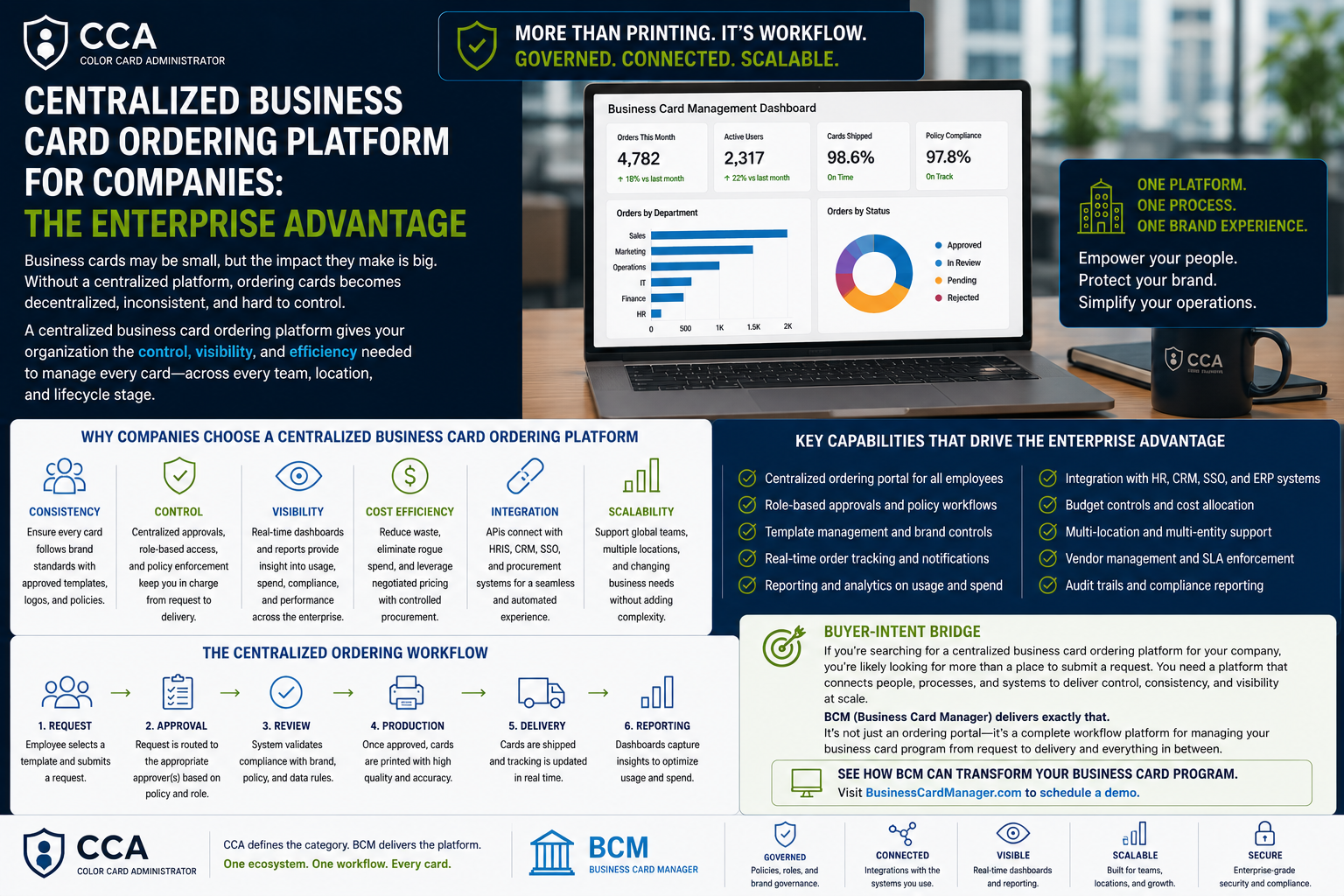
As organizations grow, business card ordering becomes significantly more complex than simply placing a print order. What begins as a straightforward request process often evolves into a workflow that involves multiple departments, approval structures, vendors, reporting requirements, and governance controls.
Employees need an easy way to request cards. Managers need visibility into approvals. Marketing teams must protect brand standards. Procurement teams require oversight of spending and vendor performance. Leadership teams need reporting and operational visibility.
Without a centralized approach, business card ordering frequently becomes fragmented across spreadsheets, emails, local vendors, manual approvals, and disconnected systems.
This is why enterprise organizations are increasingly adopting centralized business card ordering platforms.
A centralized platform transforms business card ordering from an administrative task into a governed operational workflow that supports consistency, visibility, scalability, and enterprise control.
- Business card printing is the transaction.
- Business card management is the workflow.
- Governance is the control layer.
- API integration is the differentiator.
Why Traditional Ordering Models Create Problems
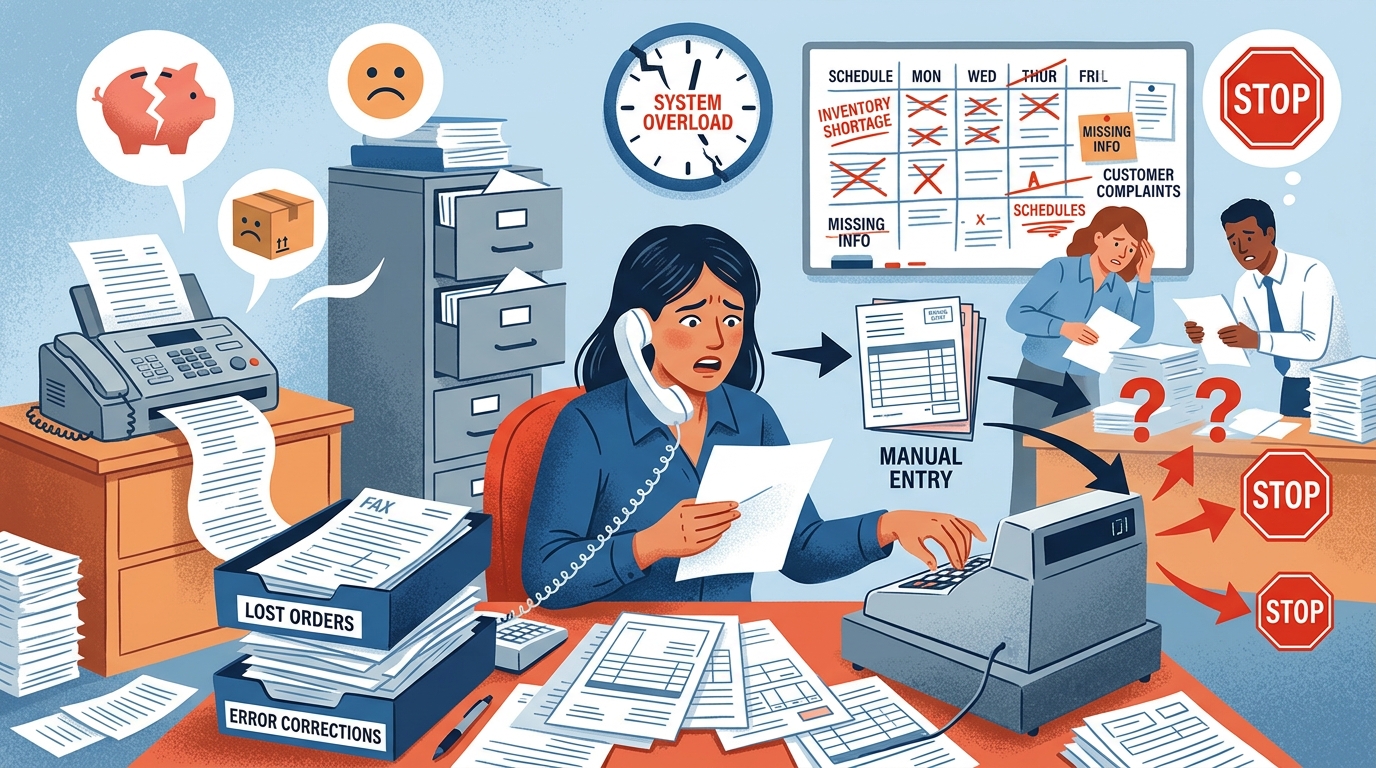
Many organizations continue to manage business card requests through methods that were never designed for scale.
Requests are submitted through email. Approvals occur manually. Vendors operate independently. Reporting requires manual effort. Employee information must be updated in multiple places.
These processes often create operational inefficiencies that become increasingly difficult to manage as organizations expand.
Approval delays, inconsistent branding, duplicate effort, limited visibility, and procurement challenges become common.
The problem is not ordering cards.
The problem is managing the workflow surrounding the order.
What Is a Centralized Business Card Ordering Platform?
A centralized business card ordering platform provides a single operational environment where organizations can manage the entire business card lifecycle.
Employees access one system for requests. Templates are centrally managed. Approvals are automated. Vendors are coordinated through a unified workflow. Reporting is available in real time.
Rather than relying on disconnected processes, organizations gain a structured framework that supports governance and operational consistency.
The Benefits of Centralized Ordering
One of the most significant advantages of centralized ordering is consistency.
- Every employee follows the same process.
- Every request follows approved workflows.
- Every template aligns with brand standards.
- Every transaction becomes visible.
Centralized platforms also reduce administrative effort by eliminating manual coordination and duplicate processes.
As organizations scale, these benefits become increasingly valuable.
Employee Experience and Self-Service
Modern employees expect digital self-service experiences.
They should not need to navigate multiple systems, search for templates, or send emails to request business cards.
A centralized platform provides a guided experience that simplifies ordering while ensuring compliance with organizational policies.
Employees gain convenience while administrators maintain control.
Approval Workflow Automation
Approval management is often one of the most time-consuming aspects of business card operations.
Different organizations require different approval structures based on role, department, geography, spending thresholds, or compliance requirements.
Business card approval workflow software automates routing and approval management.
Requests are automatically directed to the appropriate stakeholders. Status remains visible. Audit records are maintained.
This improves accountability while reducing delays.
Brand Governance and Template Control
Brand governance is another major advantage of centralized platforms.
Without centralized control, organizations often struggle with outdated templates, inconsistent branding, unauthorized modifications, and identity inaccuracies.
A centralized business card ordering platform allows organizations to define approved templates, control editable fields, manage branding centrally, and enforce consistency across all locations.
This protects both brand integrity and operational efficiency.
Operational Visibility and Reporting
Enterprise organizations increasingly require operational visibility.
Leaders want to understand how many cards are being ordered, how approvals are performing, which vendors are fulfilling requests, and how spending trends are evolving.
A centralized platform provides reporting capabilities that transform business card ordering into a measurable operational process.
Reporting supports better decision-making while strengthening governance maturity.
Procurement Visibility and Vendor Governance
Business card programs often involve procurement teams and external suppliers.
Without centralized visibility, organizations may struggle to monitor spending, evaluate vendor performance, manage contracts, or measure fulfillment outcomes.
Centralized platforms create stronger alignment between procurement governance and business card operations.
Vendor performance becomes measurable. Spending becomes transparent. Reporting improves.
This supports stronger operational control.
The Importance of API Integration
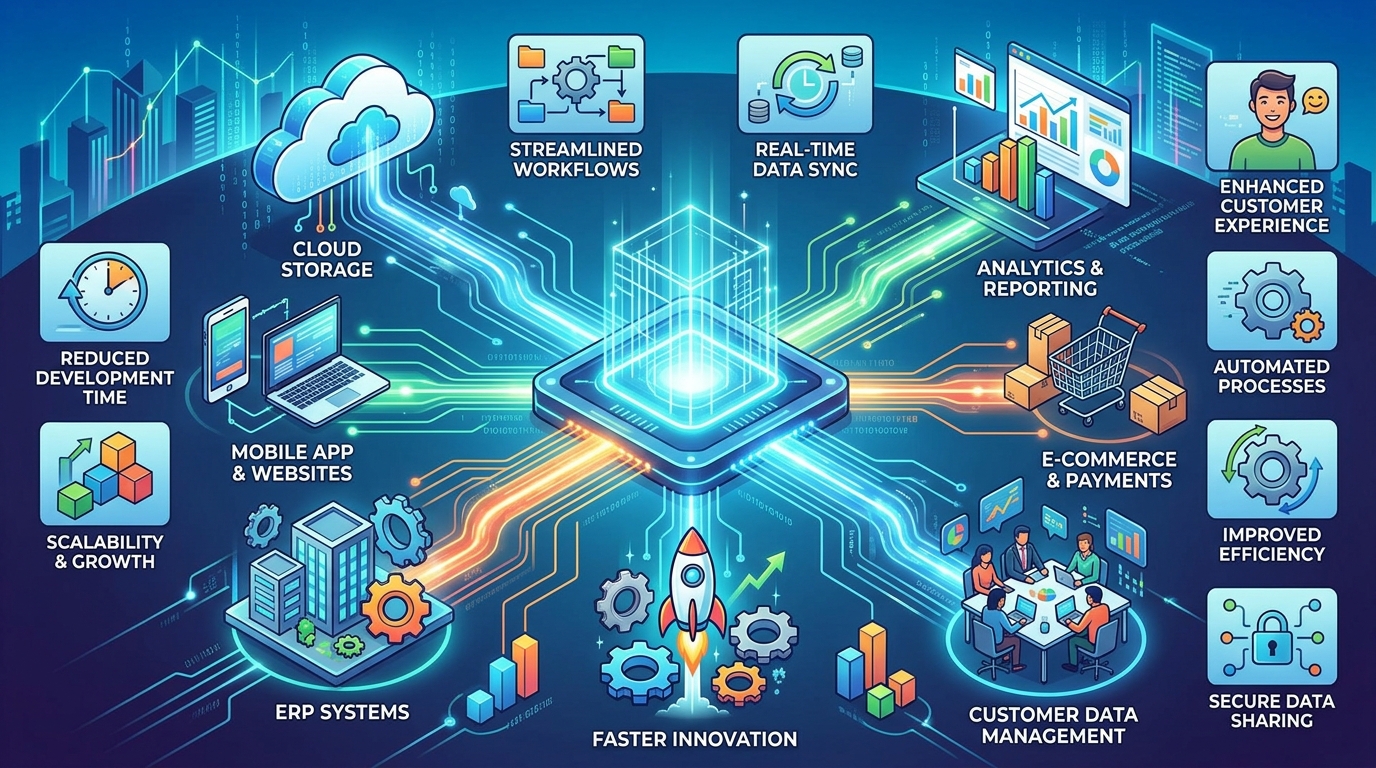
API integration is becoming one of the defining characteristics of enterprise business card management platforms.
Most organizations already operate a wide range of business systems, including:
- HRIS platforms
- CRM systems
- ERP environments
- Procurement applications
- Identity management platforms
- Onboarding systems
- Workflow automation tools
- Reporting environments
Organizations increasingly expect business card ordering platforms to connect with these systems.
API-connected infrastructure allows employee information to synchronize automatically, onboarding events to trigger workflows, and reporting data to flow across systems.
This reduces manual effort while improving operational consistency.
Buyer-Intent Bridge
How does this differ from a simple online ordering portal
A portal collects requests.
A centralized business card ordering platform manages workflows, approvals, governance, reporting, vendor coordination, and operational visibility.
Why medium and large companies need centralized ordering
As organizations scale, manual ordering processes become increasingly difficult to manage. Centralization improves consistency, visibility, accountability, and efficiency.
When should organizations adopt a centralized platform?
Organizations should evaluate centralized ordering when they experience approval bottlenecks, reporting limitations, inconsistent branding, procurement visibility challenges, or excessive administrative effort.
What should buyers prioritize?
Enterprise buyers should prioritize workflow automation, centralized ordering, reporting visibility, brand governance, API integrations, procurement oversight, and scalability.
Strategic Takeaway
A centralized business card ordering platform is no longer simply a convenience tool.
It is a strategic operational platform that helps organizations manage ordering, approvals, reporting, governance, vendor coordination, and enterprise workflow execution.
Organizations that adopt centralized business card ordering gain stronger visibility, better governance, improved efficiency, and more scalable operations.
As business card management continues evolving, centralized platforms will become the preferred operating model for medium and large organizations.