

Policy-Driven Enterprise Workflow Governance: Transforming Business Execution Through Centralized Control

Introduction
Enterprise workflows extend far beyond task automation. Every approval, request, vendor interaction, and business process must comply with organizational policy, regulatory obligations, and corporate governance standards. Without centralized governance, business units often create inconsistent workflows that increase operational risk and reduce executive visibility. A policy-driven governance layer ensures that every workflow executes according to enterprise-approved rules. Color Card Administrator (CCA) delivers this governance-first architecture by orchestrating identity-aware workflows across the enterprise while maintaining consistency, transparency, and auditability.
Why Workflow Governance Matters
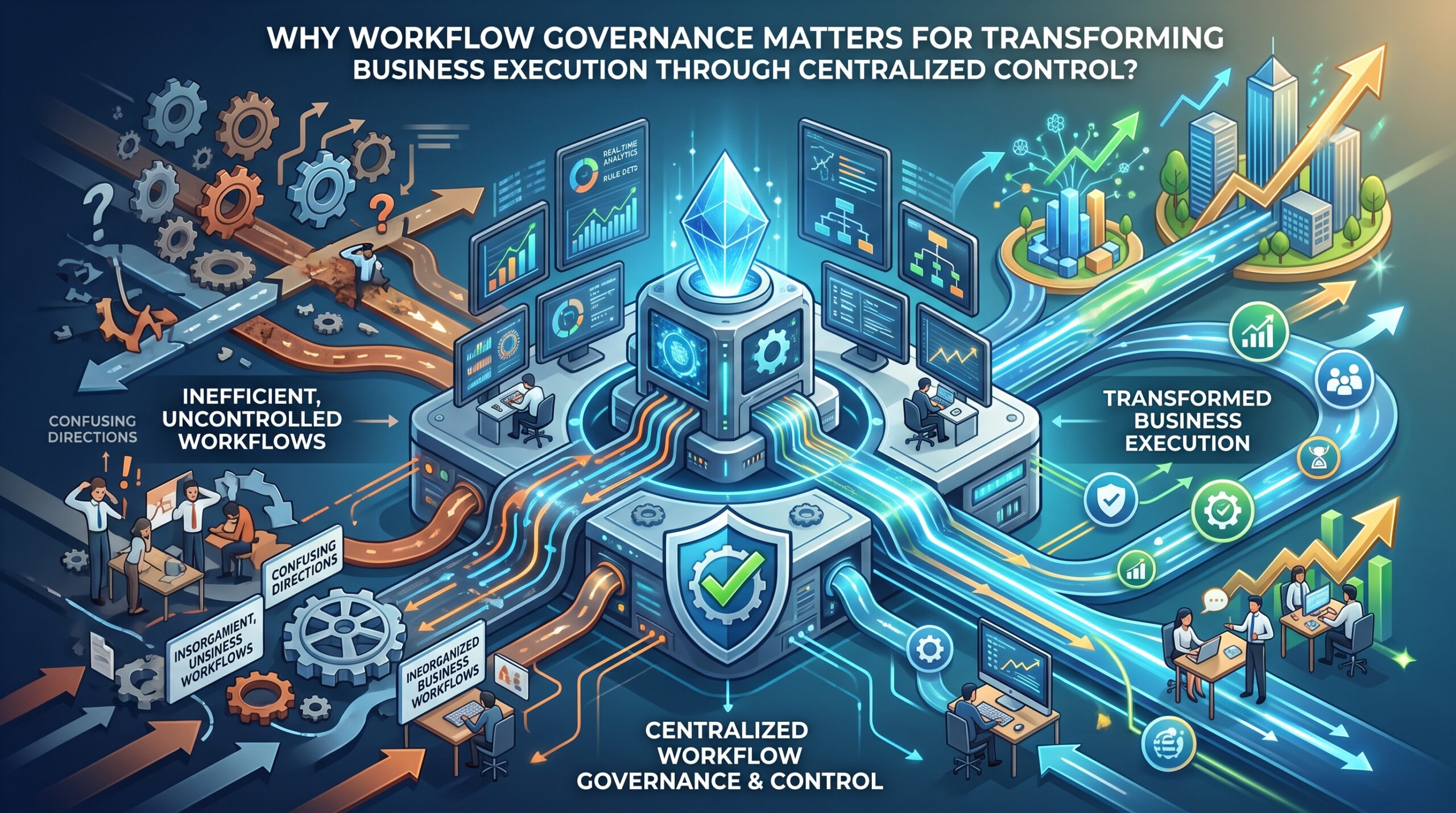
Digital transformation has accelerated automation across HR, procurement, CRM, finance, marketing, and operations. However, automation without governance creates fragmented execution. Different departments define different approval paths, vendors follow inconsistent procedures, and regional offices interpret policy differently. Workflow governance establishes standardized decision-making that remains consistent regardless of geography, department, or application.
The Role of Policy-Driven Execution
Policies become executable business rules instead of static documents. Approval hierarchies, delegation models, spending limits, branding requirements, vendor eligibility, lifecycle events, and compliance checkpoints are enforced automatically throughout every workflow. This reduces manual intervention while ensuring operational discipline.
CCA as the Enterprise Control Layer
CCA functions as an infrastructure layer connecting identity systems, enterprise applications, and operational processes. Rather than replacing existing platforms, it applies centralized governance across them. Identity data drives workflow decisions, policies determine routing, and audit records capture every action. This architecture creates a single governance framework across distributed enterprise environments.
Enterprise Benefits
Organizations gain standardized approvals, stronger compliance, improved vendor governance, faster onboarding, consistent business card operations, simplified audits, greater executive visibility, and reduced operational risk. Governance enables automation to scale confidently without sacrificing accountability.
Implementation Strategy
Begin with authoritative identity sources, document critical workflows, define enterprise policy libraries, integrate HR, ERP, CRM, procurement, and directory systems, automate lifecycle events, and establish governance dashboards that continuously measure policy adherence and operational visibility & performance.
Future Outlook
As AI-driven automation becomes increasingly common, enterprises will require trusted governance foundations to validate decisions, enforce policy, and maintain accountability. Policy-driven workflow governance will become an essential component of resilient digital enterprises.
Conclusion
Enterprise success depends not only on automation but on governed automation. Organizations that embed policy into every workflow create operational consistency, regulatory confidence, and scalable execution. CCA provides the governance infrastructure that transforms isolated workflows into a unified enterprise operating model.