

From Identity Data to Enterprise Decisions: How Governance Drives Operational Intelligence

Introduction
Modern enterprises produce massive volumes of operational data every day. Human resources systems, ERP platforms, CRM applications, procurement tools, collaboration platforms, and external vendors all generate information that influences business decisions. Unfortunately, information alone does not create business value. Data becomes valuable only when it is trusted, governed, and consistently applied across enterprise operations.
Identity is the common thread connecting every business transaction. Every approval, employee onboarding event, vendor request, business card order, departmental transfer, policy exception, and audit trail begins with a trusted identity. Organizations that govern identity effectively gain greater visibility, stronger compliance, and more reliable operational decision-making. Color Card Administrator (CCA) was designed as an enterprise governance platform that transforms identity-driven business activities into governed operational intelligence.
Why Trusted Identity Data Matters
Without centralized identity governance, organizations often maintain multiple versions of employee, contractor, department, and vendor information across disconnected systems. These inconsistencies create duplicate records, approval delays, conflicting permissions, audit challenges, and unnecessary operational costs.
A unified governance layer establishes a single trusted source of operational truth. Policies become standardized, approvals become predictable, lifecycle events remain synchronized, and executives gain confidence that operational reports accurately represent enterprise activity.
Operational Intelligence Begins with Governance
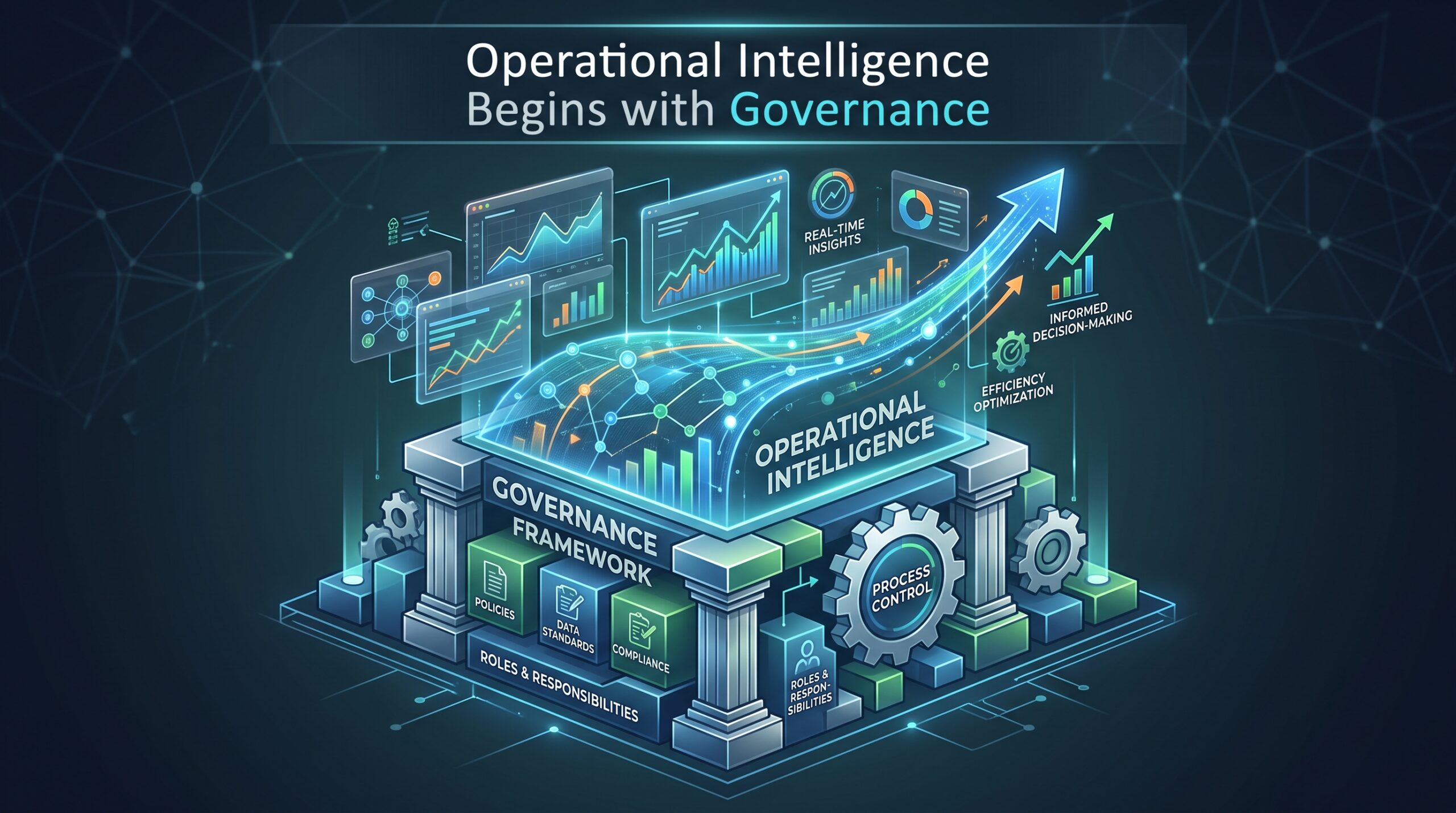
Operational intelligence is more than dashboards and reports. It is the ability to understand why business processes perform as they do and where governance improvements are required. Identity governance captures approval histories, policy compliance, workflow durations, vendor performance, exception handling, and regional execution patterns.
Instead of reacting after problems occur, enterprises can identify bottlenecks early, improve workflow efficiency, strengthen compliance, and continuously optimize business operations through measurable governance metrics.
CCA as the Enterprise Governance Infrastructure
CCA operates as an infrastructure-level governance layer positioned between enterprise identity systems and operational execution. Rather than replacing existing HR, ERP, CRM, procurement, or directory platforms, CCA coordinates them through centralized governance policies.
Its capabilities include workflow orchestration, lifecycle automation, delegated administration, vendor governance, business card governance, branding control, approval management, API-based integration, comprehensive audit logging, and executive reporting. This governance-first architecture enables organizations to modernize operations while preserving consistency and accountability.
Business Benefits
Organizations implementing enterprise identity governance achieve measurable improvements across multiple business functions. Compliance teams gain stronger audit readiness, operational leaders gain visibility into workflow performance, procurement teams improve vendor accountability, HR teams accelerate onboarding, and executives receive standardized reporting that supports strategic decision-making.
Most importantly, governance shifts from being a reactive compliance exercise to becoming an operational capability that continuously improves enterprise performance.
Implementation Best Practices
Successful governance initiatives begin with identifying authoritative identity sources and documenting existing workflows. Organizations should define enterprise policy libraries, standardize approval hierarchies, integrate core business applications through APIs, automate lifecycle events, establish governance dashboards, and regularly review policy effectiveness.
Governance maturity should evolve incrementally, ensuring that technology, policy, and operational objectives remain aligned throughout the digital transformation journey.
The Future of Identity-Driven Decision Making
Artificial intelligence, predictive analytics, and intelligent automation will increasingly rely on trusted identity data. Enterprises that establish strong governance foundations today will be able to adopt emerging technologies with greater confidence because operational decisions will continue to be supported by standardized policies and verified identity information.
CCA positions enterprises for this future by providing a scalable governance architecture that supports continuous innovation without sacrificing operational control.
Conclusion
Enterprise intelligence begins with enterprise governance. When trusted identity data becomes the foundation for operational decisions, organizations improve compliance, reduce risk, accelerate execution, and strengthen enterprise resilience. Color Card Administrator (CCA) enables organizations to transform fragmented operational data into governed intelligence that supports consistent, policy-driven business execution across the entire enterprise.