

From Identity Governance to Enterprise Governance: The Next Evolution of Operational Control
Introduction
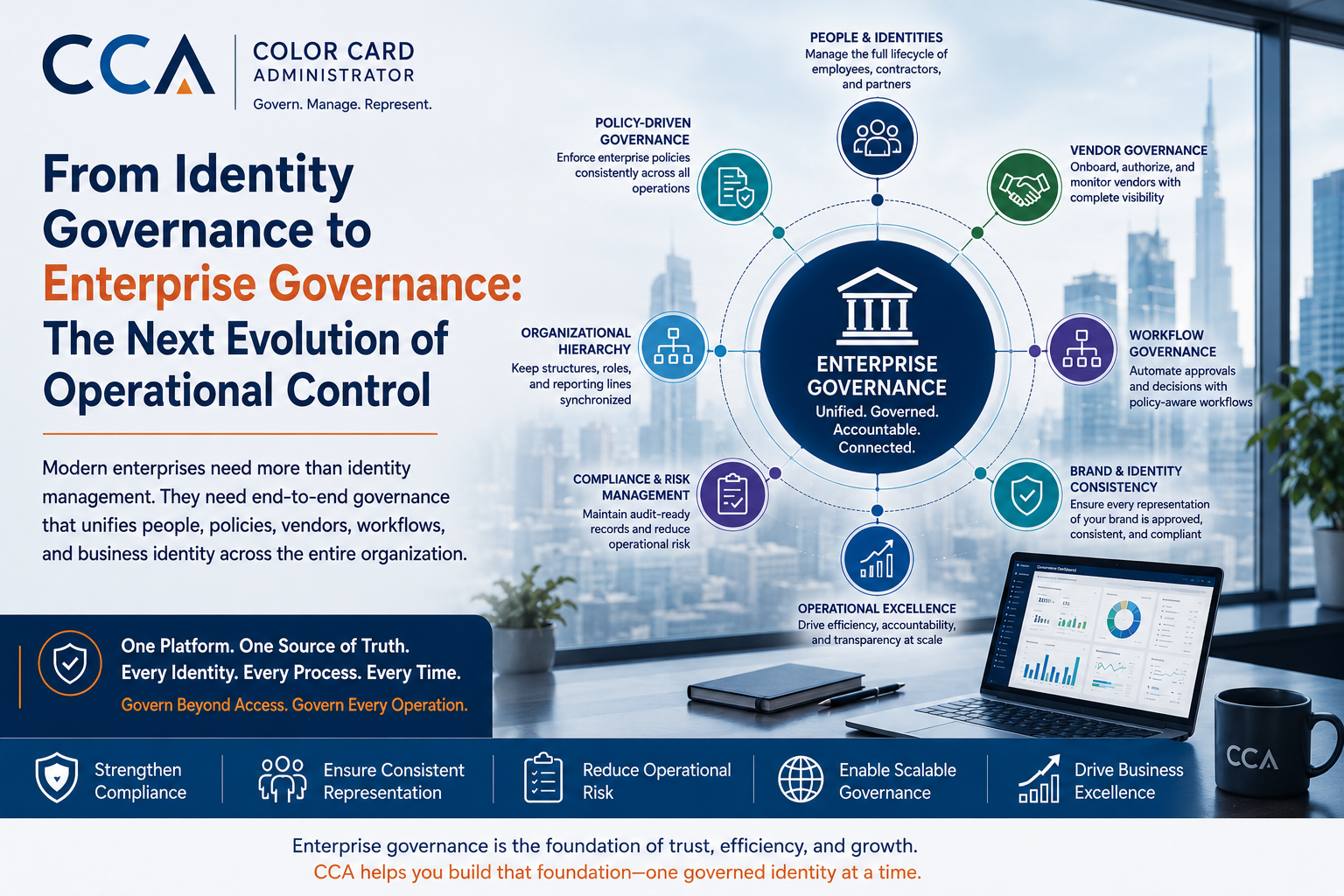
For more than two decades, enterprise identity governance has focused primarily on authentication and access management. Modern enterprises now operate through a much broader ecosystem of employees, contractors, suppliers, distributors, partners, agencies and service providers. Identity therefore determines far more than application access—it governs who may approve requests, represent the brand, authorize vendors and execute enterprise processes.
Identity governance is evolving into enterprise governance where policies, organizational structures and operational controls work together as infrastructure rather than isolated administrative activities.
Enterprise Governance Is No Longer an Administrative Function

Department-centric governance creates fragmented operations because HR, IT, Procurement, Marketing and Finance often maintain independent rules and approval structures. Governance-first architecture establishes one enterprise policy layer while allowing distributed execution. New employees, promotions and organizational changes automatically inherit approved governance rules rather than relying on manual coordination.
The Enterprise Has Become an Ecosystem of Operational Identities
Operational identities include employees, contractors, suppliers, vendors, regional offices, franchisees, business units and external partners. Every identity interacts with workflows and therefore requires governance across its lifecycle.
Why Governance-First Architecture Is Replacing Department-Centric Governance
Governance-first architecture embeds policies into operational execution. Instead of separate departments interpreting policies independently, centralized governance automatically determines organizational hierarchy, approval authority, vendor eligibility, brand permissions and cost-centre ownership.
Policy Becomes Executable Infrastructure
Enterprise policies should not exist only in documents. Mature organizations convert policies into executable infrastructure that automatically validates approvals, vendors, spending limits and compliance requirements before operational work begins.
Enterprise Workflow Governance
Workflow automation without governance only accelerates inconsistency. Governed workflows first validate organizational policy, identity, regional rules and compliance before routing requests for execution.
Organizational Hierarchies Must Become Dynamic
Every promotion, transfer or restructuring event changes operational responsibilities. Governance platforms should synchronize these changes across approvals, branding, vendors and administrative authority to prevent outdated permissions.
Vendor Governance Has Become Enterprise Governance
External suppliers increasingly represent the enterprise. Centralized vendor governance ensures authorized vendors, standardized branding, approved procurement and consistent compliance across regions.
Governance Must Be Invisible to Employees
Effective governance operates transparently. Employees complete their work while the platform automatically enforces approval hierarchies, vendor restrictions, brand standards, and compliance policies.
Business Identity Infrastructure
Business Identity Infrastructure connects enterprise identity with operational execution. It governs representation, business cards, approvals, vendors and organizational hierarchy to create a single operational source of truth.
Enterprise Governance Requires a Single Source of Operational Truth
A governance-first enterprise synchronizes organizational hierarchy, reporting relationships, cost centres, vendors, approval authorities and brand permissions through a centralized governance model
Governance Should Be Event-Driven
Employee onboarding, promotions, transfers and exits automatically trigger policy-driven operational updates including approvals, vendor rights, business card governance and administrative permissions
The Role of Color Card Administrator (CCA)
Color Card Administrator (CCA) extends governance beyond authentication into operational identity execution through business card governance, approval workflows, organizational hierarchy synchronization, vendor governance, brand compliance and audit-ready operational visibility.
Cross-link Suggestions:
- Enterprise Governance Platform
- Business Card Management Platform
- Approval Workflow Automation
- Vendor Governance
- Brand Governance
- Organizational Identity Management
- Enterprise Print Management
- Request a Demo
- Contact CCA
Enterprise Governance Maturity Model
- Level 1: Administrative Governance.
- Level 2: Departmental Governance.
- Level 3: Policy-Driven Governance.
- Level 4: Identity-Centric Governance.
- Level 5: Enterprise Governance Infrastructure.
Higher maturity delivers consistent execution, stronger compliance, audit readiness and scalable governance
The Future of Enterprise Governance
Future governance platforms will proactively evaluate organizational changes, automate policy enforcement, identify governance exceptions and provide leadership with real-time operational governance insights
Conclusion
Enterprise governance represents the next evolution of identity governance. Organizations that connect identities, workflows, vendors, approvals and policies through governance-first infrastructure improve operational consistency, compliance and enterprise scalability. Color Card Administrator (CCA) provides this governance layer by extending identity management into operational execution.