

Enterprise Vendor Governance for Identity Operations
Introduction
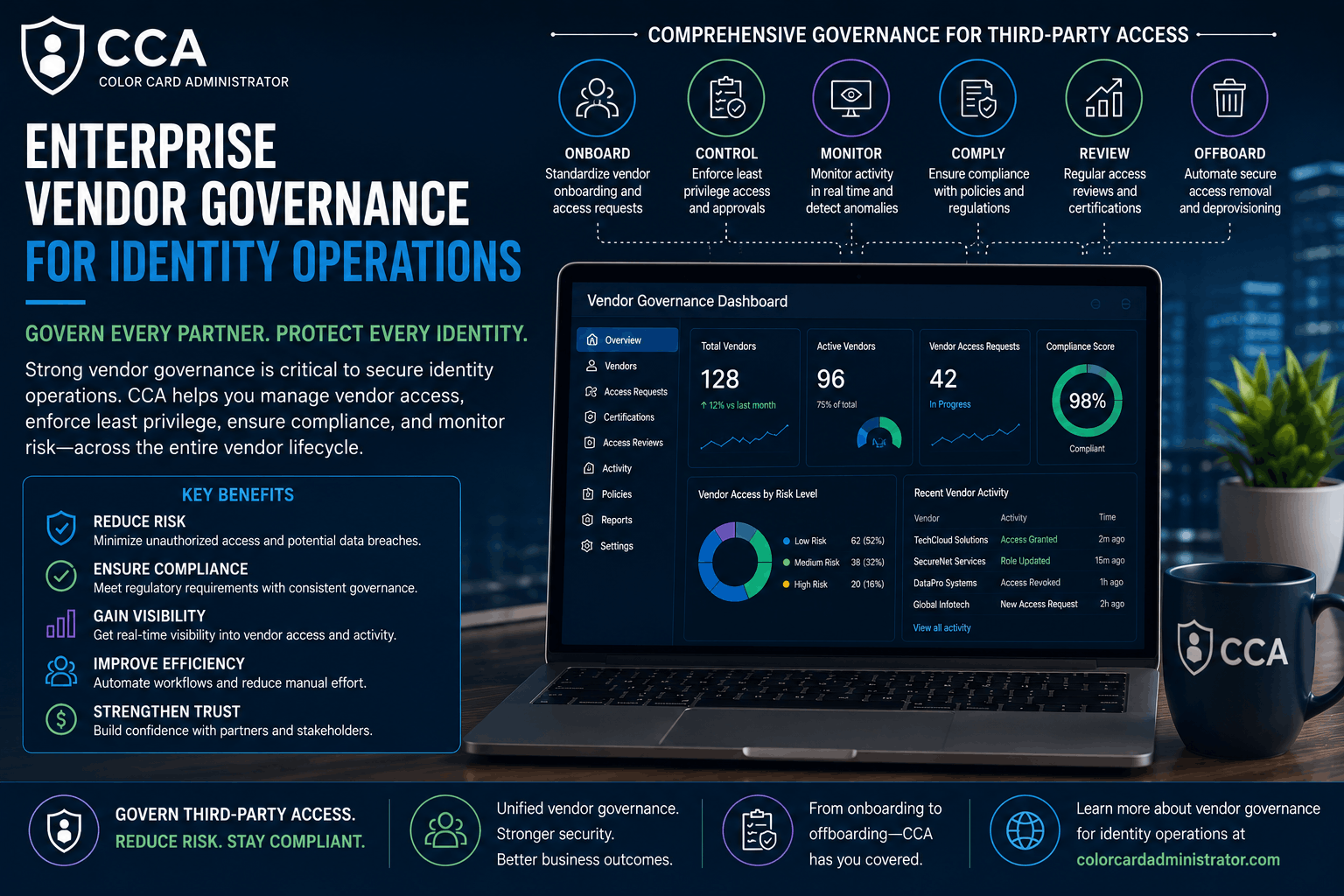
Enterprise vendor governance identity operations are no longer a procurement side issue. In large organizations, vendors influence how identity assets are created, fulfilled, standardized, tracked, and controlled. When vendor activity is not governed, identity execution becomes fragmented even when internal policies appear strong.
Business cards, digital identity assets, onboarding materials, and distributed brand outputs often move through vendor ecosystems. If those vendors operate independently from governance workflows, the organization loses visibility into fulfillment quality, approval adherence, spend patterns, and policy compliance. This is why vendor governance has become a core component of modern business card governance and enterprise identity infrastructure.
CCA’s governance model treats vendors as part of the operational system rather than external fulfillment endpoints. That distinction matters. A vendor that is not connected to governance workflows can create inconsistency across every location, department, and employee lifecycle event.
Why Vendor Governance Becomes Critical at Enterprise Scale
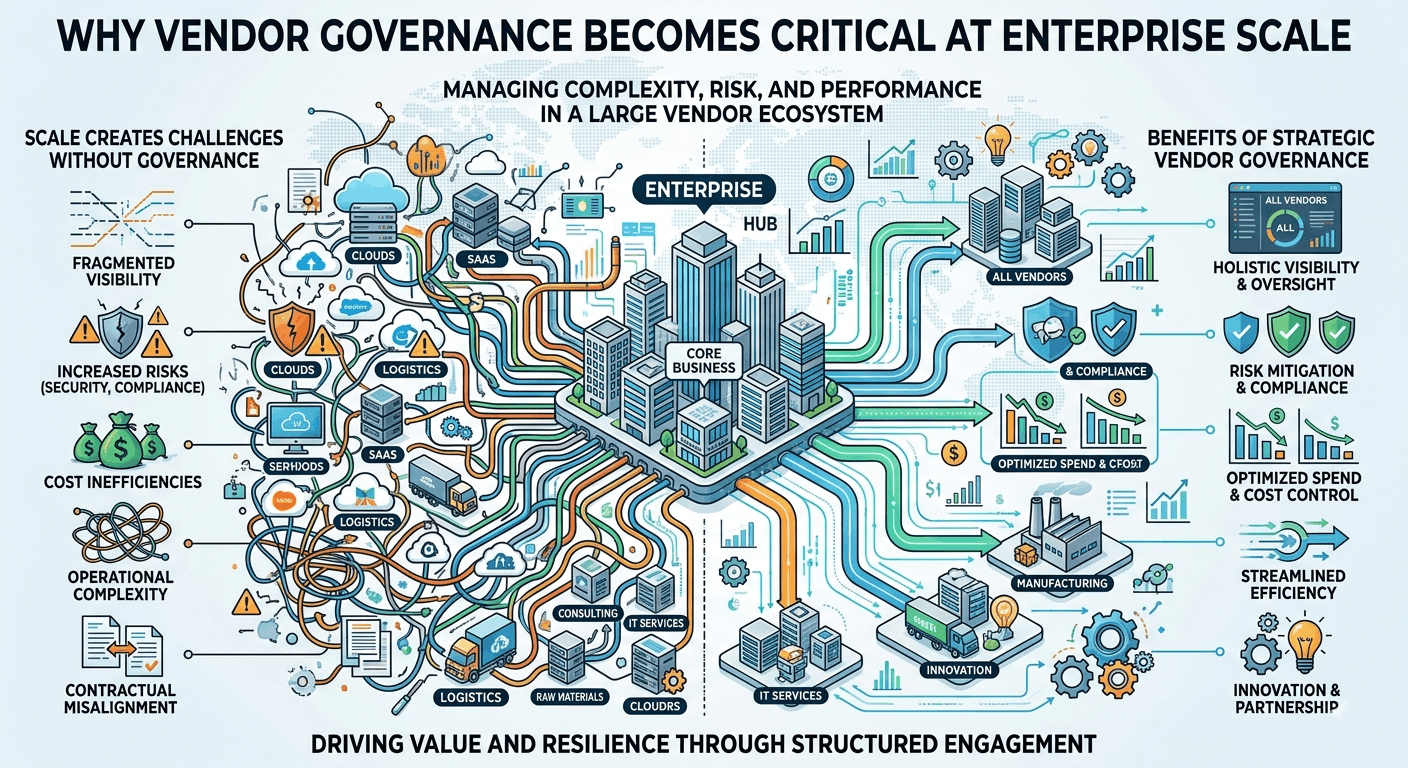
At a small scale, vendor coordination can be managed manually. Procurement knows the supplier, brand teams review output directly, and operational exceptions are visible. Enterprise environments operate differently. A single organization may have multiple regions, departments, brands, approval chains, and fulfillment paths. Without centralized governance, each operational unit begins solving identity execution in its own way.
That decentralization creates risk. One department may use a legacy vendor, another may send requests through an informal channel, and a regional team may use outdated templates. The result is not only inconsistent business cards. It is an inconsistent identity execution.
Enterprise vendor governance ensures that approved vendors, approved workflows, approved templates, and approved fulfillment rules operate as one system. It strengthens the connection between procurement governance, brand compliance, identity standardization, and operational visibility.
The Operational Cost of Ungoverned Vendor Networks
Ungoverned vendor networks create hidden operational costs. The visible cost may appear as price variation or duplicate spend, but the deeper cost is loss of control. Procurement loses visibility into active suppliers. Marketing loses control over brand execution. HR loses confidence that onboarding identity assets are accurate. Operations loses the ability to audit activity across locations.
These issues often appear gradually. A few manual exceptions become repeated practices. A vendor used for a temporary need becomes a parallel workflow. A regional process becomes the default for one business unit. Over time, the enterprise no longer has one identity governance system. It has many disconnected identity execution paths.
Vendor Governance as Part of Business Card Governance
Vendor governance should be connected directly to business card governance. This connection ensures that vendor usage is controlled by role, policy, workflow status, and approval requirements. Business cards are not treated as isolated print outputs. They are governed identity assets that must move through controlled operational infrastructure.
In a governed environment, vendors do not simply receive orders. They receive authorized, approved, standardized identity execution instructions. That distinction is what protects brand consistency and operational accountability at scale.
How Enterprise Vendor Governance Works
Effective vendor governance begins with centralization, but it cannot end there. Centralizing a vendor list is useful, but governance requires workflow enforcement. The system must control which vendors can be used, when they can be used, who can authorize their use, what templates they can fulfill, and how fulfillment activity is audited.
Enterprise integrations are essential to this model: Vendor governance must connect with HRIS systems, procurement platforms, approval engines, and reporting infrastructure. Without integration, vendor control becomes a manual administrative task rather than infrastructure-level governance.
Vendor Governance and Procurement Alignment
Procurement governance closely connects with vendor governance. Procurement defines approved commercial relationships, while identity governance defines how those relationships operate inside identity workflows. When the two are disconnected, organizations may control purchasing contracts but still lose control over execution.
CCA-style governance aligns procurement policies with identity workflows. The team uses approved vendors within approved workflow paths. Operational activity ties spend visibility. We can identify and review exceptions. This creates a stronger control environment than procurement alone can provide.
The Role of Auditability
Auditability is one of the clearest measures of vendor governance maturity. Enterprises should know which vendor fulfilled each request, when they approved the request, which template they used, which employee record they referenced, and whether the workflow followed policy. Without that visibility, vendor governance is incomplete.
Governance platforms make this operationally possible. Business Card Solutions can support vendor control, workflow enforcement, reporting visibility, and audit traceability:
Strategic Takeaway
Enterprise vendor governance is not simply supplier management. It is a control layer for identity execution. Organizations that govern vendors as part of identity infrastructure improve consistency, auditability, procurement alignment, and operational confidence. Organizations that fail to govern vendor activity remain exposed to fragmented execution and hidden identity risk.
Vendor governance is one of the practical ways enterprises move from ordering activity to a governed identity infrastructure.