

Why Enterprise Identity Governance Requires Workflow Orchestration
Introduction
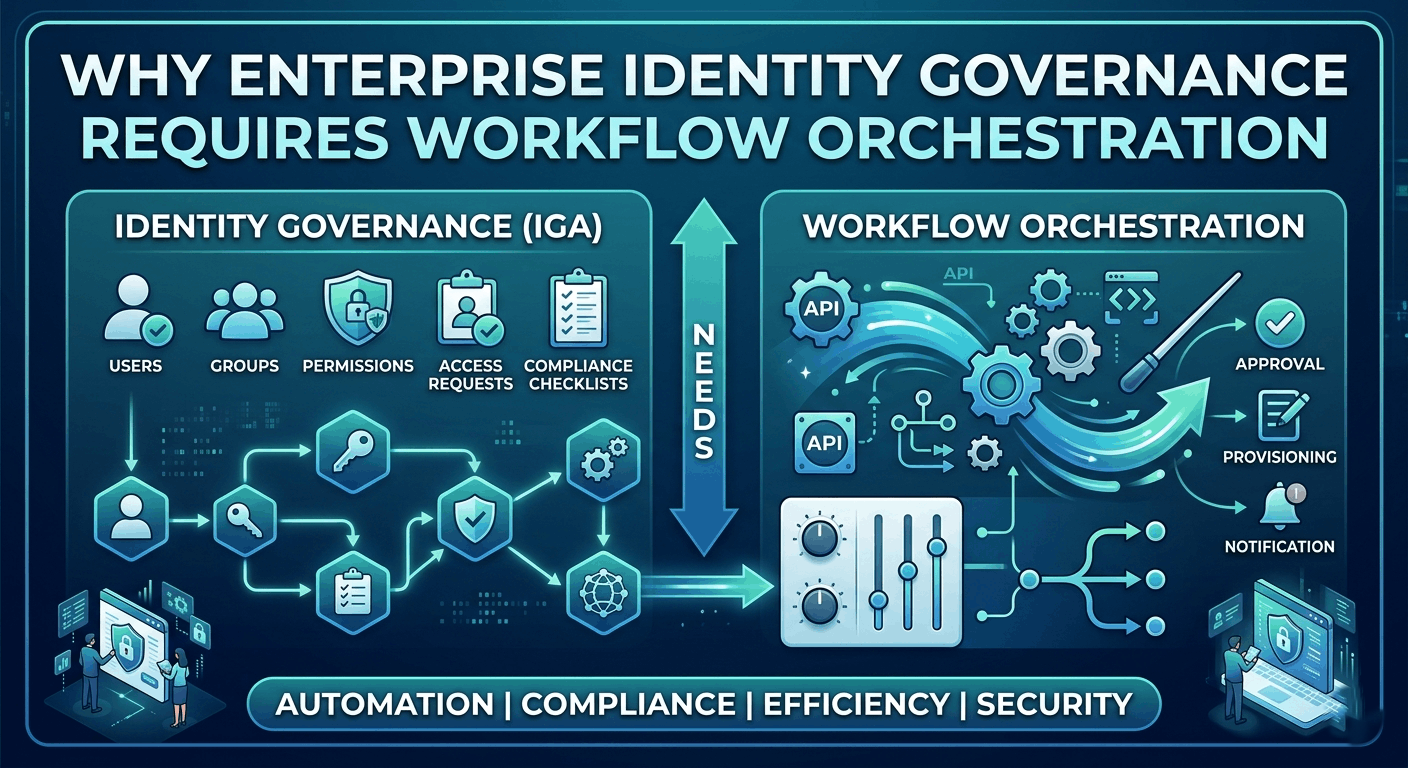
Enterprise governance does not fail because organizations lack policies.
It fails because workflows operate independently.
As enterprise environments expand across departments, onboarding systems, procurement infrastructure, approval hierarchies, regional operations, and vendor ecosystems, governance becomes increasingly dependent on workflow coordination.
Without orchestration, even well-designed governance systems become fragmented.
Identity execution begins operating through disconnected approvals, inconsistent workflows, isolated operational systems, and decentralized decision-making structures.
This fragmentation reduces visibility, weakens policy enforcement, and introduces operational risk across the enterprise.
This is why workflow orchestration has become foundational to modern business card governance strategies:
Enterprise governance requires more than automation.
It requires coordinated operational infrastructure.
Why Enterprise Governance Depends on Workflow Coordination
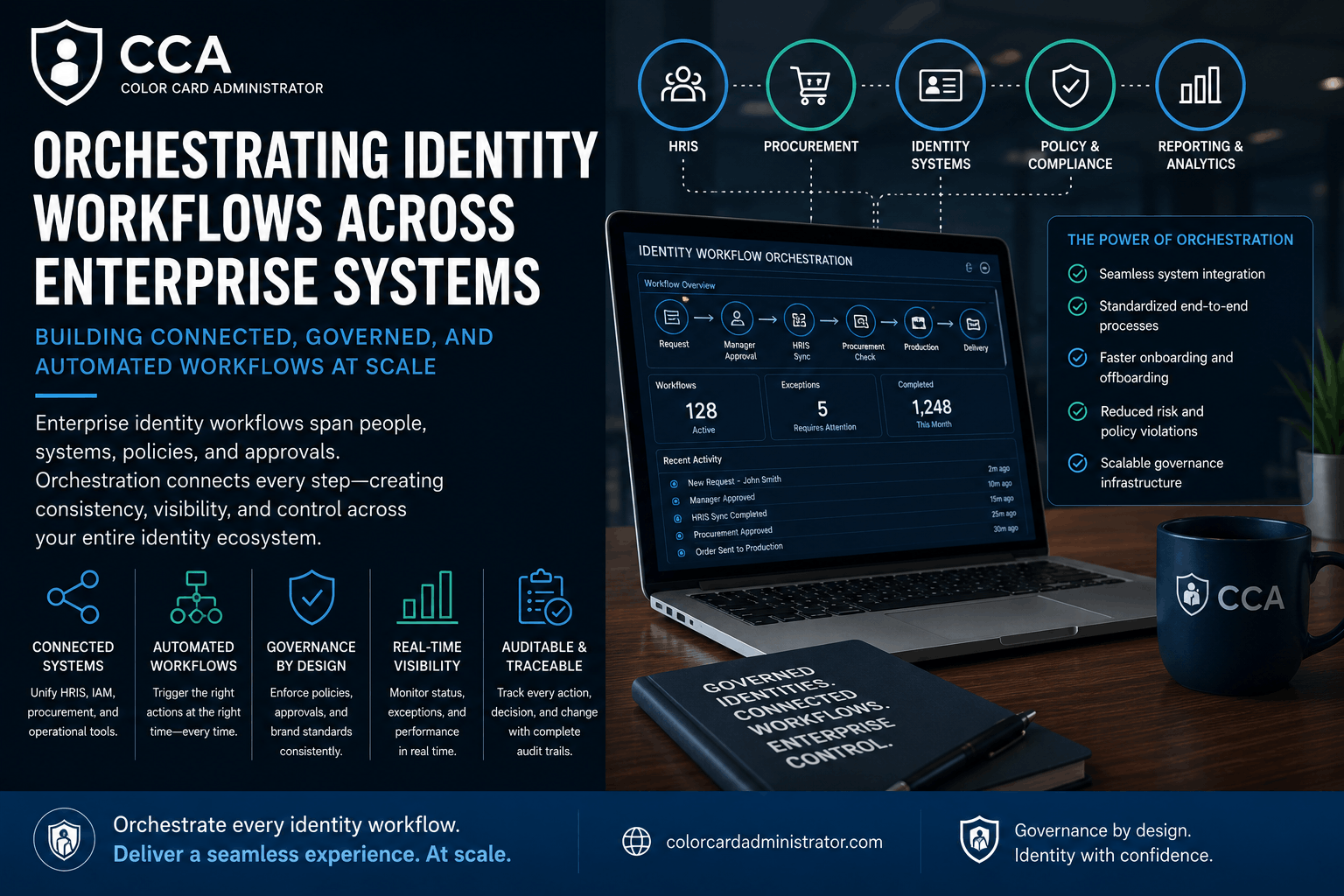
Most enterprise identity workflows do not operate inside a single system.
Identity execution frequently intersects with:
– HRIS platforms
– onboarding automation
– procurement systems
– ERP environments
– vendor management
– approval routing
– operational compliance workflows
Without orchestration, these systems function independently rather than collectively.
Organizations implementing automated onboarding systems frequently discover operational inconsistencies caused by disconnected workflows:
Examples include:
– inconsistent identity provisioning
– approval delays
– procurement routing gaps
– vendor synchronization failures
– disconnected audit visibility
Workflow orchestration aligns these operational systems into a unified governance framework.
The Difference Between Workflow Automation and Workflow Orchestration
Many organizations incorrectly assume workflow automation alone creates governance maturity.
Automation improves execution speed.
Orchestration improves operational alignment.
This distinction is critical.
Workflow automation typically focuses on:
– task execution
– approval acceleration
– operational efficiency
– request routing
Workflow orchestration focuses on:
– cross-system coordination
– workflow synchronization
– infrastructure-level visibility
– operational consistency
– governance alignment
– enterprise-wide control
Organizations implementing governance-first identity systems understand that orchestration creates operational cohesion across enterprise infrastructure:
Without orchestration, automation alone can accelerate fragmented processes rather than govern them.
How Workflow Orchestration Improves Governance Visibility
Enterprise governance depends heavily on visibility.
Organizations cannot govern systems effectively when workflows operate independently.
Workflow orchestration improves visibility by:
– synchronizing operational systems
– centralizing workflow intelligence
– aligning approval routing
– integrating auditability
– standardizing operational execution
– reducing workflow fragmentation
This becomes increasingly important as organizations scale identity operations across distributed enterprise environments.
Organizations implementing governance visibility systems frequently discover that operational orchestration significantly improves policy enforcement consistency:
Orchestration creates operational awareness across the entire governance ecosystem.
Workflow Orchestration and Identity Standardization
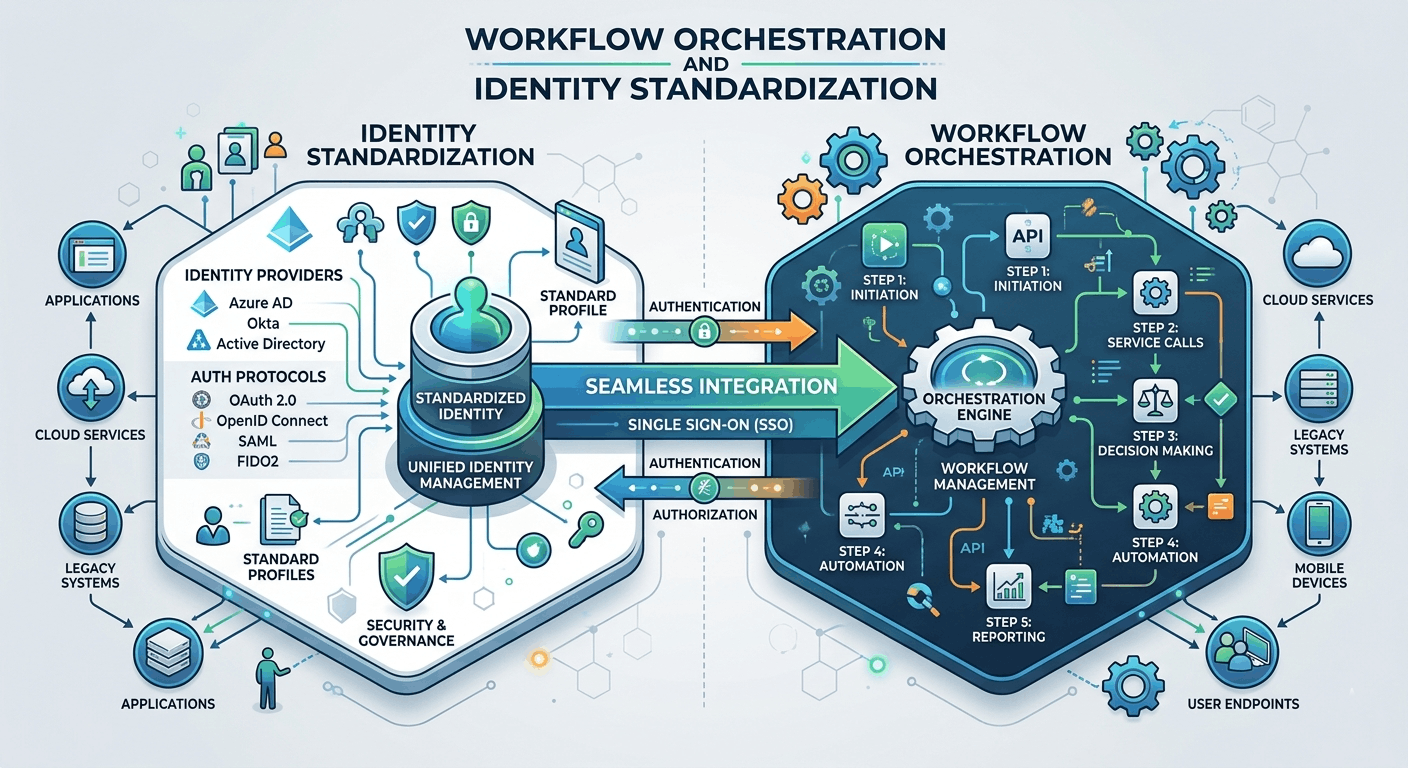
Identity consistency depends on workflow alignment.
Without orchestration, organizations struggle to maintain:
– standardized templates
– role consistency
– procurement controls
– onboarding synchronization
– vendor governance
– operational policy enforcement
These inconsistencies often create the same operational risks discussed in:
https://www.colorcardadministrator.com/blog/why-enterprises-lose-control-of-business-card-ordering
Workflow orchestration reduces these risks by aligning operational systems into centralized governance workflows.
This creates significantly stronger identity standardization across enterprise operations.
The Role of Enterprise Integrations
Workflow orchestration cannot function effectively without an integration infrastructure.
Enterprise integrations connect governance workflows across:
– HR systems
– procurement platforms
– approval engines
– identity management systems
– vendor ecosystems
– compliance environments
This is why enterprise integrations are foundational to governance maturity:
https://www.colorcardadministrator.com/integrations
Disconnected systems create governance blind spots.
Integrated orchestration creates operational continuity.
How Governance Platforms Enable Orchestration
Governance platforms operationalize workflow orchestration across enterprise identity systems.
Platforms such as Business Card Solutions systems allow organizations to:
– coordinate identity workflows
– centralize approval routing
– standardize operational execution
– synchronize enterprise systems
– improve audit visibility
– enforce policy consistency
– govern vendor interactions
This transforms governance from isolated workflow automation into coordinated enterprise infrastructure.
Organizations gain centralized control across identity operations, procurement systems, onboarding workflows, and distributed operational environments.
Workflow Orchestration Maturity Stages
Enterprise orchestration maturity evolves progressively.
Stage 1 — Fragmented Workflows
– disconnected systems
– manual coordination
– isolated approvals
– limited audit visibility
– inconsistent operational execution
Stage 2 — Automated Workflows
– approval automation
– workflow acceleration
– centralized templates
– operational efficiency improvements
Stage 3 — Integrated Workflow Orchestration
– cross-system synchronization
– centralized governance visibility
– operational workflow coordination
– infrastructure-level consistency
– auditability integration
Stage 4 — Governance Orchestration Infrastructure
– enterprise-wide workflow intelligence
– predictive operational analysis
– real-time orchestration visibility
– continuous governance synchronization
– infrastructure-level operational control
At this stage, governance becomes a fully orchestrated operational capability.
Strategic Takeaway
Enterprise governance depends on orchestration.
Organizations that automate workflows without orchestrating systems often accelerate fragmentation rather than reduce it.
As enterprise identity execution becomes increasingly distributed across onboarding operations, procurement workflows, vendor ecosystems, and operational systems, orchestration becomes essential for:
– governance visibility
– workflow consistency
– operational synchronization
– auditability
– infrastructure-level control
Organizations that invest in workflow orchestration gain significantly stronger operational alignment across identity infrastructure.
Organizations that fail to orchestrate workflows remain vulnerable to fragmentation, inconsistency, and hidden governance risk.
Governance is not simply about automating workflows.
It is about orchestrating enterprise operations into a unified governance system.