

Why Enterprise Identity Governance Requires Procurement Workflow Intelligence
Introduction
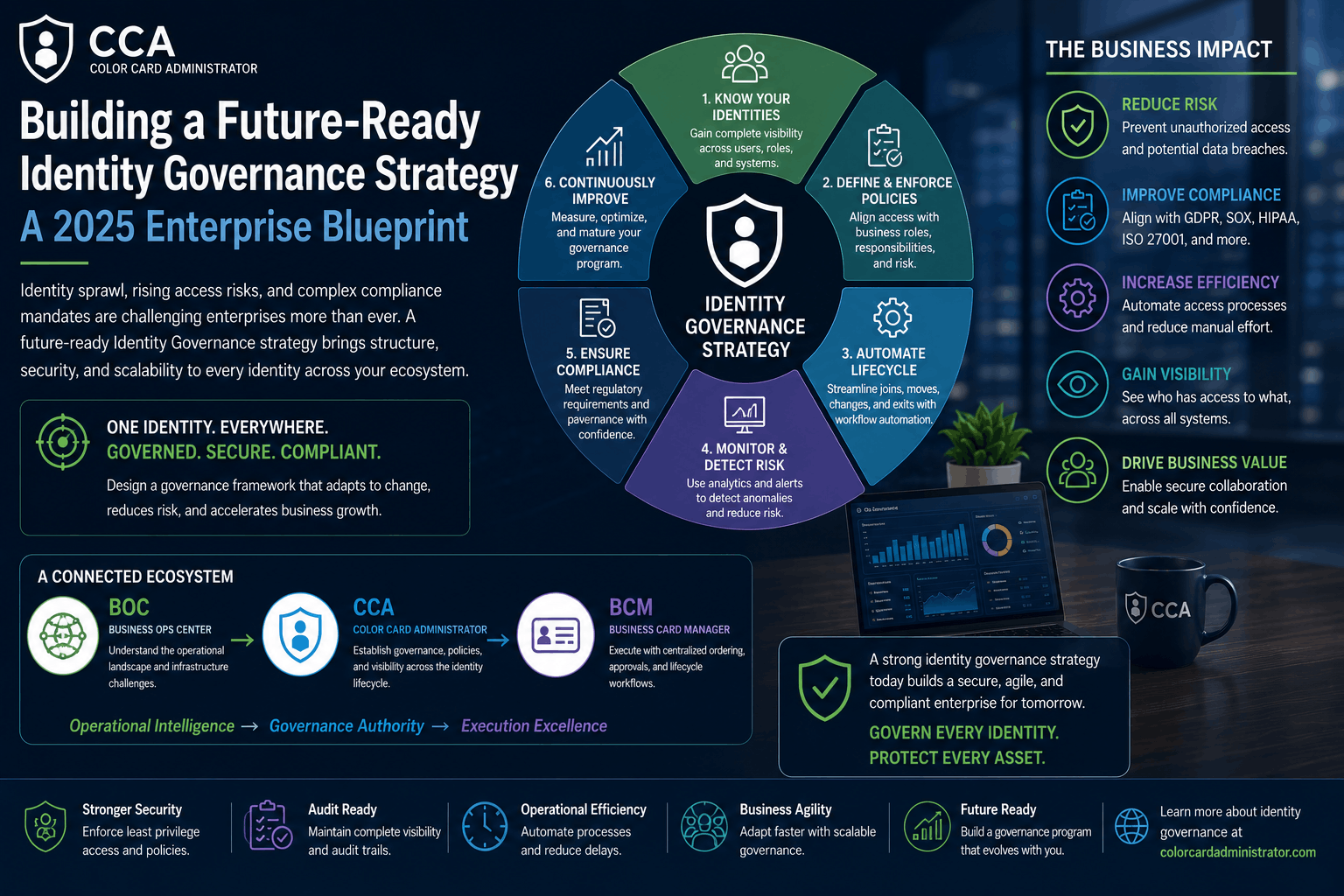
Enterprise identity governance increasingly depends on operational intelligence across procurement workflows. As organizations scale across departments, vendors, onboarding systems, distributed workforces, and complex operational environments, procurement activity becomes deeply connected to identity execution.
Business cards, digital identity assets, onboarding materials, approval workflows, and operational provisioning frequently move through procurement systems before they reach employees, managers, or vendors. When procurement workflows are not governed intelligently, organizations begin losing visibility into how identity execution operates across the enterprise.
Procurement is no longer limited to purchasing activity. It plays a direct role in workflow coordination, approval management, vendor governance, compliance oversight, and identity fulfillment. As a result, procurement workflow intelligence has become a foundational component of modern business card governance strategies.
Why Procurement Workflow Intelligence Matters
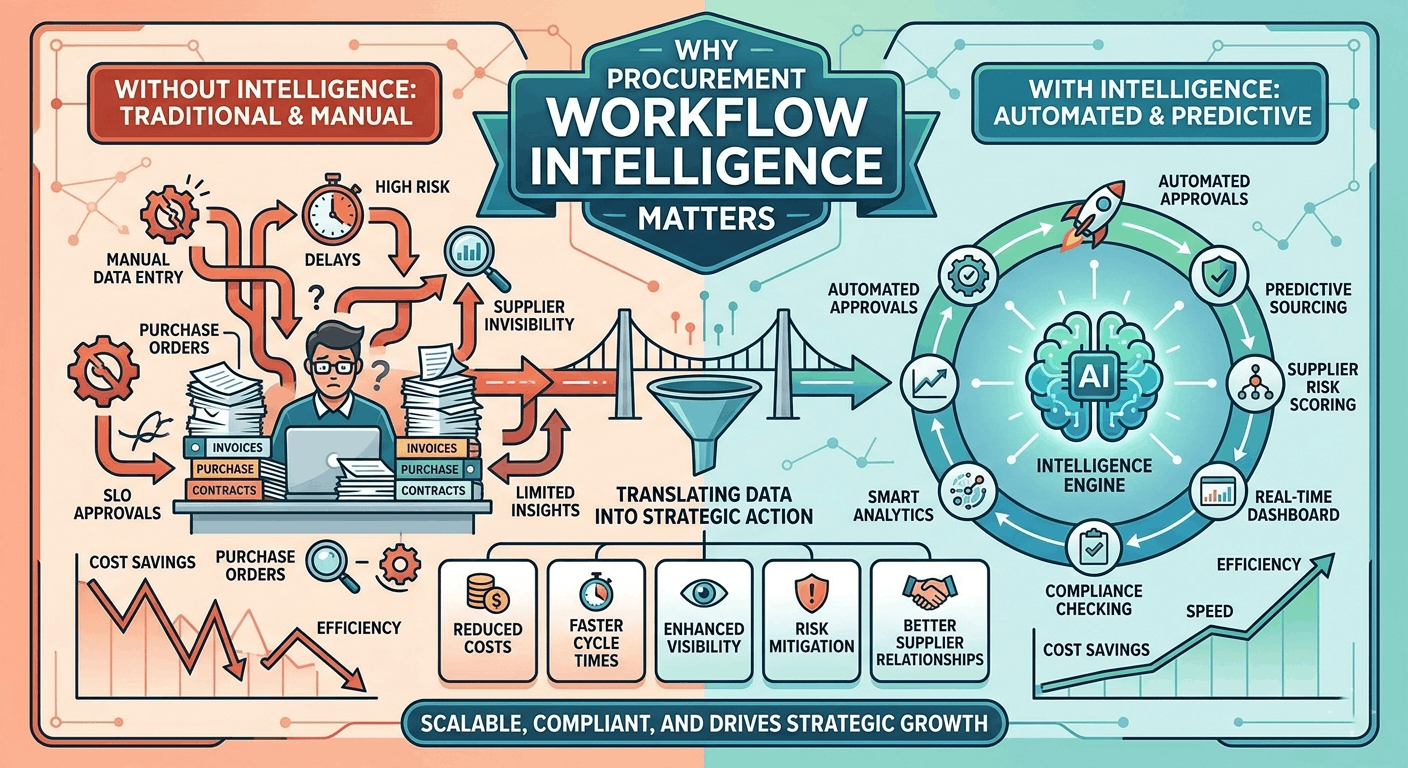
Most organizations still view procurement as a transactional function focused on purchasing and vendor management. Enterprise governance environments require something significantly broader.
Procurement workflows influence:
- Vendor authorization
- Onboarding execution
- Approval routing
- Operational provisioning
- Procurement compliance
- Identity fulfillment
- Workflow visibility
- Auditability
When procurement workflows lack intelligence and visibility, governance becomes reactive rather than proactive. Organizations may not recognize operational inconsistencies until they create delays, compliance issues, or fulfillment errors.
Organizations implementing governance-first identity systems understand that procurement workflows are not simply operational processes. They are a governance infrastructure that directly affects identity consistency and operational control.
Moving Beyond Traditional Procurement Reporting
Traditional procurement reporting focuses on historical activity. It explains what happened after a workflow has already been completed.
Workflow intelligence provides a broader perspective. It helps organizations understand how procurement systems behave continuously across the enterprise.
Procurement workflow intelligence focuses on:
- Workflow behavior
- Operational inconsistencies
- Vendor governance patterns
- Onboarding synchronization
- Auditability gaps
- Infrastructure-level visibility
Instead of simply reviewing completed transactions, organizations gain insight into how workflows move through operational systems, where bottlenecks occur, and where governance risks are emerging.
This allows leadership teams to identify issues earlier and improve operational consistency before problems affect downstream identity execution.
Procurement Intelligence and Governance Visibility
Organizations implementing enterprise governance visibility strategies frequently discover that procurement visibility significantly improves governance consistency.
When procurement activity is visible, organizations can better understand:
- How requests move through approval chains
- Whether procurement policies are being followed
- Which vendors are involved in fulfillment
- Where delays are occurring
- How identity assets are being provisioned
This visibility strengthens governance because operational activity becomes measurable and auditable.
Without visibility, procurement workflows often become fragmented across departments, making it difficult to maintain consistent governance standards across enterprise environments.
The Role of Workflow Orchestration
Enterprise procurement workflows rarely operate independently. Identity execution frequently intersects with HRIS systems, onboarding infrastructure, operational approvals, procurement environments, vendor ecosystems, compliance workflows, and identity lifecycle systems.
Workflow orchestration aligns these systems into a coordinated operational environment.
When procurement workflows are orchestrated effectively, organizations gain:
- Improved workflow consistency
- Better onboarding coordination
- Stronger approval governance
- Reduced operational fragmentation
- Increased visibility across systems
Orchestration ensures procurement activity remains connected to the broader identity governance framework rather than functioning as an isolated operational process.
Integration as the Foundation of Intelligence
Procurement workflow intelligence depends on connected operational systems.
Enterprise integrations connect procurement governance workflows across:
- HR systems
- Onboarding platforms
- Procurement infrastructure
- Operational approvals
- Vendor ecosystems
- Reporting systems
- Compliance environments
These integrations create a unified operational view that allows organizations to understand how procurement activity affects identity execution throughout the enterprise.
Without integration, procurement intelligence remains incomplete because workflow activity becomes fragmented across multiple systems and departments.
How Governance Platforms Support Procurement Intelligence
Platforms such as Business Card Solutions systems allow organizations to centralize procurement visibility, synchronize operational systems, orchestrate onboarding workflows, govern vendor activity, maintain auditability, and enforce approval consistency.
Centralized governance platforms improve procurement intelligence by providing a single environment for monitoring workflow execution, tracking operational performance, and identifying governance exceptions.
This creates stronger accountability while supporting enterprise-wide operational consistency.
Procurement Workflow Intelligence Maturity Stages
Stage 1 — Fragmented Procurement Workflows
Organizations operate with disconnected vendors, decentralized approvals, isolated onboarding execution, and limited procurement visibility.
Stage 2 — Standardized Procurement Processes
Organizations centralize procurement workflows, improve onboarding coordination, standardize approvals, and strengthen operational consistency.
Stage 3 — Integrated Procurement Intelligence
Organizations synchronize procurement systems, orchestrate workflows, centralize auditability, improve vendor governance, and establish infrastructure-level operational visibility.
Stage 4 — Enterprise Procurement Governance Infrastructure
Organizations achieve real-time workflow intelligence, predictive operational visibility, enterprise-wide orchestration, infrastructure-level procurement governance, and continuous operational monitoring.
Strategic Takeaway
Enterprise identity governance increasingly depends on procurement workflow intelligence. Organizations that invest in procurement intelligence gain stronger governance visibility, better vendor coordination, improved onboarding synchronization, enhanced auditability, and more consistent identity execution.
Procurement governance is no longer simply about managing purchasing activity.
It is about orchestrating operational intelligence across enterprise identity infrastructure and creating a governance environment where procurement workflows actively support visibility, consistency, compliance, and long-term operational control.