

Business Card Governance for Enterprise Organizations
Enterprise Business Card Governance with Color Card Administrator
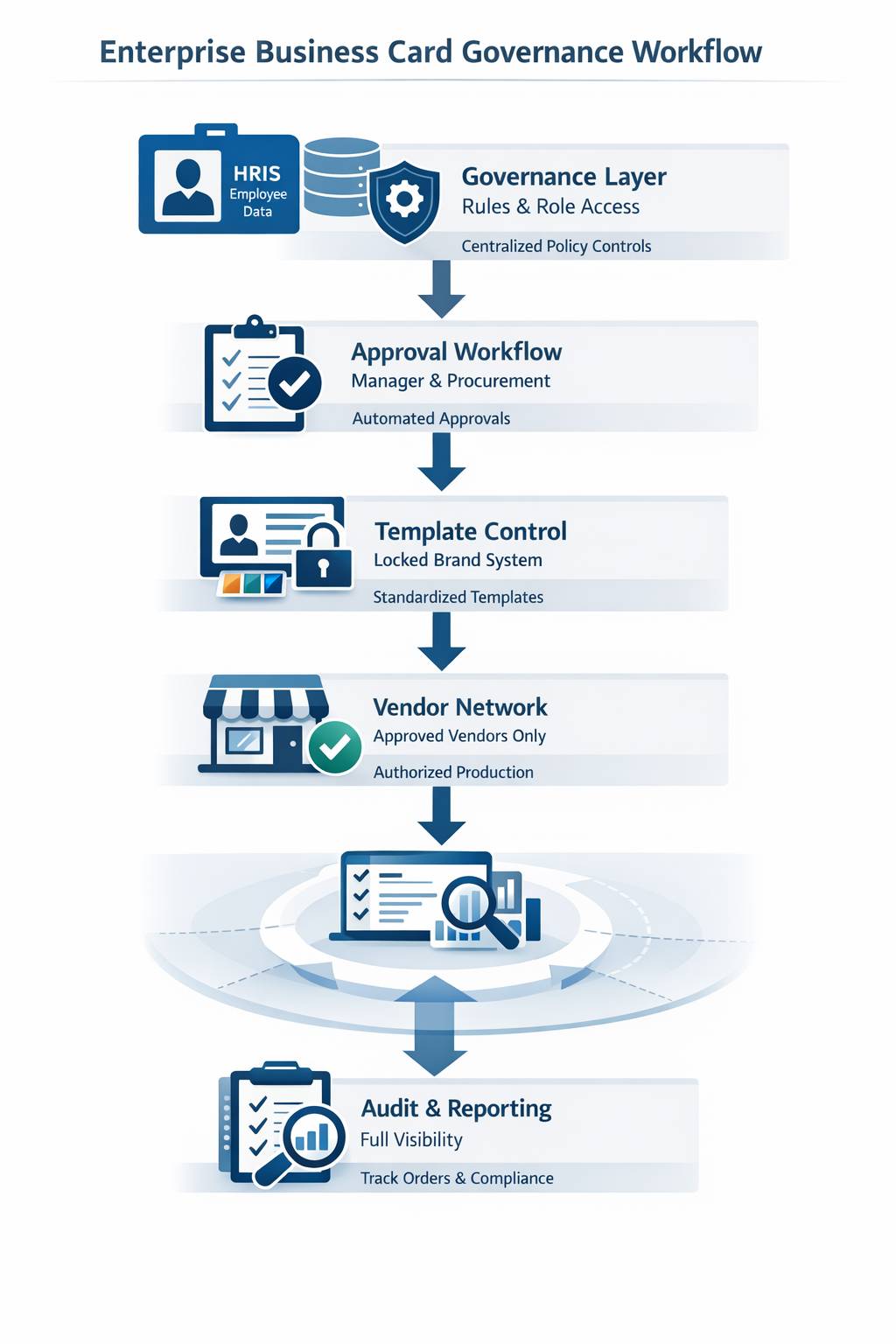
Business cards, while seemingly simple, embody critical elements of employee identity, corporate branding, organizational authority, and enterprise expenses. Traditional ordering processes relying on emails, spreadsheets, and inconsistent approvals result in loss of visibility, weak control, and risk of branding inconsistencies and unauthorized changes. The CCA introduces a comprehensive governance layer that ensures standardized, controlled, and auditable business card management across large organizations.
Introduction
Enterprise organizations rarely lose control all at once.
Control erodes gradually through disconnected approvals, inconsistent workflows, unmanaged vendors, and fragmented identity execution processes. Business cards are one of the clearest examples of this operational breakdown.
In many organizations, business card ordering still operates outside centralized enterprise systems. Employees request cards through email, templates are shared manually, approvals vary between departments, and vendors operate with limited oversight. What appears to be a simple operational task becomes a governance gap that affects compliance, brand consistency, procurement visibility, and identity control.
This is why business card governance has become increasingly important for enterprise organizations.
Business card governance is not about printing. It is about establishing infrastructure-level control over how identity assets are requested, approved, standardized, produced, and audited across the organization.
As enterprises scale across regions, systems, and business units, governance becomes essential to maintaining operational consistency.
Why Governance Becomes Critical at Enterprise Scale
At a small scale, organizations can often manage identity execution through informal coordination. Teams communicate directly, approvals happen manually, and operational inconsistencies remain relatively contained.
Enterprise environments operate differently.
Large organizations manage thousands of employees across multiple departments, locations, vendors, and systems. Identity-related activities intersect with HR platforms, procurement workflows, compliance requirements, onboarding systems, and operational policies.
Without governance, fragmentation emerges naturally.
Different departments begin using different vendors. Templates become duplicated across locations. Approval standards vary by manager or business unit. Procurement loses visibility into spending. Brand teams lose control over identity consistency.
Over time, organizations no longer have a unified process for managing business identity assets.
Instead, they operate through disconnected operational behaviors.
This creates systemic risk.
The Operational Risks of Decentralized Business Card Management
Most enterprise organizations underestimate the operational consequences of decentralized business card ordering because they incorrectly categorize it as a minor purchasing function.
In reality, business cards are identity assets.
They represent the organization externally and interact directly with broader enterprise systems and workflows.
When governance is absent, organizations experience several categories of operational risk.
Brand Inconsistency
Without centralized governance, employees often use outdated templates, incorrect titles, unauthorized layouts, or inconsistent contact information.
As organizations expand across locations and business units, these inconsistencies multiply.
The issue is not aesthetic inconsistency alone. It is organizational inconsistency. Enterprise identity begins to vary depending on location, vendor, or workflow path.
This weakens brand control across distributed operations.
Procurement Fragmentation
In decentralized environments, multiple vendors are frequently used without centralized oversight.
Departments negotiate independently. Ordering processes vary. Pricing structures become inconsistent. Spend visibility decreases.
Procurement teams are often unable to answer fundamental governance questions:
- Which vendors are active?
- How much is being spent?
- Which workflows bypass approvals?
- Which departments are operating outside policy?
These are governance failures, not purchasing inefficiencies.
Compliance and Auditability Gaps
Enterprise identity assets frequently contain regulated or standardized information tied to organizational policies.
Without governance enforcement, organizations cannot reliably ensure:
- Policy compliance
- Legal consistency
- Approval traceability
- Role-based authorization
- Audit visibility
When identity execution occurs outside governed systems, auditability disappears.
Organizations lose visibility into who approved what, when changes occurred, and whether policies were followed consistently.
HR and Onboarding Disconnects
Business cards are often disconnected from employee lifecycle systems.
This creates operational lag during:
- Employee onboarding
- Role transitions
- Department transfers
- Offboarding workflows
Manual coordination introduces delays, inaccuracies, and duplication.
In enterprise environments, these inefficiencies scale rapidly.
Without integration into HR and operational systems, identity execution becomes reactive instead of system-driven.
What Enterprise Business Card Governance Actually Includes
Enterprise governance requires more than centralized templates.
It requires a structured operational framework that controls how identity assets move through the organization.
Effective governance systems typically include several foundational components.
Role-Based Access Control
Employees should only access templates, permissions, and workflows aligned with their role, department, hierarchy, and location.
Role-based governance prevents unauthorized ordering and reduces operational inconsistency across business units.
This ensures that identity execution aligns with organizational structure.
Workflow Automation and Approval Systems
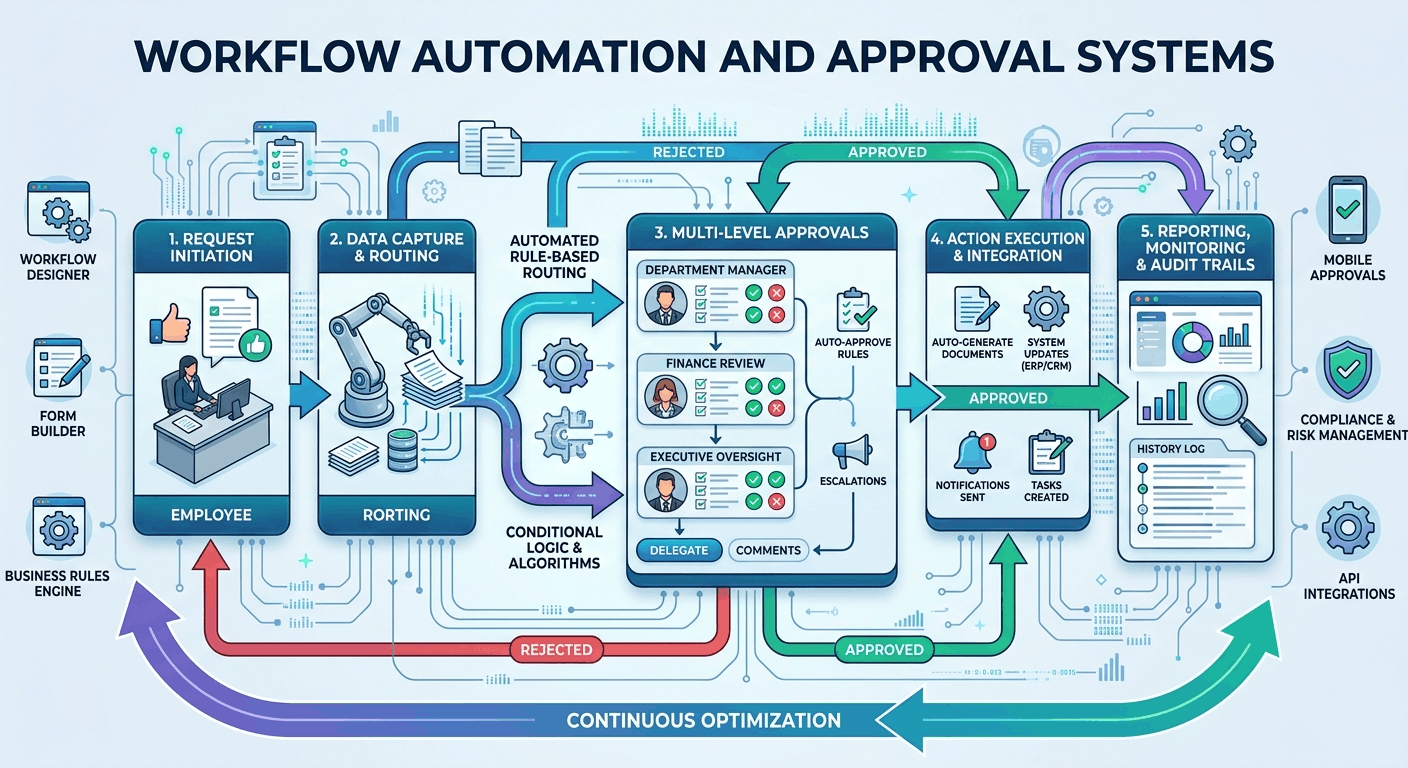
Governed systems standardize how requests move through approval chains.
Instead of relying on informal coordination, approvals follow structured workflow logic tied to enterprise policies.
This creates:
- Operational consistency
- Approval accountability
- Reduced manual oversight
- Faster execution with controlled governance
Workflow governance transforms business card management from ad hoc execution into an operational infrastructure.
Template Governance
Enterprise organizations cannot maintain identity consistency if templates are modified independently across teams.
Governance platforms centralize and lock templates to ensure that branding, titles, layouts, disclaimers, and organizational standards remain controlled.
This eliminates uncontrolled variation across distributed operations.
Policy Enforcement
Governance systems embed rules directly into execution workflows.
Instead of relying on employees to interpret policy manually, the platform enforces:
- Ordering permissions
- Quantity restrictions
- Vendor routing
- Approval requirements
- Brand standards
This shifts governance from documentation into operational execution
Auditability and Reporting
Every action within the workflow should be trackable.
Enterprise organizations require visibility into:
- Orders
- Approvals
- Vendor activity
- Policy exceptions
- Departmental usage
- Operational spend
Auditability creates accountability and allows governance teams to identify operational gaps before they scale into larger systemic issues.
Governance as Part of Enterprise Identity Infrastructure
Business cards should not operate as isolated operational outputs.
They are part of a broader identity infrastructure.
Enterprise organizations already govern systems related to:
- HRIS platforms
- ERP systems
- Procurement infrastructure
- CRM ecosystems
- Identity management workflows
- Access control systems
Business card governance must integrate into this operational ecosystem.
For example:
- HR onboarding workflows can automatically provision business card requests
- Role changes can trigger controlled updates
- Procurement systems can enforce approved vendor routing
- Identity systems can standardize organizational data
- Compliance workflows can enforce approvals automatically
This is where governance evolves into infrastructure.
The organization no longer manages business cards as standalone purchases.
Instead, identity execution becomes embedded within enterprise operations.
How Enterprise Organizations Typically Implement Governance
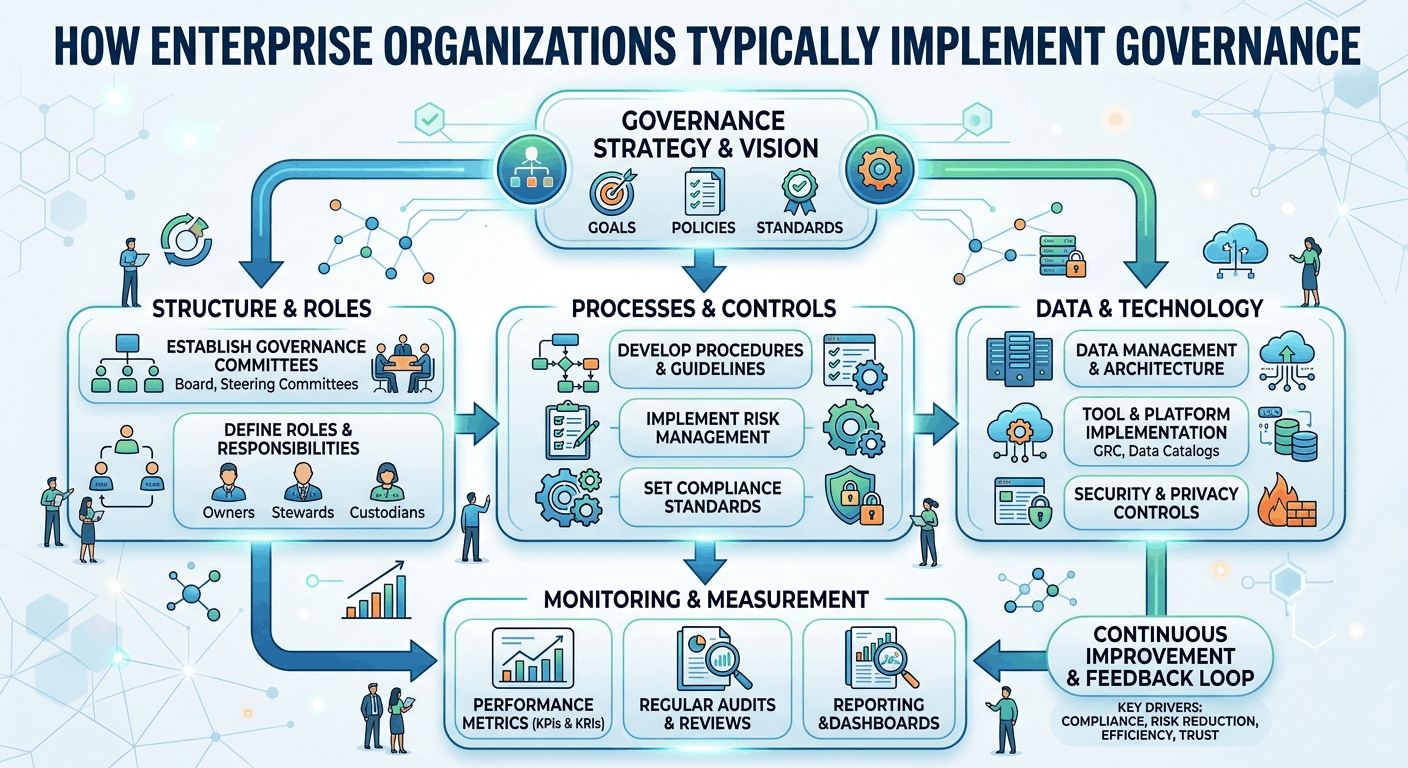
Most organizations move through governance maturity stages progressively.
Stage 1: Centralization
Organizations consolidate vendors, templates, and ordering processes into a unified environment.
This creates initial visibility and operational consistency.
Stage 2: Workflow Governance
Approval systems, permissions, and policy enforcement are introduced.
Ordering becomes controlled rather than decentralized.
Stage 3: System Integration
Business card workflows integrate with HR, procurement, ERP, and enterprise systems.
Identity execution becomes aligned with broader operational infrastructure.
Stage 4: Full Governance Infrastructure
At mature governance levels, organizations achieve:
- Complete auditability
- Centralized control
- Workflow standardization
- Policy enforcement
- Operational visibility
- Infrastructure-level identity governance
At this stage, business card management no longer operates as a fragmented operational activity.
It functions as a governed enterprise system.
The Role of Governance Platforms
Governance platforms operationalize control.
They replace manual coordination with structured systems that enforce organizational standards automatically.
Platforms such as BCM enable organizations to:
- Standardize identity execution
- Control approvals and permissions
- Govern vendors and workflows
- Integrate with enterprise systems
- Maintain audit visibility
- Scale identity operations consistently
This transforms business card management from reactive coordination into governed infrastructure.
Strategic Takeaway
Enterprise organizations do not lose control because business cards are difficult to manage.
They lose control because identity execution is allowed to operate outside governed systems.
Business card governance introduces the structure necessary to standardize workflows, enforce policies, maintain visibility, and align identity execution with enterprise operations.
As organizations scale, governance becomes foundational.
Without governance, operational fragmentation expands.
With governance, identity execution becomes controlled, auditable, scalable, and infrastructure-driven.