

Governance Observability: Making Enterprise Policy Execution Measurable, Explainable, and Continuously Optimized
Introduction
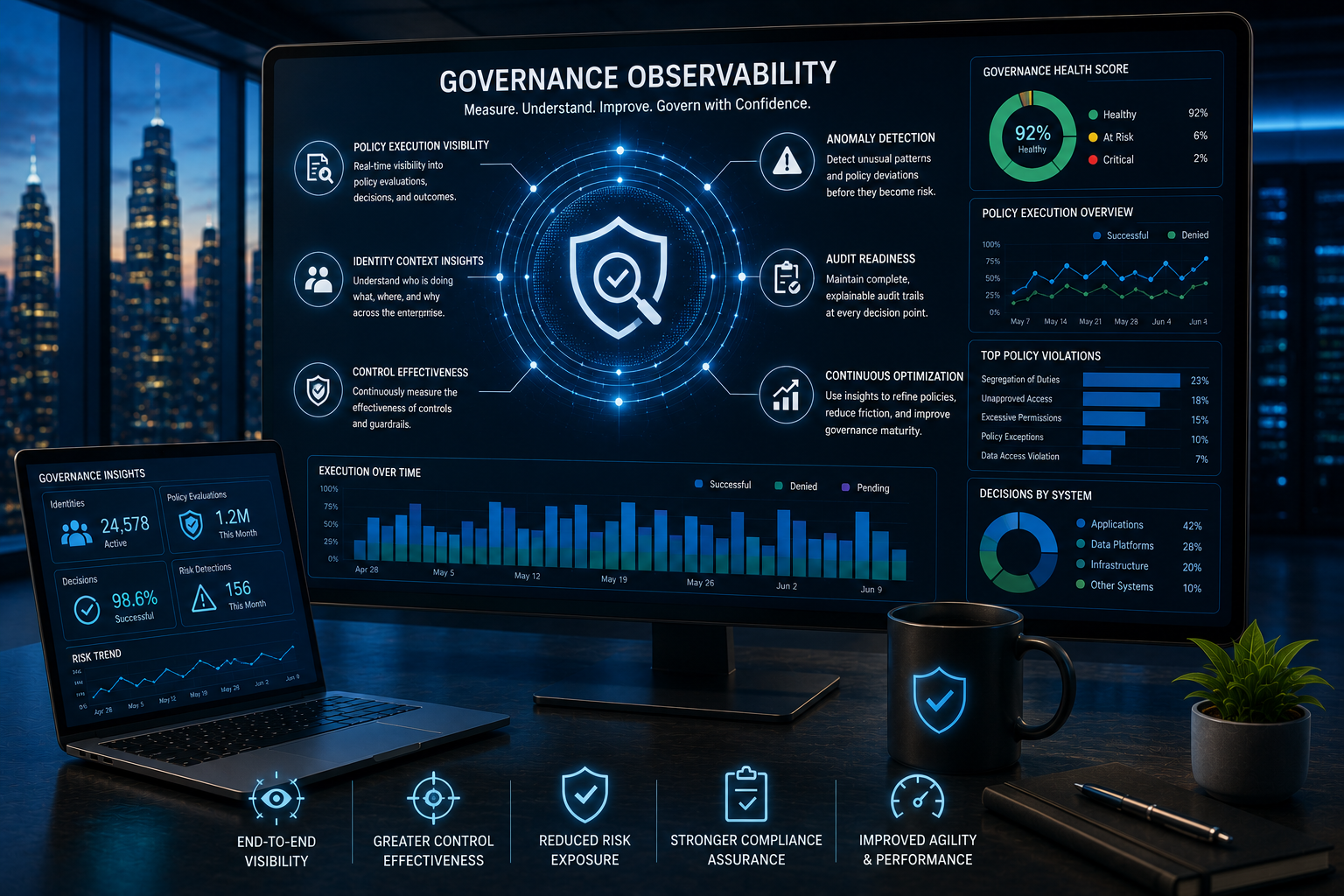
As enterprises accelerate digital transformation, governance is becoming as important as automation. Modern organizations manage thousands of identity-driven activities every day, yet many still lack visibility into how governance policies are actually executed across applications, vendors, and workflows. Governance observability introduces continuous operational insight by making policy execution measurable, explainable, and actionable. Rather than waiting for audits to identify issues, organizations gain real-time visibility into governance health. Color Card Administrator (CCA) provides the governance-first infrastructure required to establish this enterprise capability.
Why Observability Matters
Traditional monitoring focuses on system availability and application performance. Governance observability focuses on operational trust. It answers critical questions such as: Are approvals following policy? Which workflows generate exceptions? Which vendors create recurring governance risks? Where are lifecycle bottlenecks emerging? Executives gain evidence-based visibility instead of relying on assumptions or manual reviews.
Identity Intelligence as the Observation Layer
Identity provides the context needed to interpret governance events correctly. Employee roles, delegated authority, regional policies, business ownership, and vendor relationships determine whether an operational action is compliant. CCA correlates trusted identity information with workflow execution, approvals, branding governance, and lifecycle events to create meaningful governance intelligence rather than isolated audit records.
CCA as the Governance Observability Platform
CCA functions as a centralized governance layer connecting HR, ERP, CRM, procurement, directory services, collaboration platforms, and fulfillment providers. It combines policy orchestration, business identity governance, lifecycle automation, delegated administration, vendor governance, audit logging, operational dashboards, reporting, and API integration into a single governance operating model. This allows enterprises to understand not only what happened, but why it happened and how governance can be improved.
Business Outcomes
Organizations implementing governance observability strengthen compliance, reduce operational risk, accelerate onboarding, simplify audits, improve vendor accountability, standardize approvals, and enhance executive decision-making. Continuous governance metrics support operational improvement while reducing administrative effort and increasing enterprise resilience.
Implementation Strategy
Successful adoption begins with authoritative identity sources, standardized governance policies, workflow discovery, centralized event collection, API integration, governance dashboards, and KPIs that measure policy adherence, approval efficiency, exception rates, and lifecycle performance. A phased rollout ensures measurable business value while minimizing operational disruption.
Future Direction
As AI agents and autonomous business processes become more common, enterprises will require governance observability to validate automated decisions continuously. Explainable governance, trusted identity, and policy transparency will become essential enterprise capabilities, enabling innovation without sacrificing accountability.
Conclusion
Governance observability transforms governance from a reactive control mechanism into a continuous source of enterprise intelligence. With Color Card Administrator (CCA), organizations can build a governance operating model that makes every identity-driven decision transparent, measurable, and continuously optimized.