

Digital Identity Governance for Enterprise Business Card Systems
Introduction
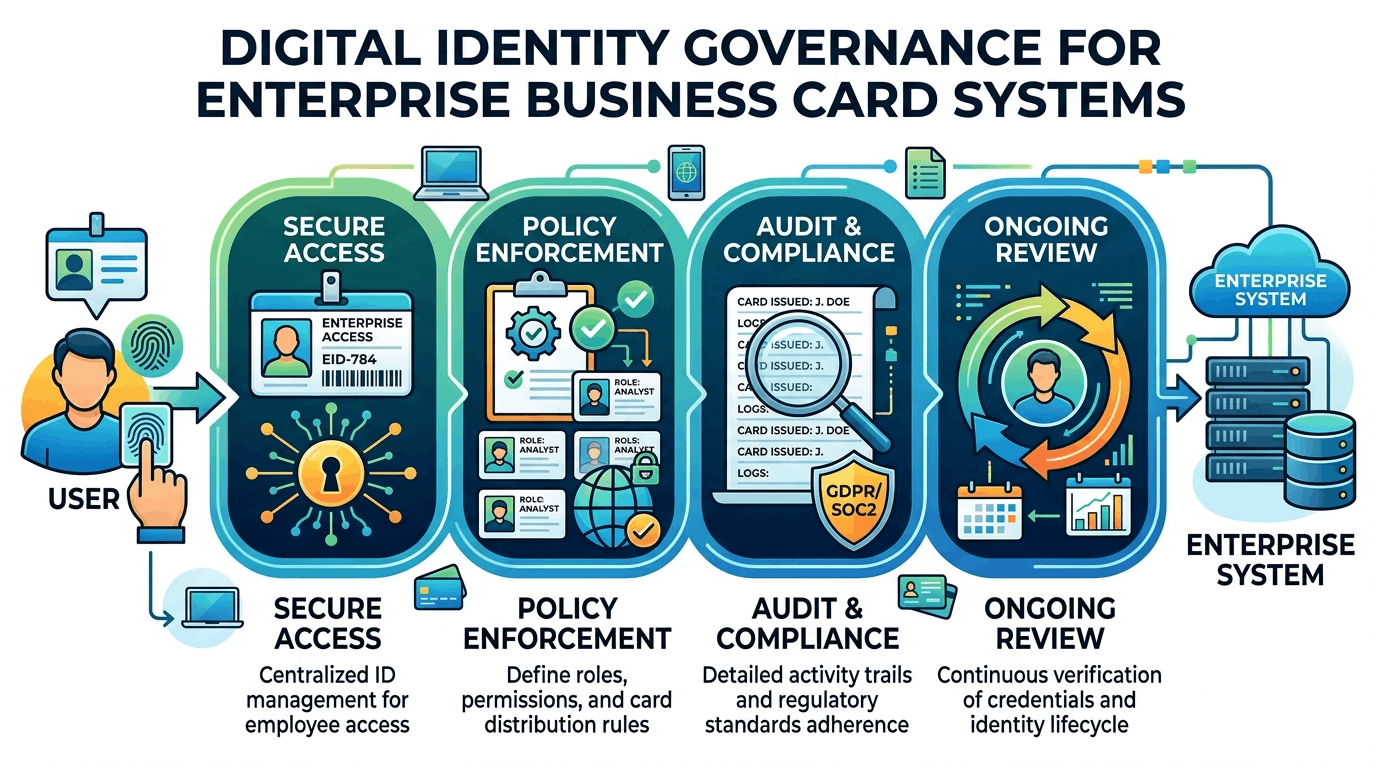
Enterprise identity systems are rapidly evolving beyond physical assets. As organizations expand across hybrid work environments, distributed operations, mobile ecosystems, and digital communication platforms, digital identity execution has become increasingly important to enterprise governance strategies.
Digital business cards are one of the clearest examples of this transformation. However, many organizations still approach digital business cards as standalone productivity tools rather than governed enterprise identity systems. This creates operational fragmentation, inconsistent identity standards, visibility gaps, and compliance risks across enterprise environments.
This is why digital identity governance enterprise strategies have become foundational to modern business card governance models. Digital business cards are not simply digital replacements for physical cards. They are operational identity assets that must be governed as part of the enterprise infrastructure.
Organizations implementing governance-first identity strategies increasingly recognize that digital identity systems require the same operational oversight, workflow standardization, and compliance visibility as other enterprise systems.
Why Digital Identity Governance Matters
Enterprise organizations now manage identity execution across multiple operational environments, including:
- mobile platforms
- collaboration systems
- onboarding workflows
- procurement infrastructure
- HRIS environments
- identity lifecycle systems
- distributed operational ecosystems
Without governance, digital identity execution becomes decentralized and difficult to control. Teams may create digital identity assets independently, resulting in inconsistent branding, outdated employee information, disconnected approval workflows, and reduced operational visibility.
Organizations implementing enterprise identity standardization strategies frequently discover that unmanaged digital identity assets create many of the same operational risks associated with decentralized physical business card systems. Inconsistent identity execution weakens governance maturity while increasing operational inefficiencies and compliance exposure.
A strong digital identity governance enterprise framework helps organizations centralize identity control while maintaining consistency across departments, systems, and workflows.
The Difference Between Digital Business Cards and Digital Identity Infrastructure
Many organizations mistakenly treat digital business cards as isolated communication tools. In reality, enterprise digital identity infrastructure focuses on:
- governance visibility
- operational standardization
- workflow orchestration
- policy enforcement
- auditability
- onboarding synchronization
- identity lifecycle management
- enterprise integrations
Organizations implementing governance-first identity systems understand that digital identity execution must operate as part of enterprise infrastructure rather than existing separately from operational systems.
Digital identity assets are connected to broader enterprise workflows, including employee onboarding, role management, procurement systems, compliance tracking, and communication platforms. Without centralized governance, identity execution becomes fragmented across systems.
How Governance Improves Digital Identity Consistency
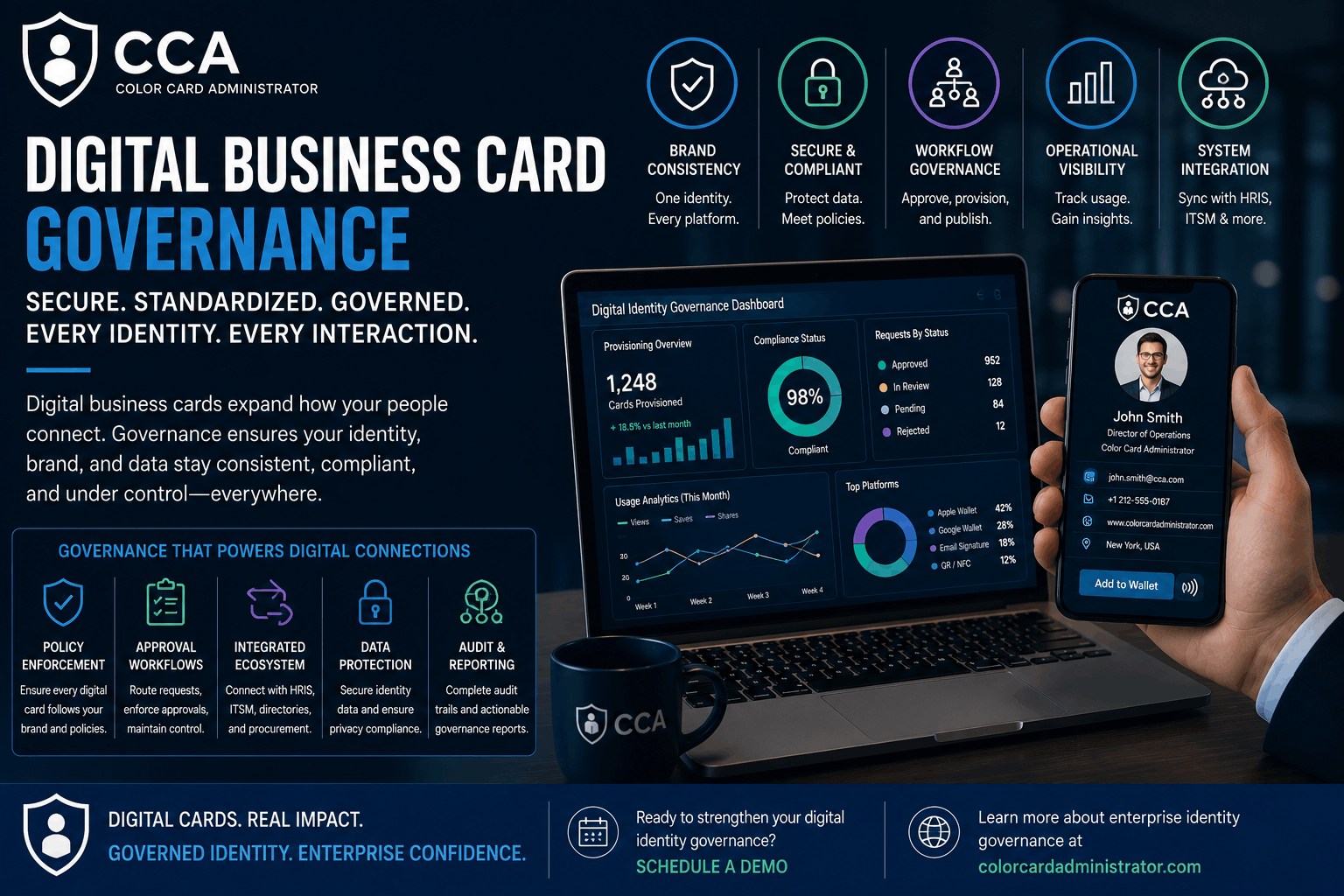
Organizations implementing enterprise onboarding orchestration workflows frequently discover that digital identity provisioning requires centralized governance coordination. Without standardized governance controls, employees may receive inconsistent digital identity assets depending on the department, location, or onboarding process.
Governance improves digital identity consistency by embedding operational rules directly into workflows. Standardized templates, role-based permissions, automated approvals, and centralized identity provisioning help organizations maintain consistency across enterprise environments.
This approach reduces operational variability while improving compliance visibility and audit readiness.
Enterprises investing in digital identity governance enterprise systems gain stronger control over identity execution throughout the employee lifecycle.
The Role of Workflow Orchestration
Organizations implementing enterprise workflow orchestration systems gain significantly stronger visibility into identity execution across enterprise infrastructure. Workflow orchestration ensures identity-related activities follow predefined governance paths instead of relying on disconnected manual processes.
For example, onboarding workflows can automatically trigger digital business card provisioning based on role, department, or organizational hierarchy. Approval routing, policy enforcement, and identity synchronization occur automatically through integrated systems.
This level of orchestration strengthens operational consistency while reducing administrative burden and governance fragmentation.
Why Visibility and Auditability Matter
Organizations implementing governance visibility systems understand that auditability is foundational to enterprise operational control. Without centralized visibility, organizations cannot reliably track how digital identity assets are created, modified, approved, or distributed.
Audit logging and governance reporting provide organizations with measurable insight into identity execution across enterprise systems. This visibility supports compliance initiatives, operational monitoring, and long-term governance optimization.
A mature digital identity governance enterprise strategy prioritizes auditability because visibility is essential for maintaining scalable operational control.
Enterprise Integrations and Digital Identity Governance
Enterprise integrations are foundational to digital identity governance maturity. Digital identity systems must connect seamlessly with HR platforms, onboarding systems, procurement workflows, communication tools, and enterprise directories.
Integrated systems ensure identity data flows consistently across operational environments while maintaining governance alignment. This minimizes duplicate data entry, reduces operational inconsistencies, and strengthens workflow automation.
Without enterprise integrations, digital identity governance becomes fragmented and difficult to scale effectively.
The Role of Governance Platforms
Platforms such as Business Card Solutions systems allow organizations to standardize digital identity provisioning, orchestrate onboarding workflows, synchronize operational systems, centralize governance visibility, and enforce compliance policies.
These governance platforms transform digital business cards from standalone assets into managed components of enterprise identity infrastructure.
Organizations using centralized governance platforms gain stronger operational control while improving scalability and workflow consistency.
Strategic Takeaway
Digital business cards are no longer isolated operational tools.
They are enterprise identity assets that require governance, orchestration, visibility, and infrastructure-level operational control.
Organizations that govern digital identity systems effectively gain:
– operational consistency
– onboarding alignment
– auditability
– compliance visibility
– workflow orchestration
– enterprise identity standardization
Organizations that fail to govern digital identity infrastructure remain vulnerable to fragmentation, inconsistency, operational risk, and disconnected identity execution.