

Governance at Scale: Why Enterprise Identity Orchestration Is the Backbone of Global Business Operations
Introduction
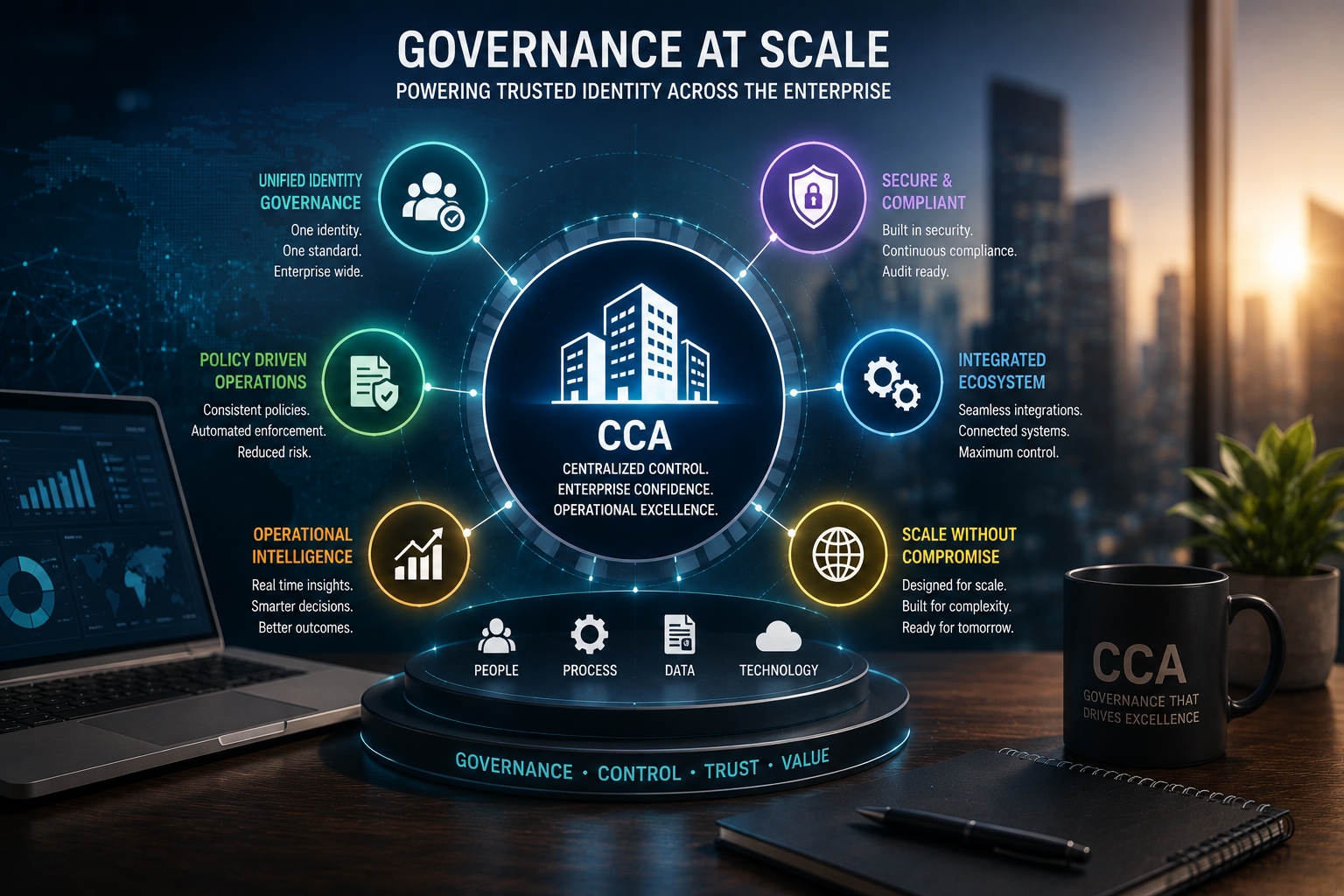
Modern enterprises require centralized governance to coordinate identity-driven operations across regions, business units, and technology platforms. Identity orchestration provides the operational backbone that ensures approvals, lifecycle events, vendor interactions, and business identity execution consistently follow enterprise policy. CCA delivers this governance-first architecture as an infrastructure layer rather than another isolated application.
Enterprise Complexity
Cloud platforms, hybrid workforces, outsourced vendors, and distributed operations create fragmented governance when every application enforces its own rules. Centralized orchestration eliminates inconsistency while improving visibility and compliance.
Identity as the Enterprise Control Point
Trusted identity data becomes the authoritative source for approvals, provisioning, workflow routing, branding governance, delegated administration, and lifecycle automation. Governance becomes reusable across systems instead of being recreated in each application.
CCA Architecture
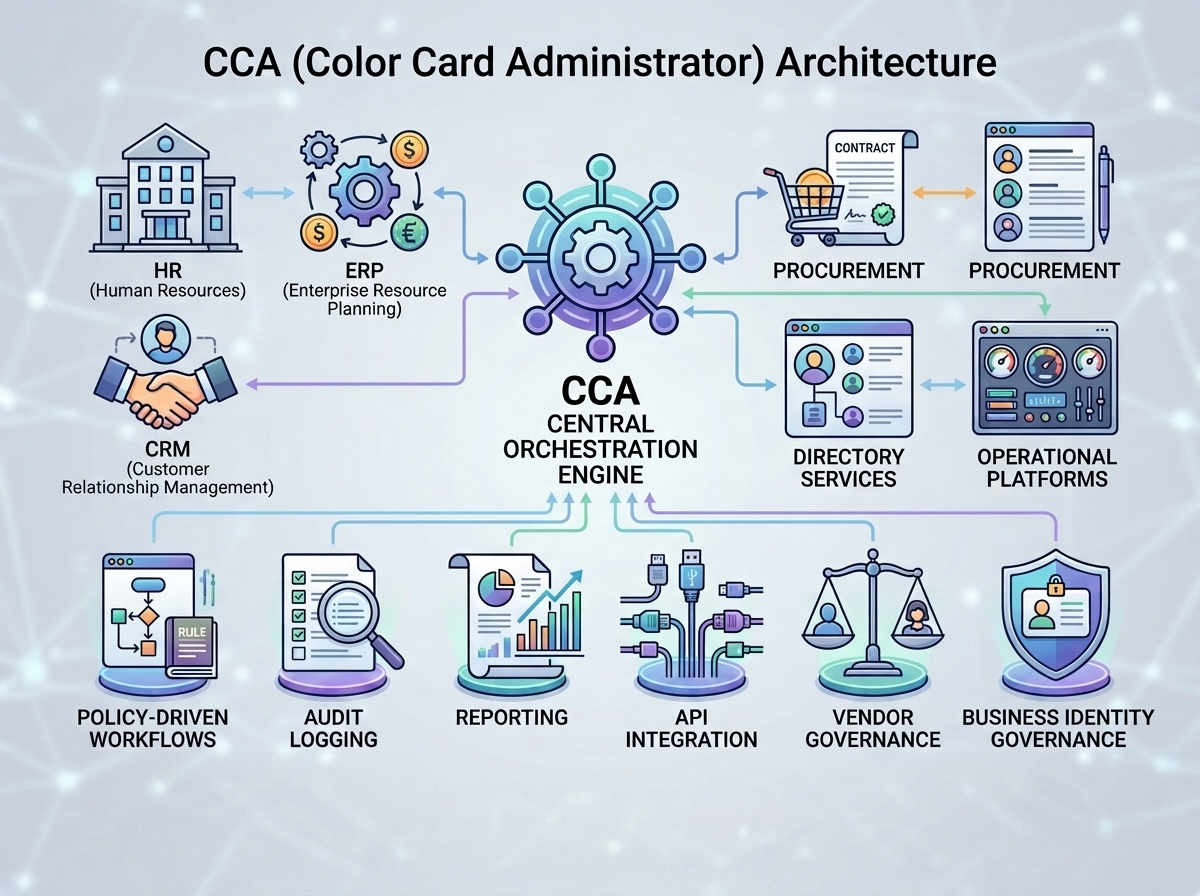
CCA coordinates HR, ERP, CRM, procurement, directory services, and operational platforms through policy-driven workflows, audit logging, reporting, API integration, vendor governance, and business identity governance.
Business Outcomes
Organizations gain faster onboarding, standardized approvals, reduced operational risk, improved compliance, stronger vendor accountability, enterprise reporting, and better executive decision-making.
Implementation
Begin with authoritative identity sources, define governance policies, integrate enterprise platforms, automate lifecycle events, establish dashboards, and continuously measure governance maturity.
Future Outlook
As AI-driven automation expands, centralized identity orchestration will ensure automated decisions remain transparent, explainable, and compliant.
Conclusion
CCA enables enterprises to orchestrate governance at scale, transforming disconnected operational processes into a unified, policy-driven execution model.