

Enterprise Governance by Design: Building Policy-Centric Operations for the Modern Digital Enterprise
Introduction
Digital transformation has fundamentally changed how enterprises operate. Cloud applications, distributed workforces, outsourced service providers, and API-driven integrations have created unprecedented operational flexibility. However, they have also introduced new governance challenges. Every business process now spans multiple systems, departments, and external partners, making consistent policy enforcement increasingly difficult.
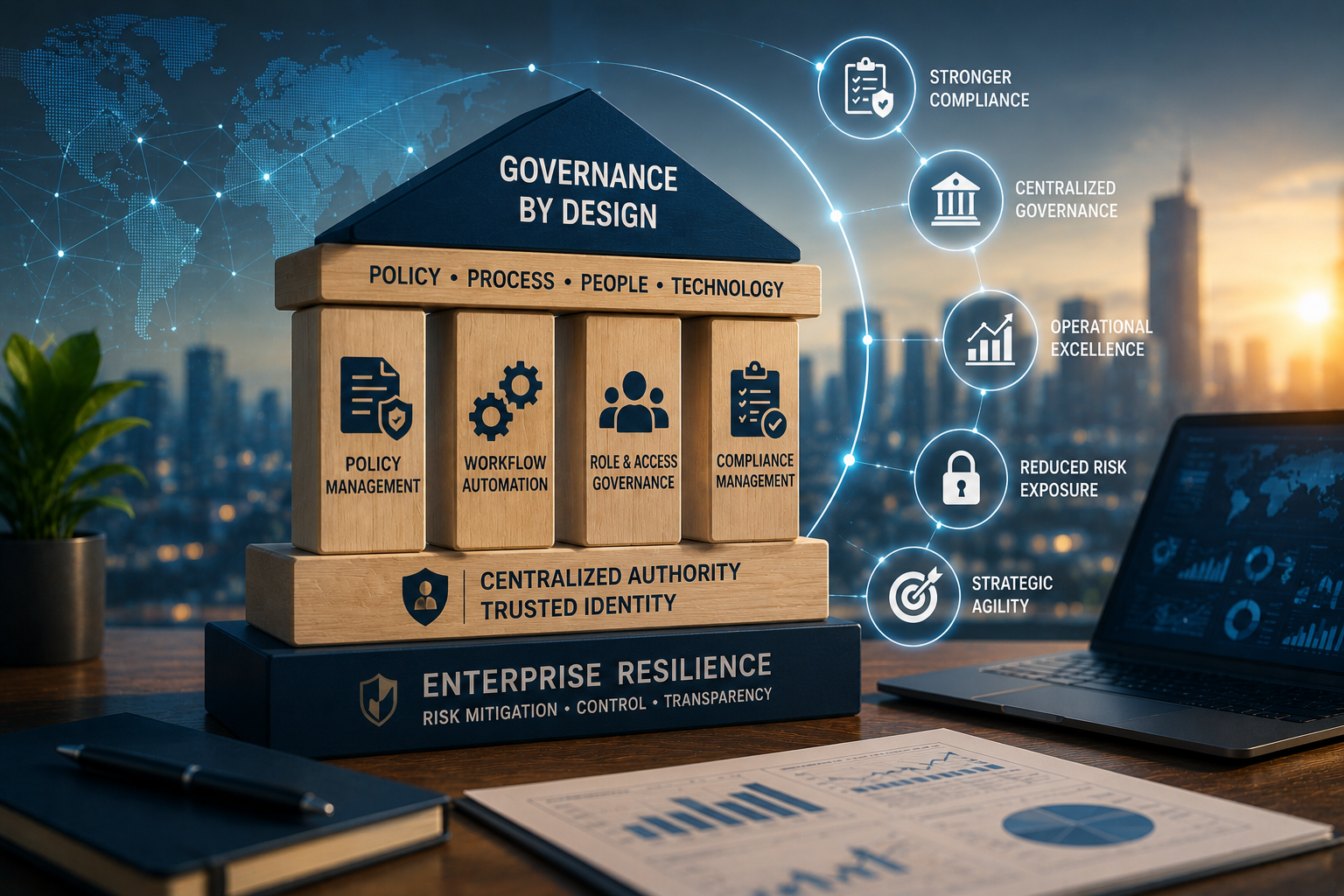
Successful enterprises recognize that technology alone cannot deliver operational excellence. Sustainable transformation requires governance to be embedded into every workflow, approval, and operational decision. Rather than relying on isolated controls inside individual applications, organizations need a centralized governance layer capable of orchestrating enterprise execution through standardized policies. This governance-by-design approach enables organizations to scale confidently while maintaining security, compliance, accountability, and operational consistency.
Why Policy-Centric Operations Matter
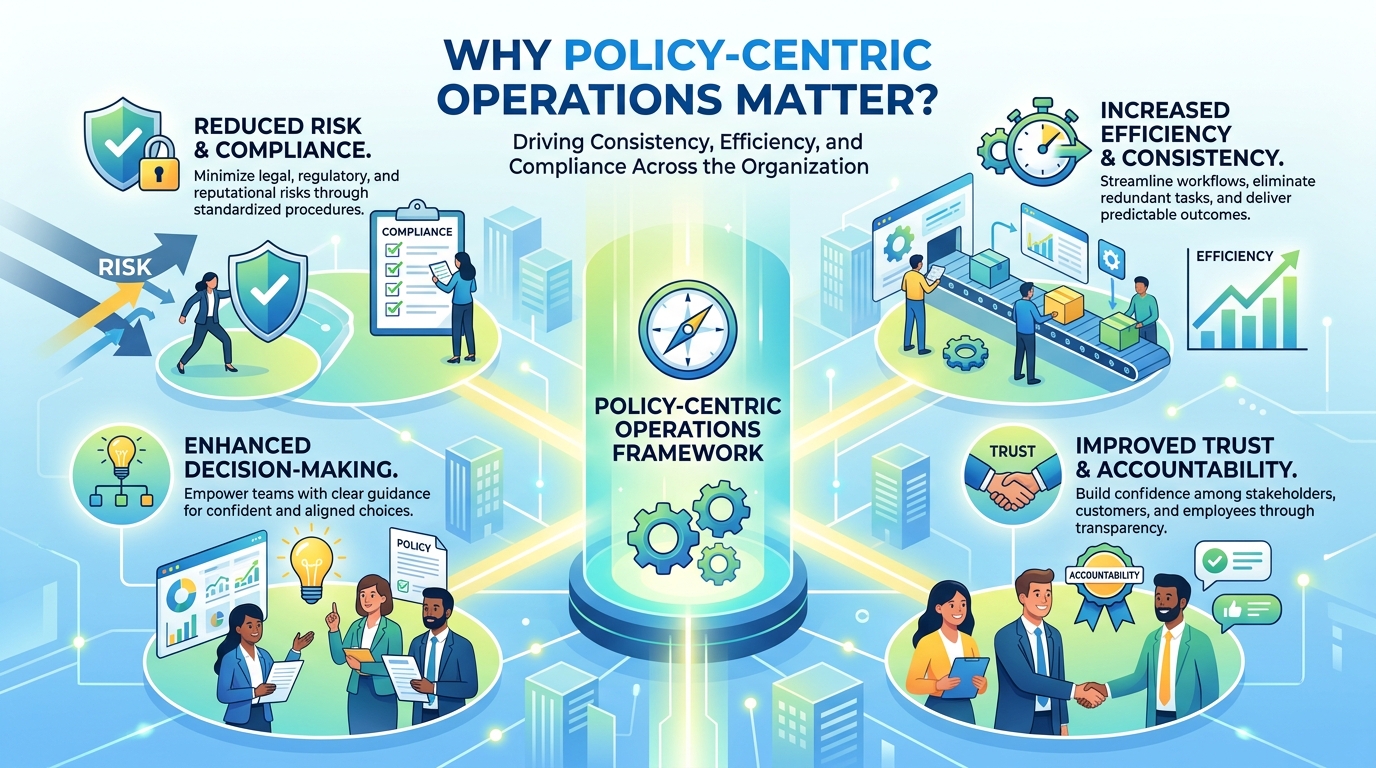
Traditional governance often relies on manual reviews, departmental procedures, and periodic audits. These approaches cannot keep pace with today’s dynamic business environment. Policy-centric operations convert governance rules into executable business logic. Approval hierarchies, branding standards, vendor eligibility, lifecycle events, regional compliance, and delegated authority become automated policies that are enforced consistently across every business transaction.
The Cost of Fragmented Governance
When governance is distributed across disconnected applications, organizations experience duplicated effort, inconsistent approvals, delayed onboarding, vendor confusion, branding inconsistencies, compliance gaps, and limited executive visibility. Individual departments may optimize their own processes while unintentionally creating enterprise-wide operational risk. Centralized governance eliminates these silos by establishing a common framework for enterprise execution.
CCA as the Enterprise Governance Platform
Color Card Administrator (CCA) is positioned as an infrastructure-level governance platform rather than a standalone operational application. It sits between enterprise identity systems and operational execution, coordinating workflows through policy rather than manual intervention. CCA centralizes identity-aware approvals, business card governance, vendor orchestration, lifecycle management, delegated administration, audit logging, reporting, and API integrations. This architecture allows existing enterprise investments in HR, ERP, CRM, procurement, and directory platforms to work together under a unified governance model.
Business Outcomes
Organizations adopting governance-by-design improve operational resilience, strengthen compliance, accelerate onboarding, standardize business identity execution, simplify audits, improve vendor accountability, reduce administrative overhead, and gain enterprise-wide visibility into operational performance. Governance evolves from a reactive compliance activity into a strategic business capability.
Implementation Roadmap
Implementation should begin by identifying authoritative identity sources and documenting critical business processes. Enterprises should then define reusable governance policies, integrate core platforms through APIs, automate lifecycle events, establish governance dashboards, and continuously monitor policy adherence. Incremental implementation enables organizations to mature governance without disrupting existing operations.
Preparing for the Next Generation Enterprise
Artificial intelligence, autonomous workflows, and predictive analytics will increase the speed of enterprise decision-making. These technologies will only deliver trusted outcomes when supported by governed identity, standardized policies, and complete operational visibility. Enterprises that establish governance-first infrastructure today will be significantly better positioned to adopt future innovations with confidence.
Conclusion
Enterprise governance is no longer an administrative function—it is the operational foundation of digital transformation. Organizations that design governance directly into business execution achieve greater consistency, resilience, and compliance while enabling innovation at enterprise scale. CCA provides the centralized governance infrastructure that allows modern enterprises to execute confidently across people, processes, vendors, and technology.