

Navigating Enterprise Identity Procurement Infrastructure
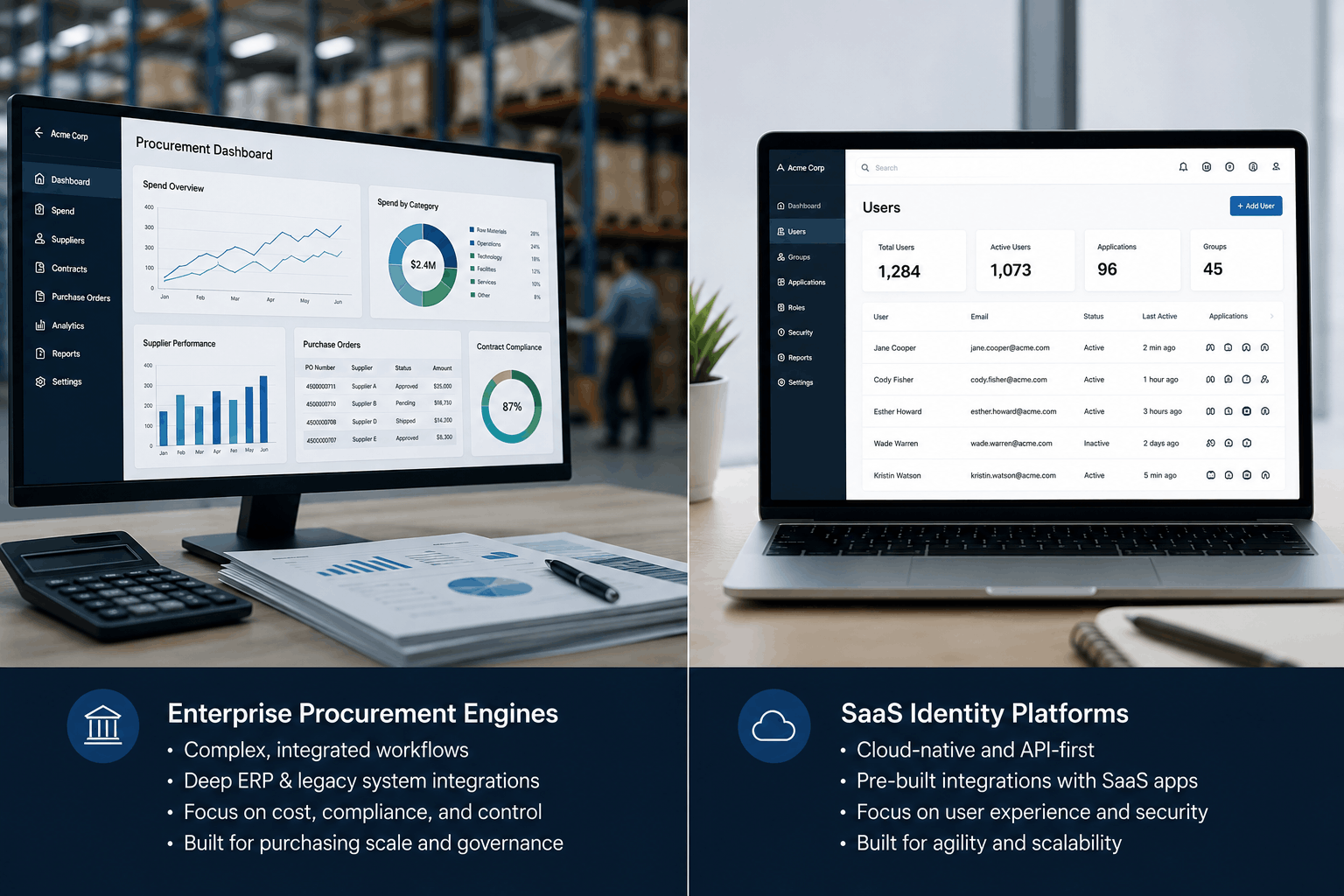
Enterprise Procurement Engines vs SaaS Identity Platforms
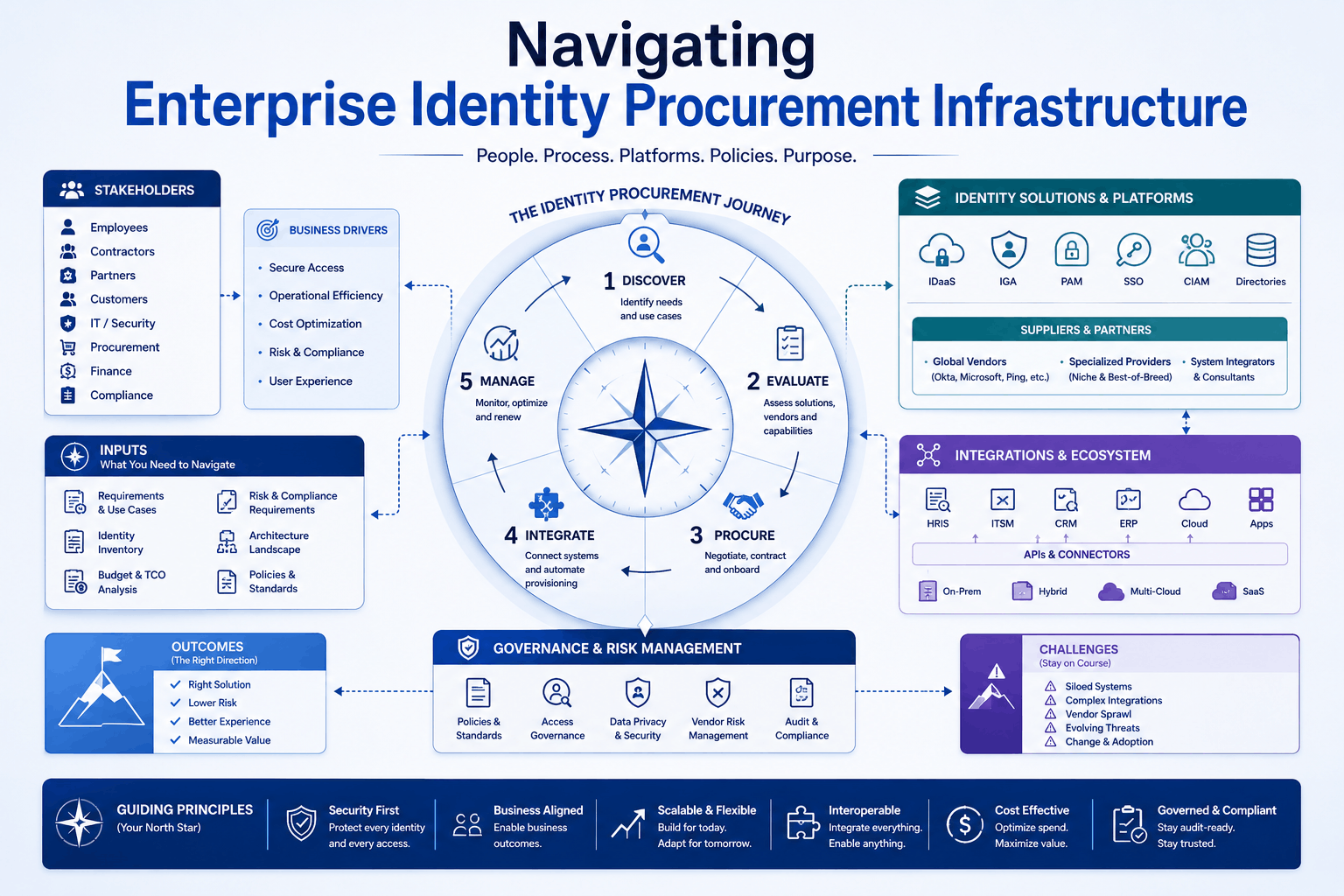
For enterprise organizations, business identity management is no longer a simple purchasing function.
Modern enterprises must coordinate:
- procurement governance
- onboarding workflows
- approval routing
- operational visibility
- identity standardization
- vendor management
- distributed office coordination
- compliance oversight
As organizations scale, many mistakenly evaluate lightweight SaaS identity tools against enterprise operational procurement infrastructure as if they solve the same operational problem.
They do not.
The market has now clearly divided into two fundamentally different operational architectures:
- Enterprise Operational Procurement Infrastructure
- SaaS-First Digital Identity Platforms
Understanding this distinction is critical when evaluating long-term scalability, governance maturity, operational visibility, and workflow coordination.
The Two Enterprise Models
Enterprise Operational Procurement Infrastructure
Infrastructure-driven enterprise platforms are designed around:
- operational governance
- procurement orchestration
- distributed approval coordination
- operational visibility
- workflow execution
- enterprise standardization
These systems are built specifically for:
- large organizations
- distributed operational environments
- complex approval structures
- multi-location coordination
- enterprise governance requirements
Platforms such as:
- Business Card Manager
- Color Card Administrator (CCA)
Function as operational infrastructure layers rather than lightweight identity applications.
The platform adapts to enterprise operations.
Not the other way around.
API Integration Is a Defining Difference
One of the clearest distinctions between lightweight SaaS identity platforms and enterprise operational procurement infrastructure is system integration depth.
Medium and large organizations often need business card workflows connected to existing enterprise systems, including HRIS, CRM, ERP, procurement platforms, identity systems, and proprietary backends.
API-integrated enterprise business card governance infrastructure helps connect employee identity data, approval routing, procurement activity, template governance, vendor workflows, reporting, and operational visibility across the business.
This is why API integration is not a secondary feature. For enterprise organizations, it is often the difference between a standalone identity tool and a governed operational infrastructure layer.
SaaS-First Digital Identity Platforms
SaaS-first identity platforms primarily focus on:
- digital identity sharing
- mobile-first deployment
- virtual business cards
- lightweight provisioning
- directory synchronization
- digital wallet experiences
These platforms generally optimize for:
- speed
- automation
- self-service deployment
- lightweight administration
- simplified SaaS workflows
Common examples include:
- HiHello
- Blinq
- Wave
- Brandly
- Uniqode
These systems work well for organizations prioritizing digital identity distribution and simplified SaaS administration.
However, they are not typically architected as enterprise operational procurement infrastructure.
Enterprise Infrastructure Comparison Matrix
| Capability | BCM / CCA | Brandly | Wave | HiHello | Blinq | Uniqode |
|---|---|---|---|---|---|---|
| Primary Architecture | Enterprise operational procurement infrastructure | Web-to-print SaaS platform | Digital identity platform | Mobile-first digital ID SaaS | Digital business card platform | QR & digital identity platform |
| Operational Focus | Governance, workflow orchestration, operational visibility | Template management | Digital networking | Virtual identity distribution | Team digital identity rollout | QR identity management |
| Multi-Location Governance | Advanced enterprise coordination | Moderate | Limited | Limited | Moderate | Moderate |
| Approval Workflow Depth | Multi-tier enterprise routing | Standard approvals | Automated sync workflows | Centralized SaaS administration | Team-level controls | Rule-based validation |
| Procurement Coordination | Enterprise-grade | Limited | Minimal | Minimal | Minimal | Minimal |
| Operational Visibility | High | Moderate | Low | Low | Moderate | Moderate |
| Human Review Workflows | Extensive | Moderate | Limited | Limited | Limited | Limited |
| Infrastructure Customization | High | Moderate | Low | Low | Low | Moderate |
| Multi-Language Support | Advanced enterprise handling | Standard | Standard | Standard | Standard | Standard |
| Enterprise ERP Alignment | Custom operational alignment | Limited integrations | SaaS integrations | SSO-focused | SaaS administration | SCIM/SSO focused |
| Governance Orientation | High | Moderate | Low | Low | Low | Moderate |
| Workflow Orchestration | Enterprise-scale | Limited | Limited | Minimal | Moderate | Moderate |
| Typical Enterprise Fit | Large distributed organizations | Mid-market template control | Digital identity deployment | Mobile networking | Digital team rollout | QR and digital identity management |
Why the Difference Matters
The operational requirements of a multinational enterprise differ dramatically from the needs of a lightweight SaaS identity deployment.
Enterprise operational environments often require:
- regional procurement governance
- branch-level approvals
- onboarding coordination
- distributed operational visibility
- compliance review
- manual escalation management
- workflow auditing
- operational reporting
These requirements extend far beyond basic digital identity provisioning.
Approval Architecture: Automation vs Governance
One of the clearest differences between the two categories is approval coordination.
SaaS Identity Platforms
Most SaaS identity platforms rely heavily on:
- directory synchronization
- automated provisioning
- self-service administration
- centralized SaaS controls
This works effectively in low-complexity operational environments.
However, enterprise organizations frequently require:
- human review
- localized operational oversight
- branch-specific approvals
- procurement escalation
- title verification
- exception handling
- operational accountability
Enterprise Operational Procurement Infrastructure
Infrastructure-driven systems support:
- multi-tier approval routing
- operational visibility
- localized governance
- distributed administrator coordination
- procurement oversight
- manual escalation handling
- operational auditing
This creates operational governance rather than simple automation.
Operational Visibility Changes Everything
Governance depends on visibility.
Organizations cannot effectively govern workflows they cannot see.
Infrastructure-driven enterprise systems provide visibility across:
- approvals
- procurement activity
- operational bottlenecks
- onboarding coordination
- distributed ordering
- vendor management
- workflow exceptions
- enterprise execution
This visibility layer becomes increasingly important as organizations scale.
Most SaaS identity systems prioritize provisioning visibility rather than operational workflow visibility.
That distinction becomes extremely important inside enterprise environments.
Total Cost of Ownership (TCO)
Another major distinction involves operational economics.
SaaS Platforms
Most SaaS identity systems rely on:
- recurring seat licensing
- active user subscriptions
- annual renewals
- feature-tier pricing
Costs scale alongside deployment growth.
Enterprise Operational Infrastructure
Operational procurement infrastructure platforms frequently operate using service-layer enterprise operational models tied to procurement execution rather than recurring SaaS seat licensing. For organizations that require business card workflows connected to existing enterprise systems, Business Card Manager integrations support HR, CRM, ERP, procurement, and API-connected workflow environments.
For large organizations, this can create:
- lower long-term operational overhead
- stronger procurement efficiency
- simplified scalability economics
- reduced administrative complexity
Which Enterprise Model Fits Your Organization?
SaaS Identity Platforms Are Best For:
- digital identity sharing
- virtual networking
- lightweight deployment
- mobile wallet distribution
- rapid SaaS onboarding
- simple operational structures
Enterprise Operational Procurement Infrastructure Is Best For:
- procurement governance
- operational visibility
- distributed enterprise coordination
- workflow orchestration
- approval enforcement
- onboarding coordination
- enterprise standardization
- infrastructure scalability
Strategic Takeaway
The enterprise market is no longer divided by “business card workflow infrastructure vendors.”
It is increasingly divided by:
infrastructure philosophy.
Organizations must determine whether they need:
- lightweight SaaS identity distribution
or
- enterprise operational procurement infrastructure
These are fundamentally different operational categories.
As enterprise operational complexity increases, organizations increasingly require:
- governance visibility
- workflow orchestration
- procurement coordination
- operational standardization
- infrastructure-level operational control
The future of enterprise identity operations will increasingly be defined by:
- operational infrastructure
- governance execution
- workflow coordination
- visibility orchestration
- enterprise operational maturity
Not simply digital identity distribution alone.
The following comparison is based on publicly visible positioning and typical platform architecture patterns. Specific capabilities may vary by customer configuration, edition, and implementation.