

Operationalizing Identity Governance Across Enterprise Environments
Introduction
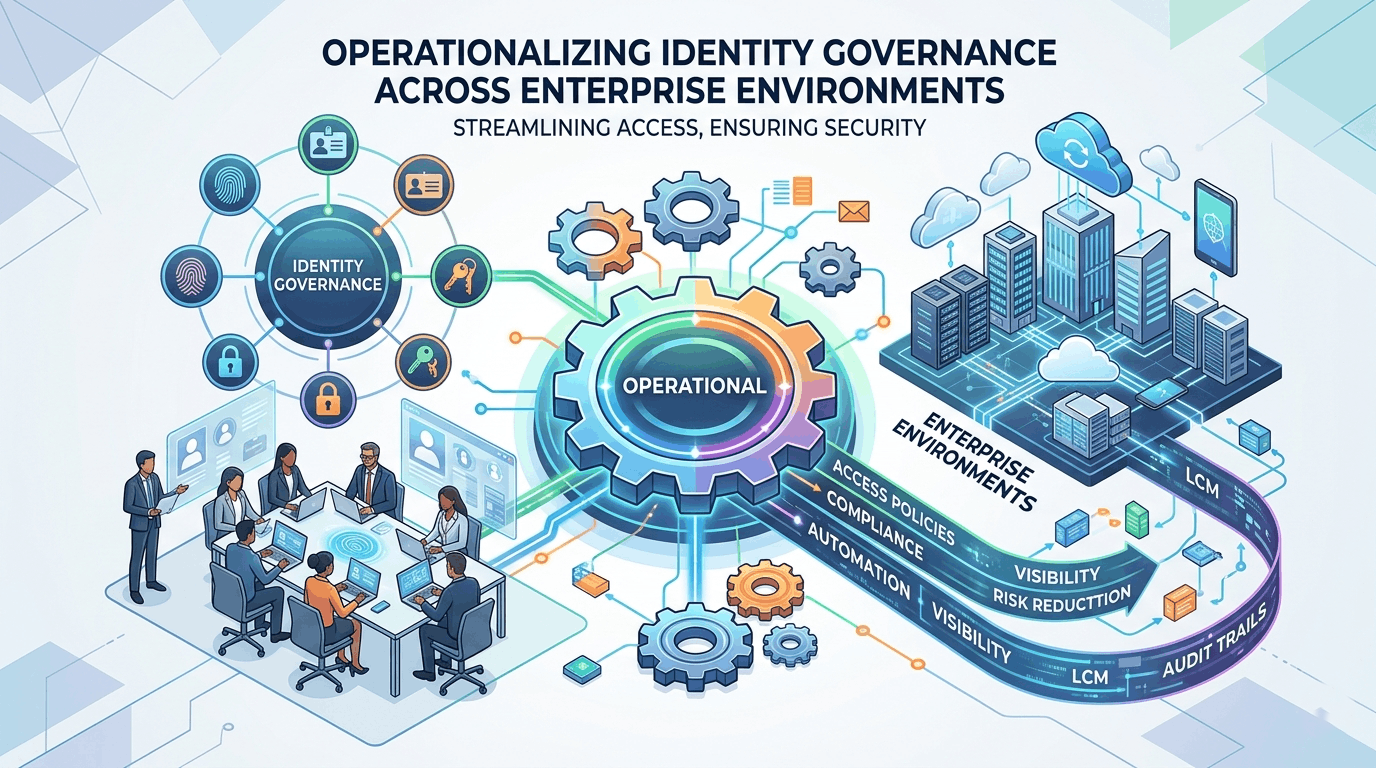
Enterprise organizations do not struggle to define governance. In most cases, governance policies, standards, and compliance frameworks are already well documented across departments and operational systems. The real challenge is operationalizing identity governance enterprise strategies in a way that ensures policies are consistently executed across the enterprise infrastructure.
Identity governance is only effective when it becomes part of day-to-day operations. Policies alone cannot create operational control if execution systems remain disconnected from governance requirements. Operationalizing identity governance means translating policies into structured actions, automated workflows, and controlled identity processes that function consistently across the organization.
As enterprises grow, identity execution becomes increasingly complex. Organizations manage onboarding systems, procurement workflows, approval routing, vendor coordination, compliance requirements, and identity-related assets across multiple business units. Without operational governance systems, these processes become fragmented, inconsistent, and difficult to monitor.
The Gap Between Policy and Execution
Many enterprises invest significant resources into developing governance frameworks. These frameworks define how identity data should be managed, how approvals should occur, and how compliance standards should be maintained. However, in many environments, governance policies exist separately from the systems responsible for executing identity-related activities.
This separation creates operational gaps. Employees often rely on manual requests, email-based approvals, disconnected spreadsheets, or inconsistent workflows to complete identity-related tasks. As a result, organizations lose visibility into how processes are actually being executed.
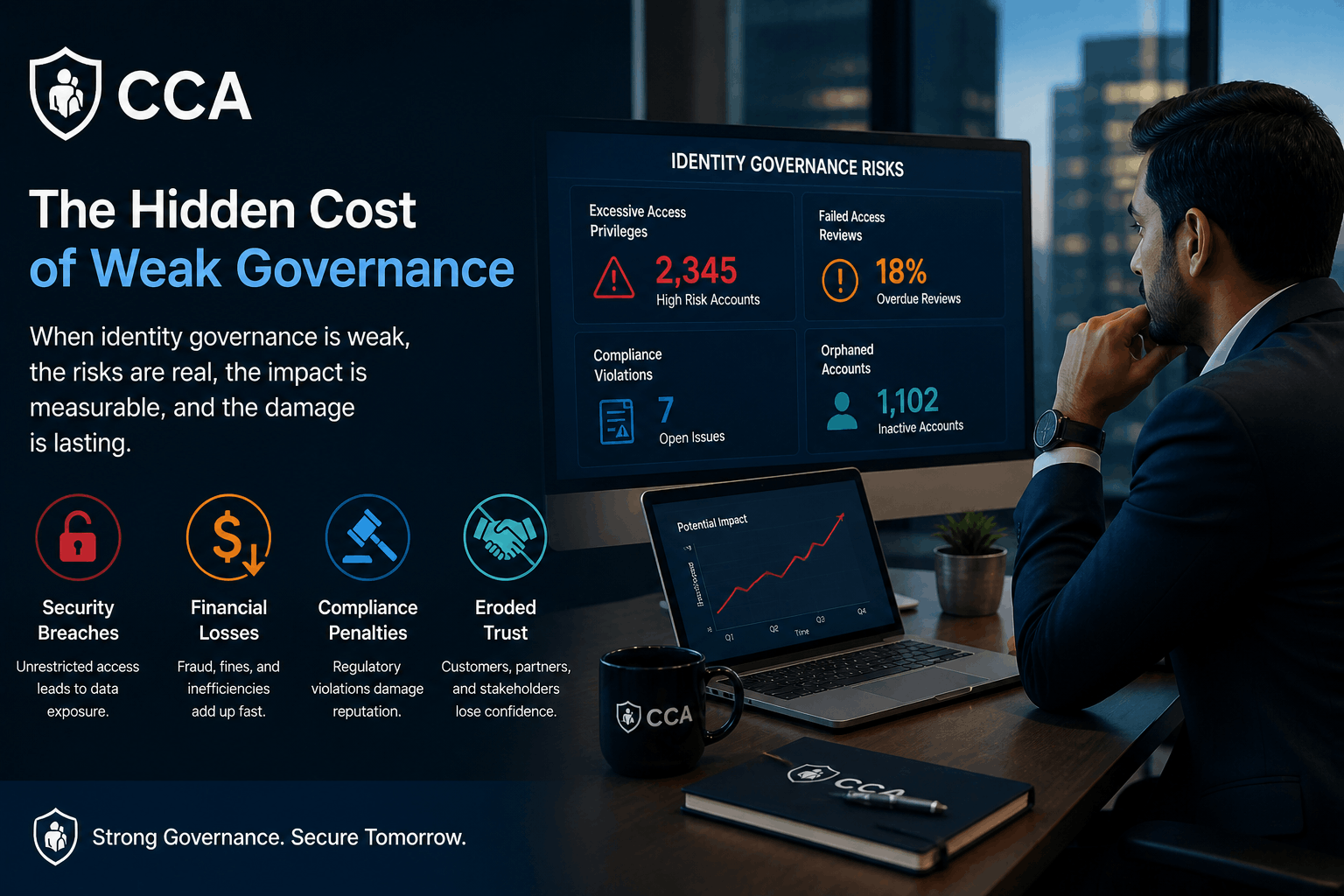
Without operational governance systems, even well-designed policies become difficult to enforce consistently. Different departments may follow different approval methods, identity data may become outdated across systems, and outputs may lack standardization. Over time, these inconsistencies increase compliance risk, reduce operational efficiency, and weaken governance visibility.
The challenge is not defining governance.
The challenge is ensuring governance operates consistently across every identity workflow.
What It Means to Operationalize Governance
Operationalizing governance involves embedding rules, controls, and approval structures directly into enterprise systems responsible for identity execution. Rather than depending on individuals to manually follow governance policies, organizations create systems that enforce governance automatically.
This is where operationalizing identity governance enterprise systems becomes essential. Enterprises must align governance processes with core operational infrastructure to ensure that governance is not simply documented but actively enforced across all workflows.
Identity data should originate from authoritative systems such as HR platforms or centralized directories. Approval workflows should connect to predefined governance rules. Outputs such as business cards, digital assets, or identity records should be generated through controlled systems that maintain consistency.
In this model, governance is no longer treated as a separate compliance layer. Instead, it becomes part of the operational framework itself.
How Governance Becomes an Operational System
To operationalize governance successfully, organizations must prioritize integration, workflow automation, and process standardization. Identity-related activities should connect seamlessly across enterprise systems so that every action follows a defined governance path.
For example, when a new employee is onboarded, identity data from the HR system should automatically initiate downstream workflows. Approval routing should follow predefined governance structures based on role, department, or location. Identity assets and outputs should then be generated using standardized templates and controlled systems.
This approach minimizes operational variability and eliminates many of the inconsistencies caused by manual intervention. It also improves visibility because every action becomes traceable within the governance infrastructure.
Organizations focused on operationalizing identity governance enterprise workflows create consistency at scale while maintaining stronger compliance and operational oversight.
Operational Impact

When governance is operationalized, organizations experience measurable operational improvements. Processes become more predictable because workflows follow standardized paths. Errors decrease because manual intervention is reduced. Compliance improves because governance rules are enforced automatically rather than relying on inconsistent oversight.
Operational visibility also increases significantly. Organizations gain insight into how identity assets are created, approved, distributed, and managed across systems. This visibility supports better decision-making, stronger audit readiness, and continuous operational improvement.
Operationalizing governance transforms identity execution from a fragmented administrative process into a centralized and controlled enterprise system.
Governance as Continuous Execution
Governance is not a one-time implementation project. It is a continuous operational process that evolves alongside enterprise infrastructure.
As organizations introduce new systems, workflows, vendors, and compliance requirements, governance structures must adapt accordingly. By embedding governance directly into operational systems, enterprises ensure governance remains scalable, measurable, and effective over time.
This adaptability is especially important for organizations operating across multiple departments, regional teams, or distributed enterprise environments.
Strategic Takeaway
Enterprise identity governance is only as effective as its execution systems. Policies alone do not create operational control.
Systems do.
Organizations investing in operationalizing identity governance enterprise strategies gain stronger visibility, improved workflow consistency, reduced risk, and greater operational control across identity infrastructure.
Rather than treating governance as static documentation, modern enterprises must treat governance as an active operational capability that supports long-term scalability and enterprise growth.