

Standardizing Identity Execution Across Enterprise Operations
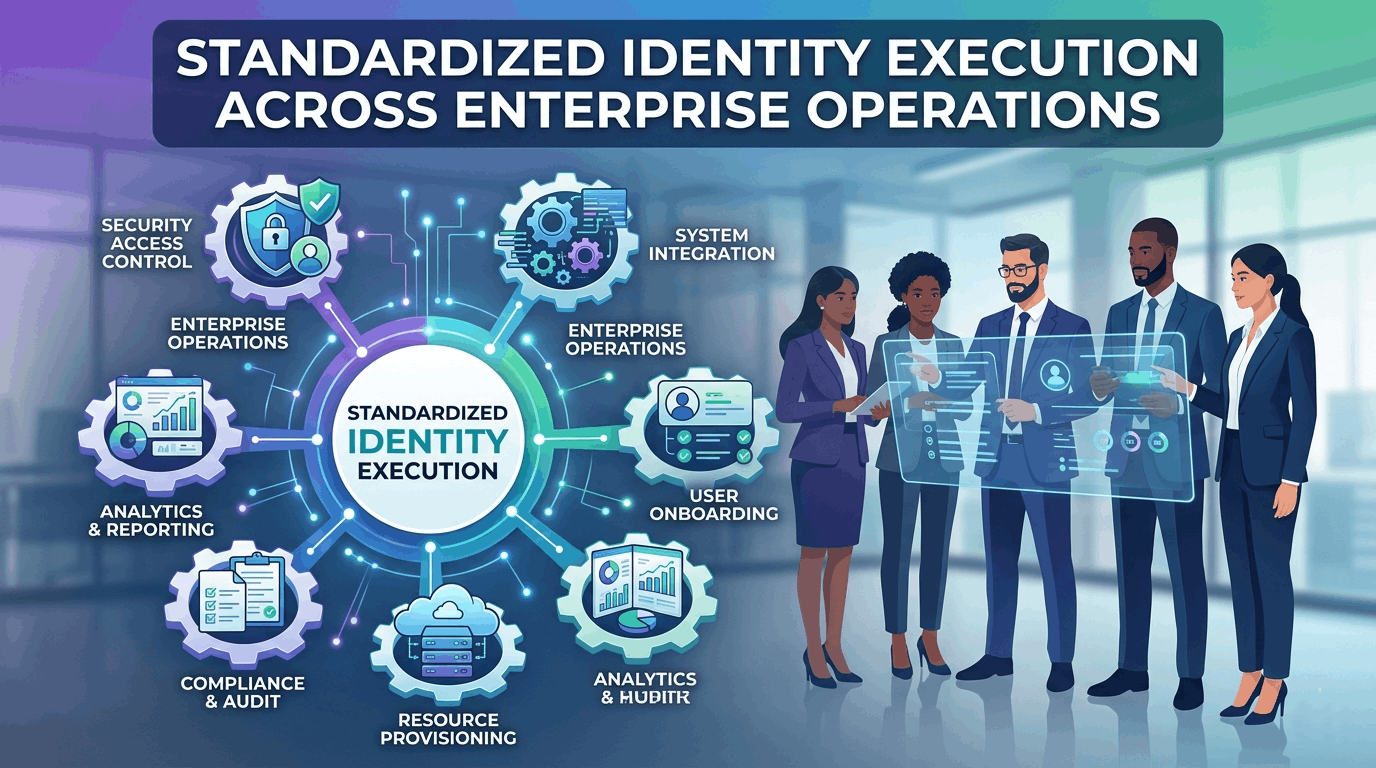
Introduction
Enterprise organizations do not struggle with identity creation.
They struggle with identity consistency.
As operations scale across departments, regions, and systems, identity execution becomes fragmented. Business cards, email signatures, digital assets, and physical outputs are created through disconnected processes.
Standardization is the mechanism that restores control.
Why Identity Execution Becomes Inconsistent
Without standardized systems:
– Employees create assets independently
– Templates are modified or recreated
– Vendors operate without alignment
– Approval processes vary by team
This results in:
– Brand inconsistency
– Compliance gaps
– Operational inefficiencies
– Lack of visibility
Inconsistency is not accidental.
It is a result of missing system-level control.
What Standardization Actually Means

Standardization is not a restriction.
It is a structured execution.
Enterprise identity standardization includes:
- Centralized Templates
All identity assets originate from controlled templates.
- Role-Based Execution
Employees interact with predefined formats based on role.
- Workflow Enforcement
Approvals follow consistent, automated paths.
- Vendor Alignment
Production is limited to approved vendors.
- Audit Visibility
All actions are tracked and reportable.
Standardization ensures identity is executed consistently across all systems.
Operational Impact
Before Standardization:
– Fragmented identity outputs
– Manual processes
– Inconsistent approvals
– Limited control
After Standardization:
– Unified identity execution
– Automated workflows
– Controlled processes
– Full visibility
The result is operational stability.
Standardization as Infrastructure
Identity execution connects to:
– HR systems
– Procurement systems
– Workflow systems
– Compliance platforms
Standardization embeds identity into enterprise infrastructure, ensuring consistency across all touchpoints.
The Role of Governance Platforms
Governance platforms enable standardization by:
– Enforcing templates
– Automating workflows
– Integrating systems
– Controlling vendors
– Providing real-time reporting
This transforms identity execution into a system-driven process.
Strategic Takeaway
Enterprise organizations do not scale through flexibility alone.
They scale through standardization.
Standardizing identity execution ensures:
– Consistency
– Compliance
– Control
– Scalability
It transforms identity from fragmented outputs into governed infrastructure.