

Business Card Analytics and Reporting: Turning Enterprise Card Programs into Measurable Operations
Introduction
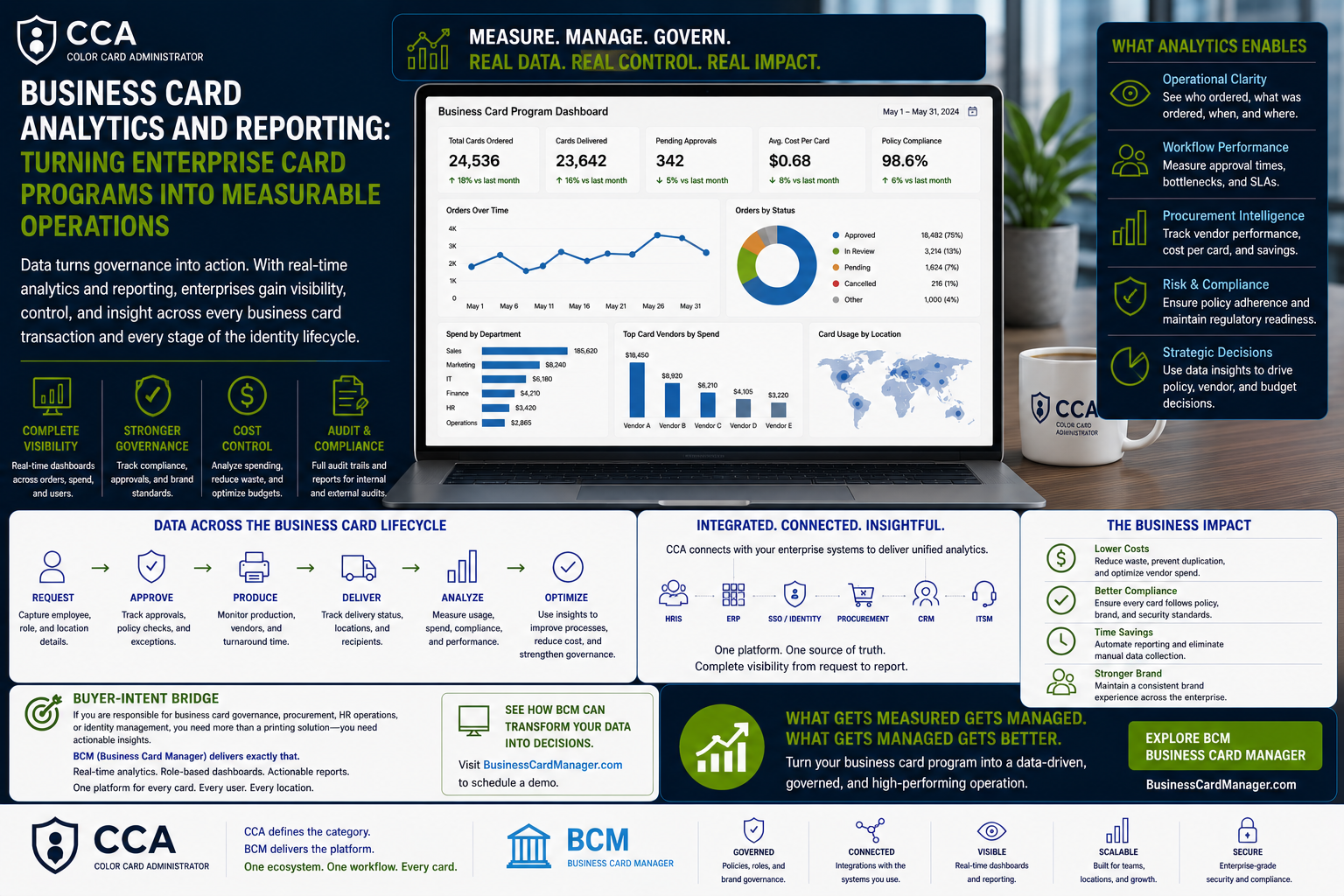
Enterprise organizations measure every important business process. HR tracks onboarding, procurement monitors spending, finance analyzes costs, and operations measure service performance. Business card programs should be no different. When business card management is supported by meaningful analytics and reporting, it evolves from a simple ordering process into an operational discipline that contributes to governance, compliance, efficiency, and strategic decision-making.
Why Reporting Matters

Without reporting, organizations cannot confidently answer fundamental questions such as how many cards are ordered each month, which departments generate the most requests, whether approval workflows are creating delays, how vendors are performing, or where unnecessary costs are occurring. A centralized reporting platform replaces assumptions with measurable operational intelligence.
Operational Dashboards
Modern enterprise platforms provide dashboards for order volumes, approval turnaround times, fulfillment status, regional demand, vendor performance, spending trends, and policy compliance. Executives, HR, procurement, marketing, and operations teams all benefit from role-specific insights while working from the same trusted data source.
Governance Through Analytics
Analytics strengthen governance by highlighting exceptions rather than simply recording transactions. Administrators can identify requests that bypass approval policies, detect unauthorized template usage, monitor compliance with branding standards, and verify that identity information remains accurate throughout the employee lifecycle.
Procurement Intelligence
Business card reporting also supports procurement strategy. Consolidated reporting enables supplier comparisons, contract reviews, spend optimization, SLA monitoring, and forecasting. Organizations gain stronger negotiating power because purchasing decisions are based on measurable performance rather than anecdotal feedback.
API-Connected Visibility
When reporting is integrated with HRIS, ERP, CRM, procurement, identity management, and onboarding platforms, business card activity becomes part of enterprise operational intelligence. You can correlate new-hire volumes with ordering trends, automatically trigger reporting events with employee transfers, and allow procurement data to flow into executive dashboards.
Business Value
Analytics help organizations continuously improve. Visible bottlenecks emerge, we can optimize approval paths, we can measure vendor quality, and leadership gains evidence for operational improvements. Instead of reacting to issues after they occur, enterprises can proactively manage their business card programs.
Buyer-Intent Bridge
Enterprise buyers should evaluate reporting capabilities as carefully as printing capabilities. The right platform should deliver configurable dashboards, audit trails, governance metrics, approval analytics, procurement visibility, API integration, exportable reports, and executive-level insights.
Strategic Takeaway
Business card analytics and reporting are foundational capabilities for enterprise governance. Organizations that measure workflows can improve compliance, reduce administrative effort, strengthen procurement oversight, protect brand standards, and build a scalable identity management program.