

Why Enterprise Identity Governance Is the Missing Foundation for Digital Transformation

Introduction
Digital transformation has become a strategic priority for enterprises seeking greater efficiency, resilience, and customer responsiveness. Yet many transformation initiatives struggle because governance is introduced only after new systems have been deployed. Applications become connected, workflows become automated, and data becomes distributed—but policy enforcement remains fragmented. The result is operational inconsistency, increased compliance exposure, and limited executive visibility. Enterprise identity governance addresses this challenge by ensuring every operational action is aligned with centrally defined business rules. Rather than treating governance as an audit function, forward-looking organizations embed it directly into execution. Color Card Administrator (CCA) was designed around this governance-first philosophy, providing an enterprise control layer that standardizes identity-driven operations across business functions.
The Governance Gap in Digital Transformation
Organizations frequently invest in ERP, CRM, HR, procurement, and collaboration platforms without establishing a unified governance framework that coordinates these systems. Departments implement local processes, vendors follow different standards, approvals vary between regions, and reporting becomes inconsistent. This governance gap introduces unnecessary operational risk and limits the long-term value of digital transformation investments.
Why Identity Is the Enterprise Control Point
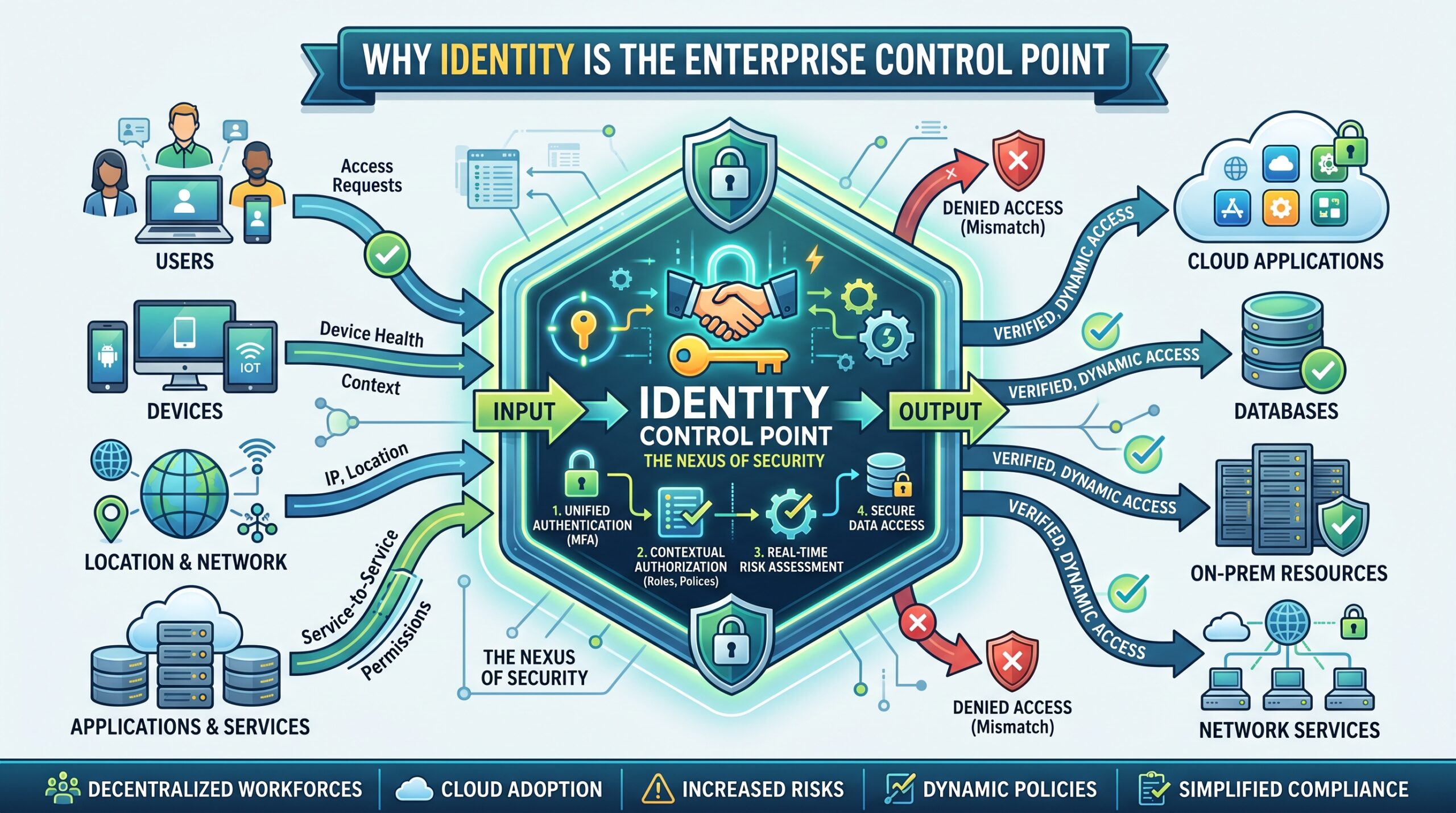
Every significant business activity begins with identity. Employees join the organization, managers approve requests, vendors receive assignments, administrators enforce policy, and business assets are provisioned based on trusted identity information. When identity becomes the common control point, enterprises gain consistent policy enforcement regardless of the downstream application or vendor involved. Governance therefore becomes scalable instead of application-specific.
How CCA Establishes Governance
CCA acts as an infrastructure-level governance platform positioned between enterprise identity systems and operational execution. It centralizes approval workflows, business card governance, vendor workflow orchestration, branding policies, lifecycle automation, delegation models, audit trails, regional policy management, and API-driven integrations. Instead of replacing enterprise applications, CCA coordinates them through standardized governance rules, ensuring every request follows approved enterprise policy.
Business Benefits
Enterprises implementing governance-first architecture experience measurable improvements in compliance readiness, operational transparency, audit efficiency, onboarding speed, vendor accountability, data quality, and policy consistency. Executive leadership gains real-time visibility into operational execution while business teams benefit from faster yet controlled service delivery. Governance becomes an accelerator for transformation rather than an obstacle.
Implementation Best Practices
Successful implementation begins with identifying authoritative identity sources and documenting existing operational workflows. Organizations should then define standardized approval policies, classify governance responsibilities, integrate core enterprise platforms, automate lifecycle events, establish vendor governance controls, and continuously monitor operational metrics. Governance maturity should evolve incrementally while remaining aligned with enterprise objectives.
Looking Ahead
Emerging technologies such as AI, intelligent automation, and predictive analytics will only increase the importance of reliable governance foundations. Organizations that establish centralized identity governance today will be better positioned to adopt future innovations without sacrificing compliance or operational control. CCA provides this long-term architectural foundation by combining governance, orchestration, and enterprise execution into a unified platform.
Conclusion
Digital transformation succeeds when governance is embedded into every operational process rather than added as an afterthought. Enterprise identity governance provides the discipline required to scale automation safely across global organizations. By positioning governance as enterprise infrastructure, CCA enables organizations to modernize operations while maintaining consistency, accountability, and compliance across the entire business ecosystem.