

Building a Unified Enterprise Identity Governance Layer Across Business Operations

Introduction
Modern enterprises operate across multiple systems, vendors, locations, and business functions. Identity-related business processes are frequently fragmented, resulting in inconsistent approvals, duplicate records, compliance gaps, and operational inefficiencies. A unified enterprise identity governance layer provides centralized policy enforcement, standardized workflows, and governance across every operational touchpoint. Color Card Administrator (CCA) represents this infrastructure-first approach by governing business identity execution rather than acting as another isolated application.
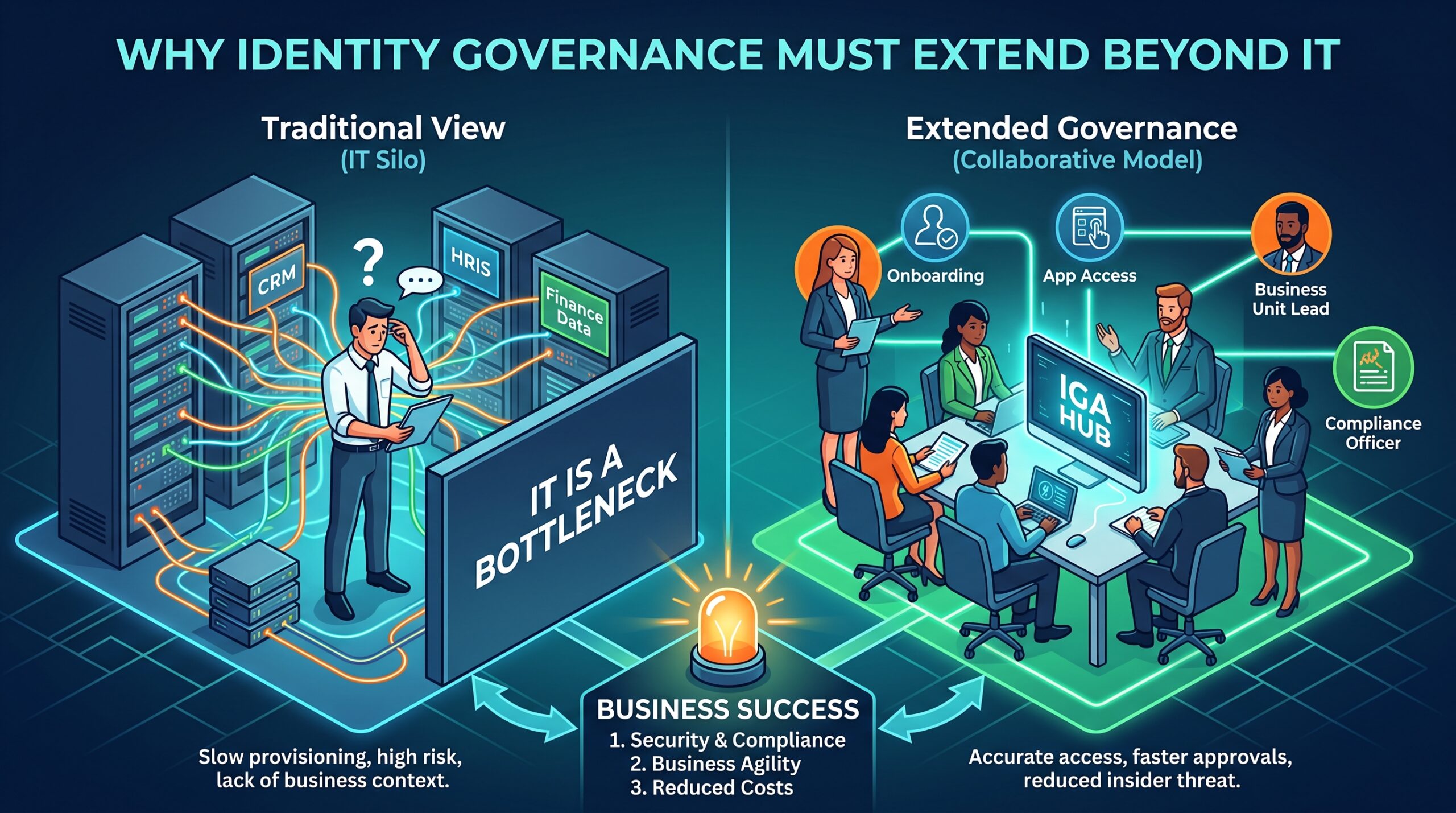
Why Identity Governance Must Extend Beyond IT
Enterprise identity governance should not stop with user authentication. Business operations such as onboarding, business card ordering, vendor engagement, approvals, branding, regional compliance, and lifecycle management all depend upon trusted identity data. When these activities operate independently, organizations lose visibility, auditability, and control.
CCA as the Enterprise Governance Layer
CCA functions as an enterprise control layer positioned between enterprise identity systems and operational execution. Policies determine who can request services, who approves them, which vendors may fulfil requests, how branding standards are enforced, and how complete audit trails are maintained. This governance-first architecture reduces operational risk while improving consistency across distributed enterprises.
Core Governance Capabilities
Centralized approval workflows, policy-driven provisioning, regional business rules, delegated administration, vendor governance, lifecycle-based automation, audit logging, API-driven integration, standardized templates, and enterprise reporting collectively establish operational governance visibility at scale.
Integration Across Enterprise Platforms
CCA integrates with HR systems, ERP platforms, CRM solutions, directory services, procurement workflows, and enterprise collaboration environments. Rather than replacing existing systems, it orchestrates governance between them, ensuring every operational action follows enterprise policy.
Business Value
Organizations adopting unified governance experience stronger compliance, faster onboarding, reduced manual effort, consistent branding, simplified audits, improved vendor accountability, and greater operational resilience. Governance becomes proactive instead of reactive.
Implementation Roadmap
Begin by documenting identity-driven business processes, standardizing approval policies, integrating authoritative identity sources, connecting operational systems through APIs, defining vendor governance, establishing reporting dashboards, and continuously measuring governance maturity.
Conclusion
Enterprise transformation depends on governance as much as automation. A unified identity governance layer enables organizations to execute business operations with confidence, consistency, transparency, and compliance. CCA provides this enterprise-first governance foundation for organizations seeking scalable operational control.