

Measuring Identity Governance Effectiveness in Enterprise Organizations
Introduction
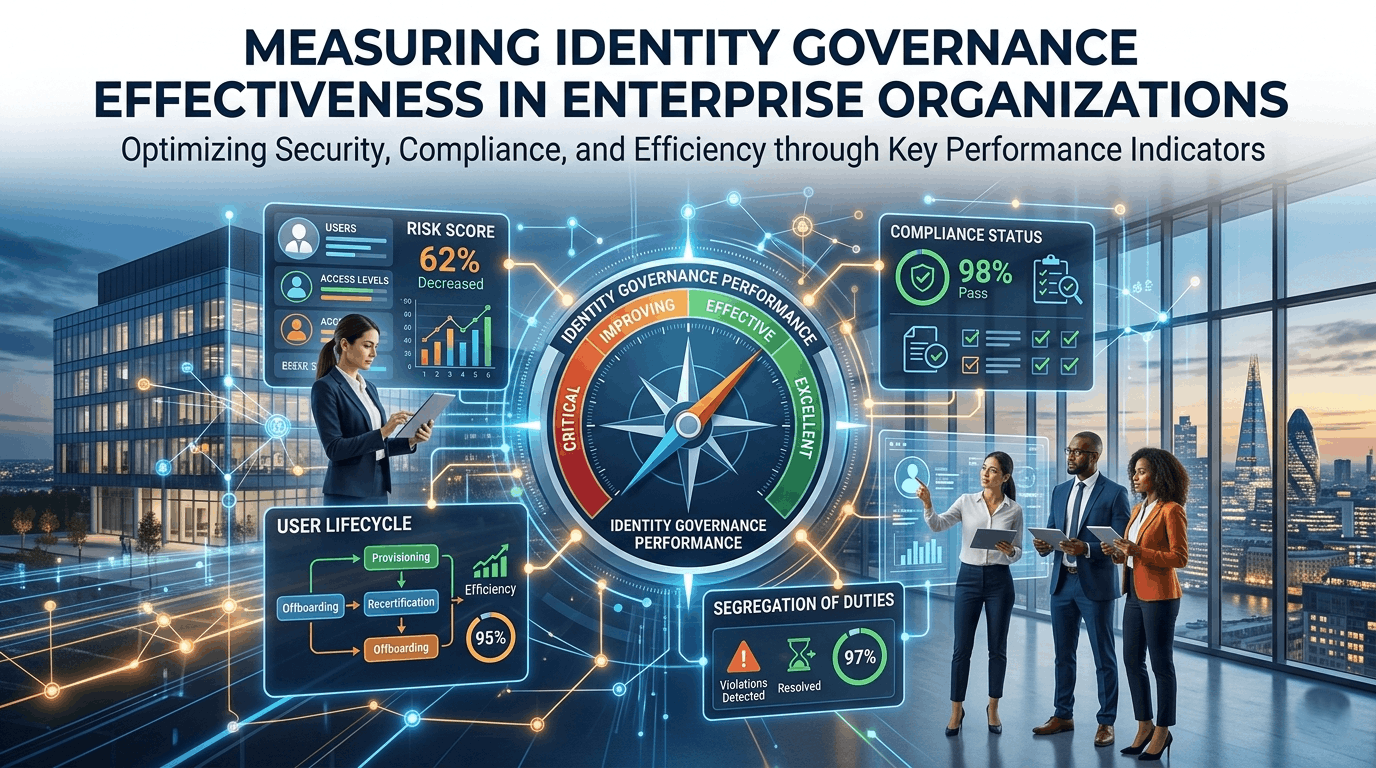
Enterprise organizations often assume governance is functioning effectively simply because workflows are active, approvals are being processed, and operational systems appear stable. However, governance effectiveness is not measured by activity alone. True governance maturity is measured through visibility, consistency, compliance enforcement, auditability, and operational control across the enterprise infrastructure.
As organizations scale, identity workflows become increasingly distributed across HR systems, procurement platforms, onboarding environments, approval systems, and external vendor networks. While these systems may appear operational on their own, disconnected governance structures often create hidden inconsistencies that reduce organizational visibility and weaken compliance enforcement. Without a measurable governance infrastructure, organizations lose insight into how identity execution is actually occurring across departments, business units, and integrated systems.
This is why measuring governance effectiveness has become a critical component of modern business card governance strategies. Governance today is no longer limited to defining policies or documenting procedures. Instead, enterprise organizations must demonstrate that governance operates consistently across operational infrastructure, workflows, integrations, and approval environments.
Why Governance Measurement Matters
Most enterprise governance failures develop gradually rather than appearing as immediate disruptions. Organizations often believe workflows are standardized until inconsistencies begin surfacing across regional teams, departments, procurement systems, or vendor-managed environments. In many cases, governance gaps remain undetected because organizations lack centralized visibility, measurable reporting systems, and operational audit controls.
For example, organizations implementing automated onboarding workflows frequently discover that identity processes still contain manual approval gaps, inconsistent provisioning standards, duplicate identity records, or disconnected procurement routing. These fragmented workflows create operational inefficiencies that increase compliance risk while reducing governance reliability.
Without measurable governance systems, organizations cannot accurately determine whether workflows are functioning correctly, whether policy enforcement remains consistent, or whether operational exceptions are increasing over time. As identity environments grow more complex, governance measurement becomes essential for maintaining enterprise-wide operational control.
The Difference Between Workflow Activity and Governance Effectiveness
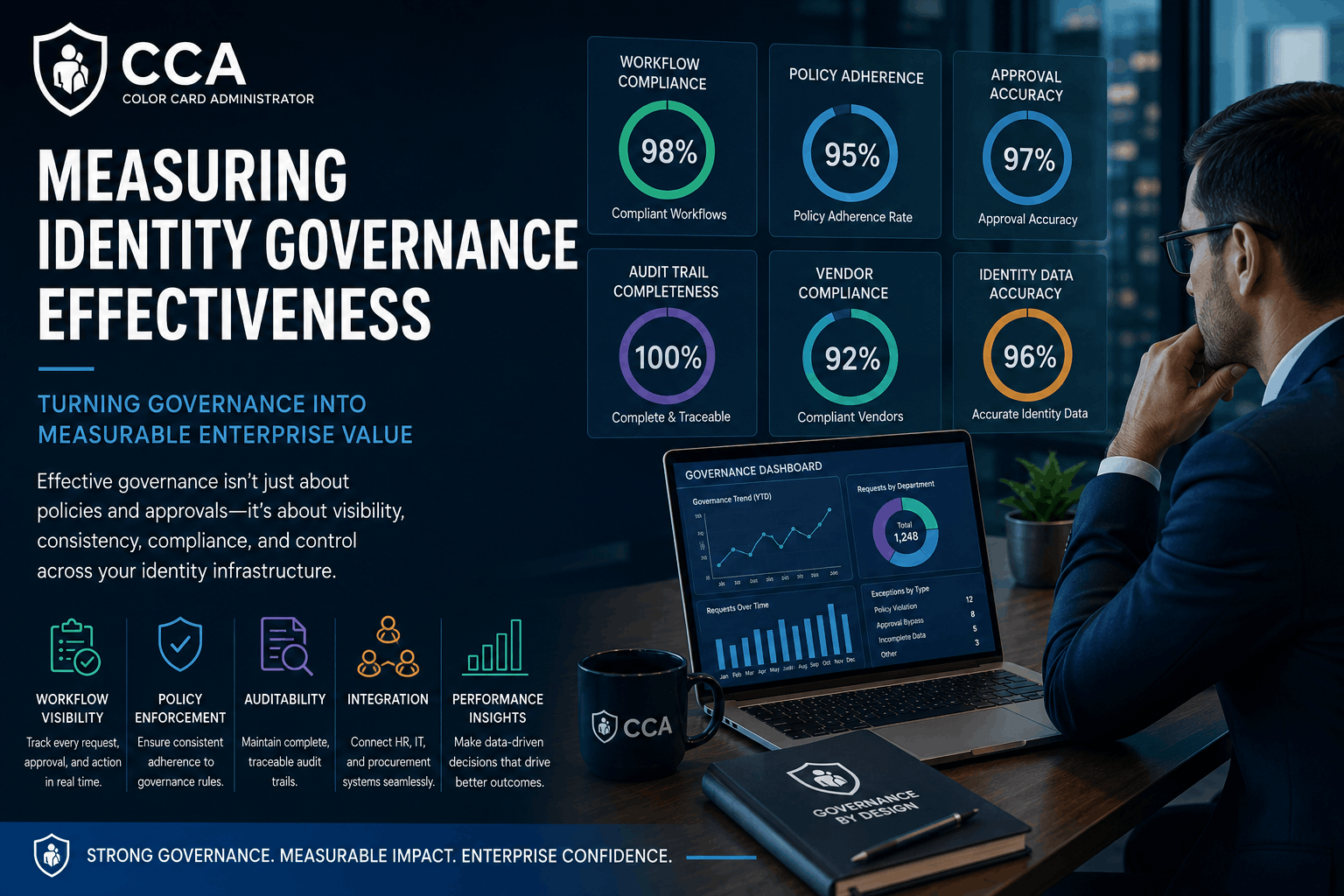
Many organizations incorrectly evaluate governance maturity through operational volume metrics alone. High workflow activity does not necessarily indicate strong governance. In many enterprise environments, workflows may continue operating while governance consistency steadily deteriorates behind the scenes.
Organizations implementing governance-first identity systems understand that operational control depends on system reliability, standardization, audit visibility, and policy enforcement rather than workflow quantity alone.
Workflow Compliance Consistency
Organizations must evaluate whether workflows consistently follow approved governance structures, authorization policies, and operational approval paths. This becomes especially important for enterprises managing business card governance systems across multiple departments, regional offices, and procurement environments.
Identity Standardization Across Systems
Without standardized governance controls, identity execution becomes fragmented across systems and departments. Inconsistent naming structures, disconnected approvals, and non-standard provisioning workflows create operational risks that weaken governance effectiveness and reduce compliance visibility.
Auditability and Operational Visibility
Organizations implementing identity governance operational systems typically prioritize auditability because it transforms governance from static policy documentation into measurable operational infrastructure. Centralized audit visibility allows organizations to monitor workflow behavior, identify exceptions, measure compliance consistency, and maintain accountability across enterprise systems.
Measuring Integration Integrity
Enterprise integrations play a foundational role in governance maturity. When governance systems are poorly integrated, workflows become fragmented, approval visibility decreases, and operational inconsistencies increase. Measuring integration integrity helps organizations ensure governance policies remain synchronized across HR systems, procurement platforms, onboarding environments, and identity management systems.
Governance as Enterprise Infrastructure
Organizations implementing enterprise identity infrastructure strategies achieve significantly higher levels of consistency, auditability, workflow control, compliance alignment, and operational visibility. Governance becomes embedded into enterprise infrastructure rather than existing as isolated policy documentation.
The Role of Governance Platforms
Business Card Solutions systems enable organizations to standardize approvals, govern identity workflows, centralize audit visibility, integrate operational systems, and enforce governance policies automatically across enterprise environments. This creates a scalable governance infrastructure capable of supporting long-term operational growth.
Strategic Takeaway
Enterprise organizations cannot improve governance that they do not measure. Organizations that invest in governance measurement gain operational clarity, workflow consistency, audit readiness, policy enforcement visibility, and infrastructure-level control.
Organizations that fail to measure governance remain vulnerable to fragmentation, inconsistency, hidden operational risk, and compliance gaps.
Governance is not simply about creating rules.
It is about proving that those rules operate consistently across enterprise infrastructure.