

The Role of Governance in Scaling Enterprise Identity Operations
Introduction
Enterprise organizations do not fail because they grow. They fail when their systems do not scale with that growth. Identity operations are one of the first areas where this breakdown becomes visible. As new employees join, roles evolve, and business units expand across regions, the creation and management of identity assets become increasingly complex. Without a governing structure, this complexity leads to fragmentation, inconsistency, and operational risk.
Governance is what allows identity operations to scale without losing control. It transforms scattered activities into structured systems that can operate consistently across the organization.
Why Scaling Identity Operations Is Challenging
At a small scale, identity execution is manageable because it relies on human coordination. Teams can manually review requests, share templates, and ensure consistency through direct communication. However, as the organization grows, these methods become unreliable. The volume of requests increases, the number of stakeholders expands, and dependencies across systems become more pronounced.
In such environments, identity assets such as business cards, email signatures, and access credentials are no longer created within a single workflow. They move across HR systems, procurement processes, approval chains, and vendor networks. When these systems are not aligned, inconsistencies emerge. These inconsistencies are not isolated errors; they are symptoms of missing governance.
What Governance Introduces Into Identity Operations

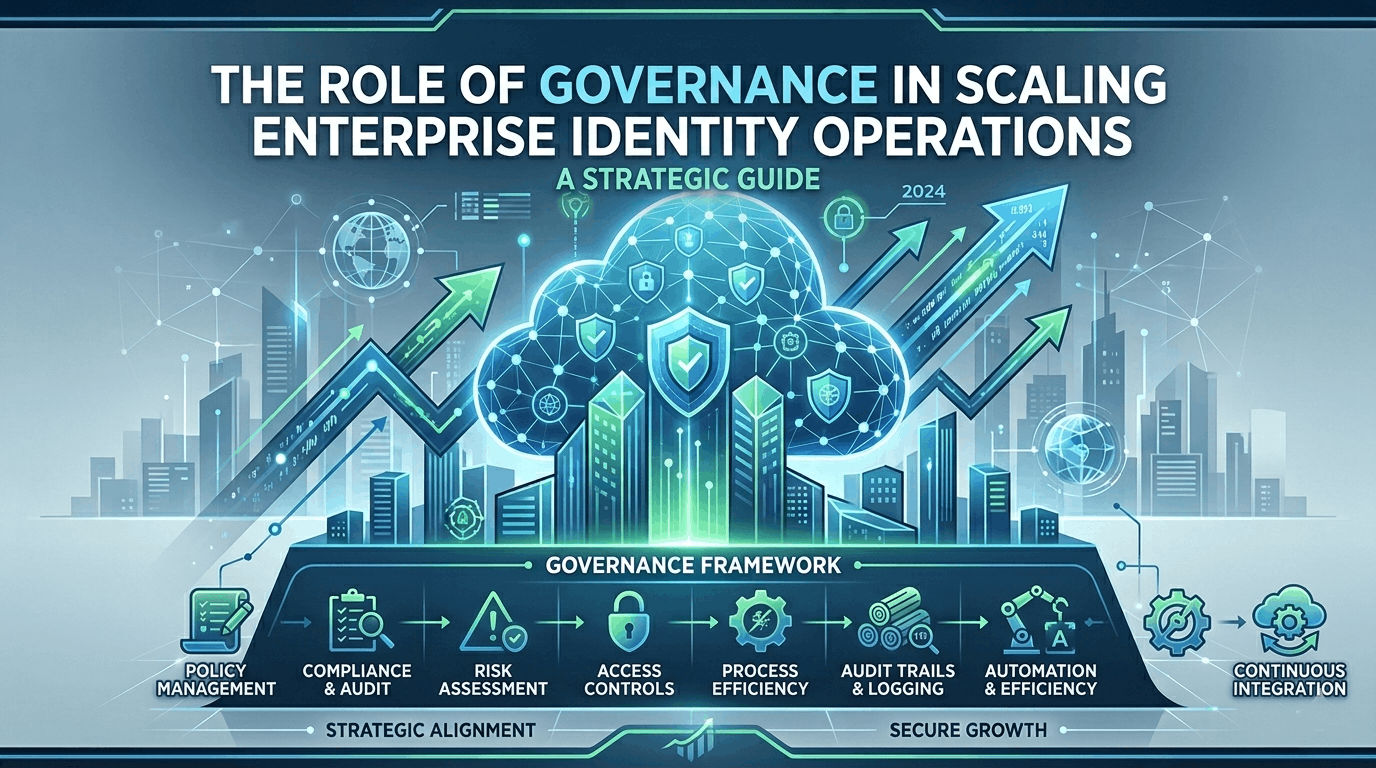
Governance introduces structure where there would otherwise be variability. It ensures that identity execution is not dependent on individual decisions but is guided by defined rules and workflows. Instead of allowing each department to operate independently, governance aligns all identity-related activities under a unified framework.
This framework ensures that identity data originates from authoritative systems, workflows are standardized, approvals are consistent, and outputs follow predefined templates. Governance also provides visibility into every step of the process, allowing organizations to track actions, identify gaps, and maintain accountability.
How Governance Enables Scalable Systems
Scaling identity operations requires more than automation. It requires alignment across systems. Governance achieves this by integrating identity workflows with enterprise platforms such as HRIS, procurement, and compliance systems. When these integrations are in place, identity execution becomes part of a broader operational infrastructure.
For example, when a new employee is onboarded, their identity data flows automatically from HR systems into governance workflows. Templates are assigned based on role, approvals are triggered according to policy, and outputs are generated through controlled vendor channels. Each step is governed, ensuring that the process remains consistent regardless of scale.
This level of integration removes reliance on manual coordination and replaces it with system-driven execution.
Operational Impact of Governance at Scale
Organizations that implement governance experience a shift in how identity operations function. Processes that were previously fragmented become unified. Tasks that required manual intervention become automated. Most importantly, visibility increases across all identity-related activities.
Instead of reacting to inconsistencies after they occur, organizations can prevent them at the point of execution. This reduces risk, improves efficiency, and ensures that identity assets accurately represent the organization at all times.
Governance also enables better decision-making. With access to audit data and reporting, organizations can understand how identity assets are created, used, and managed. This insight allows them to refine processes and maintain control as they continue to scale.
Governance as Enterprise Infrastructure
At an enterprise level, governance is not a supporting function. It is infrastructure. It connects identity execution to core systems, ensuring that every action aligns with organizational policies and standards.
When governance is embedded into infrastructure, identity operations become predictable and scalable. The organization no longer depends on individual actions to maintain consistency. Instead, consistency is built into the system itself.
This shift is critical for enterprises that operate across multiple regions, teams, and systems. Without governance, scaling introduces complexity. With governance, scaling becomes structured and manageable.
Strategic Takeaway
Enterprise growth demands more than operational expansion. It demands control. Governance provides control by aligning identity operations with enterprise systems, workflows, and policies.
Organizations that invest in governance are able to scale confidently. They maintain consistency across all identity assets, ensure compliance with internal and external requirements, and operate with full visibility into their processes.
In contrast, organizations that neglect governance struggle with fragmentation, inefficiency, and risk.
Scaling is inevitable. Loss of control is not.